What Types of Math Do Computer Programmers Use
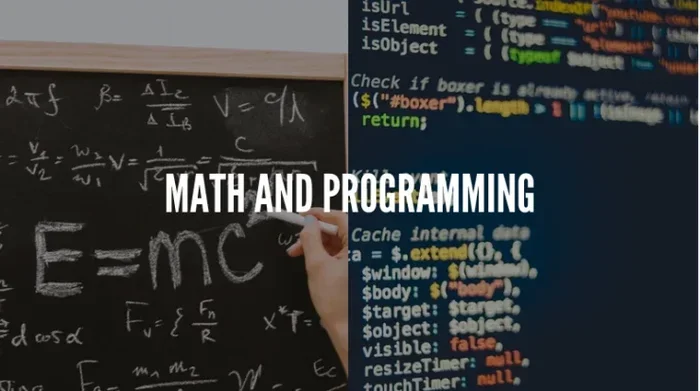
Computer programmers use many types of math, including algebra, discrete mathematics, linear algebra, statistics, and calculus. The math you need depends on your field, with game development and data science requiring deeper math skills than basic web development. Understanding these math areas helps you write better code and solve complex programming problems.
Computer programming and math go hand in hand. Whether you are building a simple website or designing a complex game engine, math plays a role behind the scenes. Many aspiring coders worry about their math skills. The good news is that the type of math you need depends on what you want to build.
This guide breaks down the types of math computer programmers use every day. You will learn which math areas matter most and how they apply to real coding work. Whether you are a beginner or an experienced developer looking to level up, this guide has you covered.
Key Takeaways
- Algebra and Boolean logic form the foundation of everyday programming and conditional statements.
- Discrete mathematics is essential for understanding algorithms, data structures, and logic circuits.
- Linear algebra powers graphics programming, machine learning, and 3D game development.
- Statistics and probability drive data science, AI, and analytics-focused programming.
- Calculus plays a key role in physics engines, simulations, and optimization problems.
- You do not need to be a math genius to start programming — many fields use basic math only.
- The right math skills can significantly boost your career options and earning potential in tech.
📑 Table of Contents
- Why Math Matters in Programming
- Algebra and Boolean Logic: The Foundation of Coding
- Discrete Mathematics: The Heart of Algorithms
- Linear Algebra: The Math Behind Graphics and AI
- Statistics and Probability: The Language of Data
- Calculus: The Math of Change and Motion
- Other Math Areas Programmers Should Know
- How Much Math Do You Actually Need to Start Programming
- Final Thoughts
Why Math Matters in Programming
Math is the backbone of computer science. At its core, programming is just telling a computer what to do using logic. And logic comes straight from math. You do not need to solve complex equations every day. But understanding basic math concepts helps you write cleaner, faster, and smarter code.
Different programming fields require different levels of math. A front-end web developer may use very little math beyond basic arithmetic. A machine learning engineer, on the other hand, relies heavily on linear algebra and statistics. The key is knowing what math your specific path demands.
Think of it like driving a car. You do not need to understand how the engine works to drive. But if you want to be a mechanic, you need to know the engine inside and out. The same goes for math and programming. Start with the basics and grow your skills as your career evolves.
Algebra and Boolean Logic: The Foundation of Coding
How Algebra Powers Everyday Programming
Algebra is the most used type of math in programming. You use it every time you write a formula, calculate a value, or manipulate variables. When you write something like x = y + 5, that is algebra in action.
Programmers use algebra to:
- Calculate values in real time
- Set up conditions in if-statements
- Build formulas for spreadsheets and data processing
- Create loops that depend on mathematical expressions
Even simple tasks like calculating a discount or sorting a list use algebraic thinking. You do not need advanced algebra skills. Basic algebra is all you need for most everyday coding tasks.
Boolean Logic and True/False Statements
Boolean logic is a branch of algebra that deals with true and false values. It is the backbone of all conditional programming. When you write code like “if the user is logged in, show the dashboard,” you are using Boolean logic.
Boolean operators like AND, OR, and NOT help programmers make decisions in code. These simple logic rules control everything from user permissions to game mechanics. Learning Boolean algebra early will make you a much better programmer.
If you work with tools like Microsoft Excel for data tasks, understanding alignment types in Excel can also help you organize and present mathematical results more clearly.
Discrete Mathematics: The Heart of Algorithms
What Is Discrete Math and Why Programmers Need It
Discrete mathematics is one of the most important math subjects for programmers. Unlike calculus, which deals with continuous numbers, discrete math works with distinct, separate values. This makes it perfect for computer science, where everything is digital and countable.
Discrete math covers several key areas that programmers use daily:
- Set theory — helps with data organization and database queries
- Graph theory — powers social networks, maps, and network routing
- Combinatorics — helps count possibilities and optimize solutions
- Logic and proofs — builds the foundation for writing correct code
If you want to work with algorithms or data structures, discrete math is non-negotiable. It teaches you how to think logically and solve problems step by step. Many coding interviews test your knowledge of discrete math concepts, especially graph traversal and recursion.
How Discrete Math Connects to Algorithms
Every algorithm is built on discrete math principles. When you search for something on Google, graph theory helps find the shortest path. When you sort a list, combinatorics helps determine the most efficient method. Understanding these math foundations makes you a stronger problem solver.
Programmers who study discrete math also find it easier to understand time complexity and Big O notation. These concepts measure how fast your code runs as input sizes grow. They are pure discrete math in action.
Linear Algebra: The Math Behind Graphics and AI
Vectors, Matrices, and Transformations
Linear algebra is the math of vectors and matrices. It is absolutely essential for graphics programming, game development, and machine learning. If you have ever wondered how 3D characters move on screen or how recommendation engines work, linear algebra is the answer.
Here is what linear algebra gives programmers:
- The ability to rotate, scale, and move objects in 2D and 3D space
- The math behind neural networks and deep learning
- Tools for image processing and computer vision
- Methods for solving systems of equations efficiently
Game developers especially rely on linear algebra. Every time a character turns a corner or a camera zooms in, matrices are doing the heavy lifting. If you are interested in game development or AI, learning linear algebra should be a top priority.
Linear Algebra in Machine Learning
Machine learning models are built on linear algebra. Every training iteration involves matrix multiplication and vector operations. Data scientists use linear algebra to reduce dimensions, find patterns, and make predictions from large datasets.
Even if you are not building AI models yourself, understanding linear algebra helps you use machine learning tools more effectively. Libraries like TensorFlow and PyTorch are built on linear algebra operations under the hood.
For hardware considerations when running math-heavy programs, check out what to do after installing a new GPU. Proper setup ensures your system handles computational math tasks smoothly. Also, understanding what GPU is equivalent to the Ryzen 7 5700G for math-heavy workloads can help you plan your development machine.
Statistics and Probability: The Language of Data
Why Data-Driven Programming Requires Statistics
Statistics is the math of collecting, analyzing, and interpreting data. In today’s world, almost every programmer works with data in some form. Whether you are building a dashboard, training an AI model, or A/B testing a feature, statistics is your toolkit.
Key statistical concepts programmers use include:
- Mean, median, and mode — basic data summaries
- Standard deviation — measures how spread out data is
- Probability distributions — predicts how likely events are
- Hypothesis testing — validates if changes actually work
- Regression analysis — finds relationships between variables
Programmers working in data science, analytics, and product development use statistics every single day. Even a simple task like tracking user engagement on an app requires basic statistical thinking.
Probability in Everyday Code
Probability is everywhere in programming. Random number generators, game mechanics, and risk models all use probability theory. Even something as simple as shuffling a playlist or generating a CAPTCHA relies on probability algorithms.
Understanding probability also helps you write better error-handling code. You can predict how often things might go wrong and build systems that handle failures gracefully. This is especially important in distributed systems and cloud applications.
Calculus: The Math of Change and Motion
When Programmers Need Calculus
Calculus is not needed for every programmer, but it is crucial in specific fields. Calculus deals with change and motion, making it essential for physics simulations, animation, and optimization problems.
You will need calculus if you work in:
- Game physics engines and realistic simulations
- Robotics and motion control systems
- Machine learning optimization and gradient descent
- Scientific computing and engineering software
Calculus has two main branches: derivatives and integrals. Derivatives measure how fast something changes. Integrals measure the total accumulation over time. Together, they let programmers model real-world physics in digital environments.
Calculus in Game Development and Simulations
Game developers use calculus to simulate gravity, friction, and collisions. When a character jumps in a game, calculus equations determine their trajectory. When water flows in a simulation, integrals calculate the movement frame by frame.
Machine learning also uses calculus heavily. The training process relies on gradient descent, which uses derivatives to find the minimum error in a model. Without calculus, modern AI would not exist.
Other Math Areas Programmers Should Know
Geometry and Trigonometry
Geometry helps programmers work with shapes, spaces, and positions. Trigonometry, a branch of geometry, is vital for game development, navigation systems, and graphics rendering. Sine, cosine, and tangent functions help calculate angles and distances in 2D and 3D environments.
Number Theory and Binary Math
Computers run on binary, which is base-2 math. Understanding how numbers work in binary helps programmers deal with low-level operations, memory management, and encryption. Number theory also plays a big role in cryptography and security programming.
Numerical Methods
Numerical methods are techniques for solving math problems using approximations. Programmers use them when exact solutions are too slow or impossible to compute. These methods are common in scientific computing, financial modeling, and engineering applications.
How Much Math Do You Actually Need to Start Programming
Here is the honest truth: you do not need to be a math genius to start programming. Many successful programmers are self-taught and started with very basic math skills. The most important skill is logical thinking, not advanced calculations.
If you want to build websites or simple apps, basic arithmetic and Boolean logic are enough. If you want to get into data science or game development, you will need to invest more time in learning specific math topics.
The best approach is to learn math alongside programming. As you encounter problems that require math, study the specific area you need. This keeps learning relevant and practical. You will also find that programming helps you understand math better, creating a positive feedback loop.
Remember, your hardware setup matters too when running math-intensive programs. Having enough RAM ensures your system can handle heavy computation. Learning about what RAM does in a laptop can help you build a machine that supports your programming journey effectively.
Final Thoughts
Math is a powerful tool for every programmer. The types of math computer programmers use range from basic algebra to advanced calculus, depending on your field. Start with the basics and grow your skills as your career demands more. The most important thing is to keep learning and applying math in practical coding projects.
Whether you are drawn to game development, data science, web development, or AI, there is a math skill set that will serve you well. Do not let math anxiety hold you back. Every programmer can improve their math skills with practice and patience. The journey of a thousand lines of code starts with a single step — and that step often involves a little math.
Frequently Asked Questions
Do I need advanced math to become a programmer?
No, not for most programming jobs. Basic algebra and logical thinking are enough for web development, app development, and many other fields. Advanced math becomes important only in specialized areas like machine learning, game physics, and scientific computing.
Which type of math is used most in programming?
Algebra and discrete mathematics are the most commonly used types of math in programming. They form the foundation of algorithms, data structures, and everyday coding logic. Most programmers use these areas daily without even thinking about it.
Can I learn programming if I am bad at math?
Absolutely. Many great programmers struggle with traditional math. Programming is more about problem-solving and logical thinking than calculation skills. You can always learn the specific math you need as you go along.
Is calculus required for all programmers?
No, calculus is only required in specific fields like game development, physics simulations, robotics, and machine learning. If you work in web development or basic software engineering, you likely will not use calculus at all.
How can I improve my math skills for programming?
Start with basic algebra and Boolean logic, then move to discrete mathematics. For specific fields, study linear algebra for AI and graphics, or statistics for data science. Practice by applying math concepts directly to coding projects.
Does programming help improve math skills?
Yes, programming can actually make you better at math. When you apply math concepts in code, you see them in action. This practical application helps reinforce theoretical knowledge and builds deeper understanding over time.
=== CONCLUSION ===
The types of math computer programmers use vary widely based on the field and the specific work. From the foundational role of algebra and Boolean logic to the specialized demands of linear algebra and calculus, each type of math serves a unique purpose in the programming world. Discrete mathematics keeps your algorithms sharp, while statistics and probability power the data-driven applications that define modern tech.
The beauty of this journey is that you do not need to master everything at once. Start where you are, build your skills progressively, and let your programming goals guide your math learning. Whether you are calculating simple variables or training complex neural networks, math is your silent partner in writing great code. Embrace it, practice it, and watch your programming abilities grow.