Where Do You Plug the Hdmi Cable into Pc

Plugging an HDMI cable into your PC is simple once you know where to look. Whether you have a desktop or a laptop, the HDMI port is usually easy to find on the back or side of your machine. This guide walks you through every step, from locating the right port to fixing common connection issues. You will also learn about different HDMI cable types and how to get the best display quality for your setup.
So, you have an HDMI cable in your hand and a PC ready to go. But where exactly do you plug it in? This is a question many people ask, especially if they are setting up a second monitor or connecting their PC to a TV for the first time. The good news is that it is much simpler than it looks. Once you know what to look for, plugging in an HDMI cable becomes second nature.
Where Do You Plug The HDMI Cable Into PC depends on a few things. Are you using a desktop tower or a laptop? Is your graphics card separate from the motherboard? These small details matter. In this guide, we will walk you through every scenario. You will learn exactly where to plug the cable in, how to avoid common mistakes, and what to do if nothing shows up on your screen.
## Understanding Your PC’s HDMI Ports
Before you plug anything in, it helps to understand what an HDMI port looks like and why your PC has one. HDMI stands for High-Definition Multimedia Interface. It carries both video and audio through a single cable. This is why it is the go-to choice for most PC setups today.
### What Does an HDMI Port Look Like?
An HDMI port on a PC is small and trapezoidal. It has a slightly tapered shape with a single split in the middle. The cable clicks in when you push it gently. There are different sizes of HDMI ports. The standard full-size HDMI is the most common on desktops. Some laptops use a smaller version called Mini HDMI or Micro HDMI. But the full-size port is what you will see most often.
### Why Does Your PC Have an HDMI Port?
Your PC includes an HDMI port because it makes connecting to a monitor or TV easy. You do not need extra adapters for basic setups. The HDMI port sends high-quality video and sound at the same time. This saves you from running multiple cables. It also keeps your cable management clean and simple.
## Where to Plug the HDMI Cable on a Desktop PC
Where Do You Plug The HDMI Cable Into PC is the first question most desktop users ask. The answer depends on whether your PC has a dedicated graphics card or uses integrated graphics.
### Finding the HDMI Port on the Back of Your Tower
On a desktop PC, you will find the HDMI port on the back of the tower. Look for a small, trapezoidal slot. There may be several ports grouped together near the bottom or middle of the back panel. The HDMI port is usually labeled with the letters “HDMI” right next to it.
### GPU Port vs. Motherboard Port: Know the Difference
This is a key detail many people miss. If your PC has a dedicated graphics card, it will have its own HDMI port. The graphics card sits in a slot on the motherboard and handles all the visual output. It usually has one or more HDMI ports on the back of the PC.
The motherboard also has an HDMI port in some cases. This is the integrated graphics output. However, you should always plug your HDMI cable into the GPU port, not the motherboard port. If you plug into the motherboard, you may get no signal or a weak signal. Your dedicated graphics card is what drives your display.
### Step-by-Step: Plugging in Your HDMI Cable on a Desktop
Follow these simple steps to connect your HDMI cable to a desktop PC:
- Turn off your PC and unplug it from the power outlet.
- Locate the HDMI port on your graphics card at the back of the tower.
- Take your HDMI cable and align the plug with the port.
- Push the cable in gently until it clicks into place.
- Plug the other end of the cable into your monitor or TV.
- Turn on your PC and your display.
That is all it takes. If your screen lights up with a clear picture, you are done. If not, do not worry. We will cover troubleshooting in a later section.
## Where to Plug the HDMI Cable on a Laptop
Laptops handle HDMI connections a bit differently. The port is easy to access, but you still need to know where to look.
### Locating the HDMI Port on Your Laptop
Flip your laptop over or look at the sides. The HDMI port is usually on the left or right edge. It is a small, trapezoidal slot, just like on a desktop. Some laptops place it near the USB ports. Others put it closer to the power jack. Look carefully for the “HDMI” label next to the port.
### Connecting Your Laptop to an External Monitor
Once you find the port, the process is straightforward. Plug one end of the HDMI cable into your laptop. Plug the other end into your external monitor. Then, turn on both devices. Your laptop should automatically detect the second display. If it does not, you may need to adjust your display settings.
### What to Do If Your Laptop Has No HDMI Port
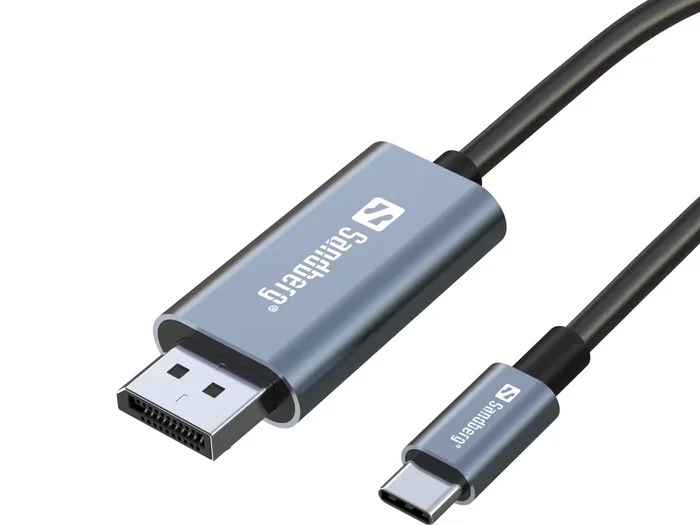
Not every laptop has an HDMI port. Some modern laptops only have USB-C or Thunderbolt ports. In this case, you can use an HDMI adapter. A USB-C to HDMI adapter is cheap and works well. Just plug the adapter into your laptop and then connect the HDMI cable to the adapter. This gives you the same result as a built-in HDMI port.
## How to Get the Best Display Quality with HDMI
Plugging in the cable is only half the battle. You also want great picture quality. Here are some tips to help you get the most out of your HDMI connection.
### Check Your HDMI Cable Version
Not all HDMI cables are the same. Older HDMI cables may only support 1080p resolution. Newer cables support 4K and even 8K resolution. Look for labels like “HDMI 2.0” or “HDMI 2.1” on the cable packaging. If you want 4K at high refresh rates, go with an HDMI 2.1 cable. For basic 1080p use, an older cable works just fine.
### Adjust Your PC Display Settings
After plugging in the cable, check your display settings. Right-click on your desktop and select Display Settings. You should see options for your connected monitor. You can choose to extend your display, duplicate it, or show the main display only. These settings let you control how your screen works with the new monitor.
### Update Your Graphics Drivers
Sometimes, the best HDMI cable and correct port are not enough. Outdated graphics drivers can cause display problems. Visit your GPU manufacturer’s website and download the latest drivers. NVIDIA, AMD, and Intel all offer free driver updates. Installing the newest version often fixes black screen issues and improves performance.
## Common HDMI Connection Problems and Fixes
Even when you plug everything in correctly, problems can happen. Here are the most common issues and how to solve them.
### No Signal on Your Monitor
If your monitor says “No Signal,” the first thing to check is the cable connection. Pull the HDMI cable out and plug it back in firmly. Make sure both ends are fully seated. If that does not work, try a different HDMI port on your monitor. Sometimes, a specific port may be faulty.
### Black Screen After Plugging In
A black screen after connecting can be frustrating. Start by checking your display settings. Your PC might be set to show the display only on the internal screen. Press the Windows key plus P to open the projection menu. Select “Extend” or “Duplicate” to switch to the external display. If this does not work, update your graphics drivers as mentioned above.
### Flickering or Distorted Image
A flickering image usually points to a loose cable or a low-quality cable. Make sure the HDMI cable is firmly connected at both ends. If the problem continues, try replacing the cable. A damaged or old cable can cause signal interference. Investing in a high-quality HDMI cable can save you a lot of headaches.
### Audio Issues with HDMI
HDMI carries both video and audio. But sometimes, you may get video with no sound. Check your sound settings in Windows. Right-click the speaker icon in your taskbar and select Sound Settings. Make sure your HDMI output is set as the default playback device. This simple step often fixes audio problems instantly.
## Quick Tips for HDMI Cable Management
Keeping your cables tidy makes your PC setup look clean and feel organized. Here are some quick tips.
- Use cable ties or clips: These keep your HDMI cable neatly routed along your desk.
- Label your cables: If you have multiple cables, label them so you know which one goes where.
- Avoid sharp bends: Do not bend your HDMI cable at sharp angles. This can damage the internal wires over time.
- Keep cables away from heat sources: Place cables away from your PC’s exhaust vents to prevent heat damage.
## Expert Insights on HDMI Connections
Experienced tech users know that a good HDMI connection starts with the right gear. Using a high-quality cable and plugging into the correct port makes all the difference. If you are running a dual-monitor setup, consider buying cables with good shielding. Shielded cables reduce interference and keep your signal clean.
Another expert tip is to check your monitor’s input source. Many monitors have multiple input options. If your monitor is set to the wrong input, it will not display your PC’s signal. Use the monitor’s menu button to select the correct HDMI input. This small step is often overlooked but solves many connection issues.
## Key Takeaways
Key Takeaways
- Desktop PCs: The HDMI port is typically on the back of the tower, near the graphics card output.
- Laptops: Look on the side or back edge for a small, trapezoidal HDMI port.
- GPU vs. Motherboard: Always plug into the graphics card output, not the motherboard HDMI, for the best picture quality.
- No HDMI port? Use an HDMI adapter or a DisplayPort-to-HDMI cable to connect your monitor.
- Troubleshooting: Check cable seating, display settings, and driver updates if your screen stays black after plugging in.
- Cable choice matters: HDMI 2.1 supports 4K and higher refresh rates, while older versions may limit your display quality.
Key Takeaways
- Desktop PCs: Plug your HDMI cable into the graphics card output on the back of your tower for the best results.
- Laptops: Look on the side edge for the HDMI port. It is easy to spot and simple to use.
- Always check your cable version: HDMI 2.0 or 2.1 cables support higher resolutions and smoother visuals.
- Troubleshoot step by step: Check cable seating, display settings, and driver updates if you run into issues.
- No HDMI port? Use a USB-C to HDMI adapter to connect your monitor without any hassle.
- Audio follows video: HDMI carries both sound and picture. Set the HDMI output as your default audio device for sound.
## Frequently Asked Questions
Can I Plug an HDMI Cable Into Any Port on My PC?
Not all ports are the same. If your PC has a dedicated graphics card, always plug the HDMI cable into the GPU output, not the motherboard port. The motherboard HDMI port may not work if the dedicated graphics card is handling the display output. Check the labels on the back of your PC to find the correct port.
What Should I Do If My HDMI Cable Does Not Fit the Port?
Make sure you are using the right type of HDMI port. Some laptops use Mini HDMI or Micro HDMI instead of the standard full-size port. You can buy adapters to bridge the size difference. Also, check that the cable is not damaged or bent at the connector. A gentle push until you hear a click means it is seated correctly.
Do I Need to Install Drivers After Plugging in an HDMI Cable?
Usually, no. Windows detects most HDMI monitors automatically. However, if your screen does not appear or looks blurry, updating your graphics drivers can help. Visit your GPU manufacturer’s website for the latest drivers. This is especially important for 4K displays and high refresh rate monitors.
Can I Use an HDMI Splitter to Connect Multiple Monitors?
Yes, an HDMI splitter lets you connect one PC to multiple screens. However, a basic splitter duplicates the same image on all monitors. If you want to extend your display across multiple screens, you need a PC with multiple HDMI outputs or a DisplayPort hub. Check your PC’s available ports before buying a splitter.
How Long Can an HDMI Cable Be Before Signal Quality Drops?
A standard HDMI cable works well up to about 15 feet. Beyond that, the signal may weaken, especially at higher resolutions. If you need a longer run, consider an active HDMI cable or an HDMI extender. These boost the signal and keep your picture clear over longer distances.
Is It Better to Use HDMI or DisplayPort for My PC?
Both cables work well, but they serve different needs. HDMI is more common on TVs and monitors. DisplayPort is often found on higher-end monitors and graphics cards. DisplayPort supports higher refresh rates at 4K resolution. For most everyday uses, HDMI works perfectly fine. Choose the cable that matches your monitor’s available ports.
Frequently Asked Questions
What is Where Do You Plug The Hdmi Cable Into Pc?
Where Do You Plug The Hdmi Cable Into Pc is an important topic with many practical applications.