3 Way 6.5 Speakers

Looking for crystal‑clear, powerful audio in a compact package? 3 way 6.5 speakers deliver three dedicated drivers in a 6.5‑inch format, giving you deep bass, smooth mids, and crisp highs without the bulk of larger systems. In this guide we break down how they work, what to watch for when buying, and how to get the most out of them in cars, boats, or home setups.
Key Takeaways
- Three drivers in one box: A 6.5‑inch woofer, a midrange, and a tweeter work together for balanced sound.
- Size matters less than crossover design: Proper 3‑way crossover tuning is the secret to seamless frequency blending.
- Power handling varies widely: Choose models that match your amp’s RMS output for clean, distortion‑free playback.
- Installation tips: Secure mounting, correct polarity, and proper wiring protect performance and longevity.
- Best for: Car audio enthusiasts, marine installations, and compact home theater builds.
- Value‑driven buying: Look for sensitivity ≥ 88 dB, low distortion, and durable cones for the best bang for your buck.
- Future‑proofing: Pair with a quality 3‑way crossover and a capable amp to keep your system ready for upgrades.
📑 Table of Contents
- What Makes a 3 Way 6.5 Speaker Different?
- Core Components of a 3 Way 6.5 Speaker
- How the 3‑Way Crossover Works
- Choosing the Right Amplifier
- Installation Tips for Different Environments
- Top 3 Way 6.5 Speaker Models in 2024
- Maintaining Your 3 Way 6.5 Speakers
- Frequently Overlooked Factors
- Bottom Line – Are 3 Way 6.5 Speakers Right for You?
What Makes a 3 Way 6.5 Speaker Different?
When you hear the term “3 way 6.5 speaker,” two things jump out: the three‑driver design and the 6.5‑inch enclosure. Most traditional car or marine speakers are two‑way – a woofer and a tweeter. Adding a dedicated midrange driver creates a true three‑way system, allowing each driver to handle a narrower slice of the audio spectrum.
This separation does three things:
- Improves clarity: The midrange can reproduce vocals and instruments without the “mud” that a single woofer often adds.
- Boosts efficiency: Each driver works at its optimal frequency range, so you get louder sound with less power.
- Reduces distortion: When a driver is forced to play frequencies it isn’t built for, distortion spikes. A three‑way design keeps that to a minimum.
Why 6.5 Inches?
The 6.5‑inch size is a sweet spot for many installations. It’s large enough to move air and produce satisfying bass, yet small enough to fit in tight door panels, boat consoles, or compact home theater shelves. Compared to 5‑inch units, you gain roughly 2‑3 dB of SPL (sound pressure level) and deeper low‑end response. Compared to 6×9 or 8‑inch models, you keep the weight down and avoid the need for massive mounting brackets.
Core Components of a 3 Way 6.5 Speaker
Understanding the three drivers helps you judge quality and match them to your system.

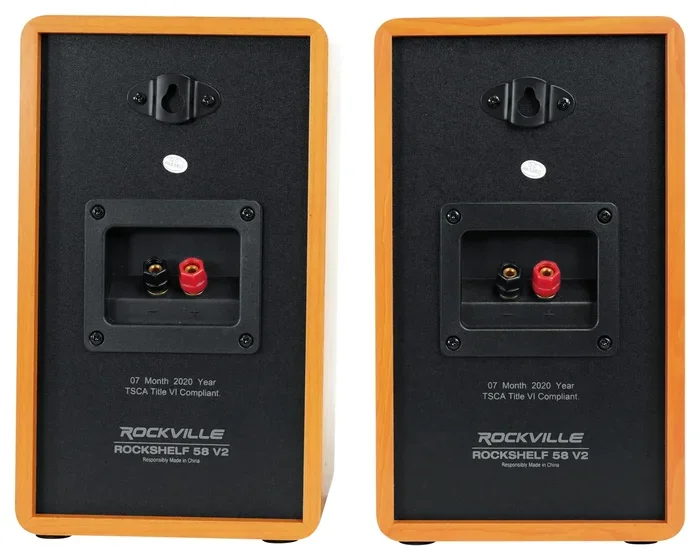
Visual guide about 3 Way 6.5 Speakers
Image source: i.pinimg.com
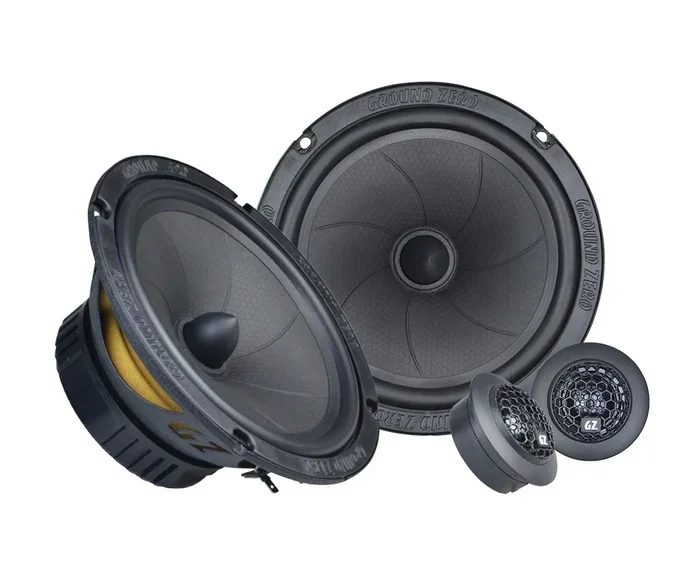
1. The Woofer (Low‑Frequency Driver)
Usually a 6.5‑inch cone made from polypropylene, woven carbon fiber, or treated paper. Look for:
- Power handling (RMS): 50‑100 W is typical. Higher RMS means the speaker can handle louder music without overheating.
- Sensitivity: 86‑92 dB (1 W/1 m). Higher sensitivity lets you get louder with less amp power.
- Cone material: Carbon‑fiber cones are stiff and lightweight, delivering tighter bass.
2. The Midrange (Mid‑Driver)
This driver handles the critical 500 Hz‑3 kHz range where most vocals and lead instruments sit. Common features include:
- Ferrite or neodymium magnet: Neodymium is lighter and provides stronger magnetic flux, improving efficiency.
- Soft dome or woven fiber diaphragm: Soft domes smooth out harshness, while woven fiber adds detail.
- Power rating: Typically 20‑40 W RMS – enough to blend smoothly with the woofer.
3. The Tweeter (High‑Frequency Driver)
Most 6.5‑inch three‑way speakers use a 1‑inch dome tweeter. Key specs:
- Frequency response: 10 kHz‑20 kHz (or higher). A wider response adds sparkle to cymbals and high‑end synths.
- Material: Titanium, silk, or aluminum. Silk is smooth but less powerful; titanium is bright and punchy.
- Power handling: 10‑30 W RMS – tweeters need less power but must be protected from overload.
How the 3‑Way Crossover Works
The crossover is the unsung hero that tells each driver when to speak. A 3 way crossover for speakers typically splits the signal into three bands:
Visual guide about 3 Way 6.5 Speakers
Image source: online.fliphtml5.com
- Low‑pass filter: Sends frequencies below ~300‑500 Hz to the woofer.
- Band‑pass filter: Directs 500 Hz‑3 kHz to the midrange.
- High‑pass filter: Sends everything above ~3 kHz to the tweeter.
Quality crossovers use precise slopes (12 dB/octave or 24 dB/octave) to avoid overlap that can cause “phase cancellation.” When buying a set, check whether the crossover is built‑in (most factory‑installed 3‑way 6.5 speakers have it) or if you need an external unit for fine‑tuning.
Passive vs. Active Crossovers
Passive crossovers sit inside the speaker enclosure and require no external power. They’re cheap and simple but can introduce a bit of loss.
Active crossovers sit before the amp, powered by a small DC source. They give you control over filter slopes and level balancing, ideal for audiophiles who want to tweak the sound.
Choosing the Right Amplifier
Power matching is crucial. An amp that delivers too little RMS power will force the speakers into clipping, while an over‑powered amp can damage the drivers if you turn the volume up too high.
Visual guide about 3 Way 6.5 Speakers
Image source: i.pinimg.com
Calculate Required Power
Use this quick rule: Amplifier RMS power ≈ 1.5 × Speaker RMS power. For a 6.5‑inch three‑way set rated at 80 W RMS, look for an amp that can comfortably deliver 120 W RMS per channel at the same impedance (usually 4 Ω).
Recommended Amp Options
If you’re building a car audio system, the recommended car amp for 6 speakers article lists several models that pair well with 3‑way 6.5‑inch units. Look for features such as:
- Low‑pass, band‑pass, and high‑pass filters (to fine‑tune each driver).
- High‑current MOSFET outputs for clean bass.
- Adjustable gain and bass boost for extra punch.
Installation Tips for Different Environments
Whether you’re mounting in a sedan, a boat, or a home theater shelf, a few universal guidelines keep your speakers performing at their best.
1. Car Installation
- Secure mounting: Use the provided brackets and silicone sealant to prevent vibration.
- Polarity check: Connect positive (+) to positive and negative (–) to negative on both the speaker and amp. Reverse polarity causes phase cancellation and thin sound.
- Wire gauge: For runs longer than 5 ft, use 12‑gauge speaker wire to reduce resistance.
2. Marine Installation
Water and salt are enemies of electronics. Choose marine‑grade 3 way 6.5 speakers like the Jl Audio 6 5 Marine Speakers for corrosion‑resistant hardware. Additionally:
- Seal all connections with marine‑grade heat‑shrink tubing.
- Mount speakers on vibration‑isolating pads to reduce hull noise.
- Run wires through existing conduit to keep them dry.
3. Home Theater or Desktop Setup
- Speaker stands: Use sturdy stands that keep the tweeter at ear level for optimal imaging.
- Room acoustics: Add a small bookshelf or acoustic panel behind the speakers to reduce rear‑wall reflections.
- Power supply: A clean, low‑noise power strip prevents hum and interference.
Top 3 Way 6.5 Speaker Models in 2024
Below are three standout models that balance performance, price, and durability.
1. Rockford Fosgate R165X3
- Power handling: 70 W RMS (150 W peak)
- Sensitivity: 89 dB
- Features: Patented “Horn‑Wrapped” tweeter for tight highs, carbon‑fiber woofer, and a built‑in 3‑way crossover.
- Best for: Car enthusiasts who want a punchy, road‑ready sound.
2. JBL Club 6520C
- Power handling: 80 W RMS
- Sensitivity: 91 dB
- Features: Cast‑iron frame, titanium tweeter, and a marine‑grade sealed design.
- Best for: Boats and outdoor venues where moisture resistance matters.
3. Alpine R‑S65C
- Power handling: 60 W RMS
- Sensitivity: 88 dB
- Features: Soft‑dome tweeter, high‑temp polypropylene woofer, and an external 3‑way crossover for custom tuning.
- Best for: Home theater setups where you want flexibility to adjust crossover points.
Maintaining Your 3 Way 6.5 Speakers
Regular care extends life and preserves sound quality.
Cleaning the Cones
Use a soft dry brush or a slightly damp microfiber cloth. Avoid solvents; they can damage the cone coating.
Checking for Damage
Every 6‑12 months, inspect the diaphragm for tears, the surround for cracks, and the tweeter dome for discoloration. Replace any damaged drivers promptly.
Re‑tuning the Crossover
If you notice a “hole” in the mids or overly bright highs, you may need to adjust the crossover. An external active crossover makes this easy; otherwise, swapping the internal crossover for a higher‑quality aftermarket unit can revitalize the sound.
Frequently Overlooked Factors
Even if you have the perfect drivers and amp, a few subtle details can make or break the listening experience.
Impedance Matching
Most 3 way 6.5 speakers are 4 Ω. Wiring two speakers in parallel drops the load to 2 Ω, which can over‑stress many amplifiers. If you need to bridge speakers, use a dedicated impedance‑matching transformer or stick to series wiring.
Room Placement and Stereo Imaging
Place speakers at least 2‑3 ft from side walls and keep them symmetric relative to the listening position. This creates a balanced stereo field and prevents bass “boominess.”
Power Supply Quality
In a car, a weak battery or alternator can cause voltage sag, leading to distortion. Adding a high‑current capacitor (often called a “stiffening capacitor”) smooths out the power delivery.
Bottom Line – Are 3 Way 6.5 Speakers Right for You?
If you crave a compact speaker that doesn’t sacrifice detail, the 3 way 6.5 format is a strong contender. Its three‑driver design delivers a full‑range soundstage, while the modest size fits almost any enclosure. Pair them with a well‑matched amp, a quality crossover, and proper installation, and you’ll enjoy music that feels both intimate and expansive.
Remember, the best system is the one that matches your listening habits, vehicle or room size, and budget. Use the tips above to evaluate options, and you’ll be on the road—or water—toward richer, clearer audio.
Frequently Asked Questions
What is the difference between a 2‑way and a 3‑way 6.5 speaker?
A 2‑way speaker uses a woofer and a tweeter, while a 3‑way adds a dedicated midrange driver. This extra driver improves mid‑frequency clarity and reduces distortion.
Can I use a 3 way 6.5 speaker in a standard 2‑way car door?
Yes, but you’ll need a proper 3‑way crossover (often built‑in) and an amp that can handle the additional driver’s power requirements.
Do I need a special amplifier for 3 way 6.5 speakers?
Any amp that matches the speaker’s RMS power and impedance will work. For optimal results, choose an amp with built‑in crossover controls or pair it with an external crossover.
How do I know if my speakers are wired correctly?
Check polarity: the positive terminal on the amp should connect to the positive (+) terminal on the speaker. A quick test is to play a song and watch the speaker cone move; it should push forward on the beat.
Are marine‑grade 3 way 6.5 speakers necessary for a boat?
Marine‑grade speakers have corrosion‑resistant hardware and sealed enclosures, which greatly extend life in salty, humid environments. They’re highly recommended for boat installations.
Can I upgrade the crossover on my existing 3 way 6.5 speakers?
Yes. Many aftermarket crossovers are compatible, especially if the original is passive. Upgrading can give you finer control over frequency split points and filter slopes.