Where to Rent Thermal Imaging Camera
Looking to rent a thermal imaging camera but not sure where to start? This guide walks you through the top rental sources, what to check before you sign, and how to get the most value out of your short‑term thermal camera hire. Save time, money, and headaches with our practical tips.
Key Takeaways
- Know your needs first: Define the temperature range, resolution, and accessories you require before searching.
- Local vs. online rentals: Both have pros; local stores offer hands‑on help, while online services often have larger inventories.
- Check insurance and damage policies: Understand liability, deposits, and what’s covered in case of mishap.
- Compare rates and bundles: Weekly discounts and accessory packages can cut costs dramatically.
- Plan for calibration and training: Some providers include on‑site setup or tutorials.
- Read reviews and ask for references: Real‑world feedback reveals hidden fees or service quirks.
- Return logistics matter: Know the exact drop‑off location, cleaning requirements, and late‑fee structure.
📑 Table of Contents
- Introduction: Why Renting a Thermal Imaging Camera Makes Sense
- 1. Types of Rental Sources
- 2. How to Choose the Right Thermal Camera for Your Rental
- 3. Top Places to Rent a Thermal Imaging Camera
- 4. What to Look for in Rental Agreements
- 5. Tips for a Smooth Rental Experience
- Conclusion: Make the Most of Your Thermal Camera Rental
Introduction: Why Renting a Thermal Imaging Camera Makes Sense
Thermal imaging cameras used to be a niche tool reserved for scientists, firefighters, or high‑end security firms. Today, they’re affordable enough for contractors, wildlife enthusiasts, and even DIY homeowners. Buying a brand‑new unit can cost several thousand dollars, and most users only need the gear for a short project—like a building inspection, a night‑time wildlife survey, or a one‑off energy audit. That’s where renting shines.
Renting gives you access to the latest sensor technology without the upfront capital outlay. You can test different models, upgrade mid‑project, and avoid depreciation worries. But the big question remains: where to rent thermal imaging camera that fits your budget and timeline? This article breaks down the options, the hidden costs, and the steps to ensure a smooth rental experience.
1. Types of Rental Sources
Not all rental providers are created equal. Understanding the categories helps you narrow down the right fit.
Visual guide about Where to Rent Thermal Imaging Camera
Image source: blog-imgs-155.fc2.com
1.1 Local Camera & Equipment Shops
Many cities have specialty photography or industrial equipment stores that keep a few thermal units on the shelf. The biggest advantage is face‑to‑face advice. Store staff can walk you through the camera’s features, suggest lenses, and even demonstrate proper focus.
For example, a shop in Austin might carry FLIR E8 and a Seek Thermal Compact Pro. You can pick up the gear, get a quick tutorial, and return it in person. This hands‑on approach reduces the learning curve, especially if you’re new to thermography.
1.2 Online Rental Marketplaces
Platforms like LensRentals.com, BorrowLenses, or equipment‑specific sites such as ThermalRentals.com list dozens of models, from entry‑level to high‑end. You browse, select dates, and the camera ships to your door. These services often provide detailed spec sheets, user manuals, and sometimes a short video walkthrough.
Because they serve a national audience, online rentals usually have more inventory and flexible pricing tiers (daily, weekly, monthly). However, you’ll need to factor in shipping costs and a possible delay if the item is in transit.
1.3 Specialized Trade‑Show and Construction Rental Companies
Companies that rent out heavy‑duty tools—like United Rentals or Sunbelt Rentals—have started adding thermal cameras to their catalogues. These firms understand the needs of contractors: they offer rugged cases, battery packs, and on‑site support.
Renting from a trade‑show vendor can be especially smart if you need a camera for a large‑scale project that also requires other equipment (e.g., drones, laser scanners). Bundling can lead to discounts.
1.4 University or Research Lab Programs
Some universities run “equipment loan” programs for community members or small businesses. If you have an affiliation or can partner with a research group, you might borrow a high‑resolution thermal camera at little to no cost. Check local college engineering departments or extension programs.
2. How to Choose the Right Thermal Camera for Your Rental
Before you type where to rent thermal imaging camera into a search engine, clarify your project needs. The wrong model can waste time and money.
2.1 Temperature Range
Identify the hottest and coldest temperatures you’ll encounter. A basic consumer unit may measure –20 °C to 250 °C, while an industrial FLIR T540 can handle –40 °C to 2000 °C. For building inspections, the lower range is usually sufficient; for hot‑work monitoring, you’ll need the higher spec.
2.2 Spatial Resolution
Resolution determines how detailed the thermal image will be. A 80 × 60 pixel sensor gives a general heat map, while a 640 × 480 sensor provides crisp details that can pinpoint a faulty pipe or a small animal. Higher resolution often means higher cost, so match it to the task.
2.3 Lens Options and Field of View
Wide‑angle lenses capture larger scenes—great for drone mounts or roof scans. Telephoto lenses zoom in on distant heat sources, useful for electrical inspections from a safe distance. Verify that the rental includes the lenses you need.
2.4 Connectivity and Software
Most modern thermal cameras stream data via Wi‑Fi, Bluetooth, or USB. If you plan to integrate the footage into a GIS system or need real‑time alerts, ask whether the rental package includes the necessary software licences. Some providers bundle MS Excel templates for energy audits.
2.5 Battery Life and Power Options
Thermal sensors can be power‑hungry. Look for cameras with removable batteries and optional external power packs. If you’re working on a remote site, a solar charger (see our article on Can You Use A Camera Solar Charger To Charge Battery) might be a lifesaver.
3. Top Places to Rent a Thermal Imaging Camera
Now that you know what to look for, here are the most reliable sources where you can answer the question “where to rent thermal imaging camera” with confidence.
Visual guide about Where to Rent Thermal Imaging Camera
Image source: jmtest.com
3.1 FLIR Rental Program
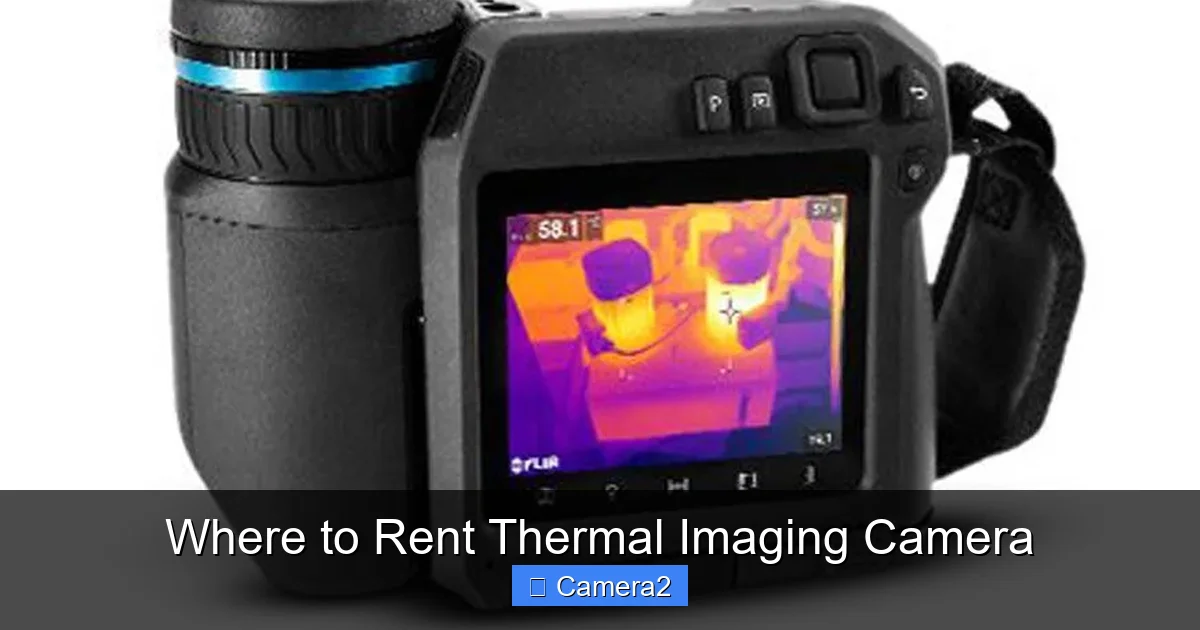
FLIR, the market leader, runs its own rental service for both short‑term and long‑term needs. Their website lets you filter by temperature range, resolution, and accessories. They ship nationwide and include a complimentary calibration check.
- Pros: Access to the newest models, expert support, optional on‑site training.
- Cons: Slightly higher daily rates compared to third‑party marketplaces.
3.2 LensRentals.com (Thermal Section)
LensRentals is known for photography gear, but they also stock a solid selection of thermal cameras like the FLIR One Pro and Seek Thermal Compact. Their rental terms are clear, and you can add insurance for a modest fee.
- Pros: Competitive pricing, easy online checkout, fast shipping.
- Con: No in‑person demo; you rely on manuals and video guides.
3.3 United Rentals – Construction Division
If you already rent power tools or scaffolding from United, adding a thermal camera to the same order can simplify invoicing. They offer rugged cases and a “thermal inspection kit” that includes a tripod, extra batteries, and a data‑log USB stick.
- Pros: Bundled discounts, local pickup in many cities, on‑site assistance.
- Cons: Limited model variety; mainly mid‑range units.
3.4 Local Specialty Stores (Example: Austin Imaging Solutions)
Search for “thermal camera rental near me” and you’ll often find boutique shops. Austin Imaging Solutions, for instance, rents FLIR E6 and offers a free 30‑minute tutorial. They also accept returns after business hours, which is handy for night‑time projects.
- Pros: Personalized service, immediate pickup, ability to test equipment.
- Cons: Inventory may be limited; prices can vary.
3.5 University Equipment Loan Programs
Contact the engineering department of your nearest university. Some schools maintain a “tool bank” that includes high‑end thermal imagers for community projects. Rentals are often free or low‑cost, but you may need to submit a project proposal.
4. What to Look for in Rental Agreements
A great camera is only half the story. The contract you sign can make or break your experience.
4.1 Deposit and Insurance
Most rentals require a refundable security deposit—usually 10‑20% of the camera’s value. Ask if the provider offers optional insurance that covers accidental damage, water exposure, or loss. This can save you from unexpected fees.
4.2 Calibration and Accuracy Guarantees
Thermal accuracy degrades over time. Reputable renters perform a calibration check before each checkout. Ensure the agreement states that the camera will be calibrated to manufacturer specifications and that any drift will be corrected at no extra cost.
4.3 Late Return Policies
Understand the penalty structure. Some companies charge a flat daily fee; others calculate a percentage of the rental price. If you anticipate a schedule shift, contact the provider early to negotiate an extension.
4.4 Accessory Packages
Do you need a tripod, external battery, or a protective case? Some rentals bundle these for a small extra fee, while others charge per item. Compare the total cost of an “all‑in‑one” package versus buying accessories separately.
4.5 Technical Support and Training
Especially for first‑time users, having a tech‑savvy contact can be priceless. Look for renters that offer phone or video support, and ask whether they provide a quick start guide or a live demo.
5. Tips for a Smooth Rental Experience
Even with the best provider, a few simple habits can keep the process painless.
5.1 Test Before You Go
When you receive the camera, power it up and run a quick self‑test. Verify that the sensor, screen, and connectivity work. If something feels off, contact the rental company immediately—most have a 24‑hour replacement window.
5.2 Keep a Logbook
Note the start‑up time, battery level, and any settings you adjust. This record helps you troubleshoot on the field and provides evidence if the provider claims damage on return.
5.3 Clean the Lens Carefully
Thermal lenses are sensitive to fingerprints and dust. Use a microfiber cloth and, if needed, a lens‑safe cleaning solution. Some renters require the lens to be returned spotless; a dirty lens can trigger cleaning fees.
5.4 Backup Your Data
Transfer images to a laptop or cloud storage after each day’s work. This protects you against accidental loss and speeds up the return process—no one wants to wait for you to download gigabytes of footage.
5.5 Return on Time and In Good Condition
Pack the camera in its original case, include all accessories, and double‑check that the battery is charged (or removed if required). A tidy return often earns you a discount on future rentals.
Conclusion: Make the Most of Your Thermal Camera Rental
Finding the right place to rent a thermal imaging camera doesn’t have to be a guessing game. By defining your project needs, comparing local and online options, and reading the fine print, you can secure a high‑quality device without breaking the bank. Remember to treat the equipment with care, document any issues, and leverage the support most providers gladly offer. With the right rental partner, your next inspection, survey, or adventure will be clearer—and hotter—than ever.
Frequently Asked Questions
What is the average cost to rent a thermal imaging camera for a week?
Weekly rates typically range from $150 to $400 depending on the model’s resolution and temperature range. Adding accessories like a tripod or extra batteries may increase the price by $20‑$50.
Can I rent a thermal camera for a one‑day project?
Yes. Most rental services offer daily rates, often with a minimum 24‑hour charge. Some online platforms even have “hourly” options for short field tests.
Do I need special training to operate a thermal camera?
Basic operation is straightforward, but understanding emissivity, distance, and environmental factors improves accuracy. Many renters include a short tutorial or a user manual, and some offer paid on‑site training.
Is insurance required when renting a thermal imaging camera?
Insurance is not mandatory but highly recommended. It protects you from costly damage fees. Most companies provide optional coverage for a modest daily rate.
Can I use a solar charger with the rental camera’s battery?
Yes, as long as the charger matches the battery’s voltage and connector type. Our guide on Can You Use A Camera Solar Charger To Charge Battery explains how to choose a compatible charger.
What should I do if the camera malfunctions during my rental period?
Contact the rental provider immediately. Most companies will offer a replacement unit or technical support within 24 hours. Keep your rental agreement handy for reference.