2 4 Ohm Speakers in Parallel

Connecting two 4 ohm speakers in parallel is a simple way to match your amp’s load and get more volume. This guide walks you through the math, wiring tips, and safety checks so you can enjoy louder, cleaner sound without damaging your gear.
Key Takeaways
- Impedance drops to 2 ohms: Parallel wiring halves the total load, so two 4 ohm speakers become a 2 ohm load.
- Amplifier compatibility is crucial: Only use this setup if your amp can safely handle a 2 ohm load.
- Power distribution is even: Each speaker receives the same voltage and half the total current.
- Wiring quality matters: Use proper gauge wire and secure connections to prevent loss and noise.
- Safety first: Check heat, distortion, and fuse ratings to protect your system.
- Series vs. parallel: Know when to choose series (higher impedance) over parallel (lower impedance).
- Practical examples: Real‑world wiring diagrams make the process easy to follow.
📑 Table of Contents
- Introduction: Why Talk About 2 4 Ohm Speakers in Parallel?
- Understanding Impedance and Parallel Wiring
- When Is Parallel Wiring the Right Choice?
- Step‑by‑Step Guide: Wiring Two 4 Ohm Speakers in Parallel
- Practical Examples: Real‑World Scenarios
- Potential Pitfalls and How to Avoid Them
- Advanced Topics: Boosting Performance Further
- Conclusion: Wire Smart, Sound Loud
Introduction: Why Talk About 2 4 Ohm Speakers in Parallel?
If you’ve ever stared at the back of your car stereo or home audio amp and wondered how to get more volume without buying a new amplifier, you’re not alone. One of the most common tricks is to wire two 4 ohm speakers in parallel. The result? A lower overall impedance that can draw more power from a capable amp, delivering louder, richer sound.
But it’s not just about turning up the dial. Wiring speakers the wrong way can overheat your amp, cause distortion, or even fry the speakers. In this friendly, step‑by‑step guide we’ll demystify the math, show you how to wire safely, and give you practical tips you can apply today—whether you’re upgrading a car audio system, a home theater, or a DIY Bluetooth speaker project.
Understanding Impedance and Parallel Wiring
What Is Impedance?
Impedance, measured in ohms (Ω), is the resistance a speaker offers to the flow of alternating current (AC). It’s similar to the resistance you see in a light bulb, but it also includes the speaker’s reactive components, which affect how it handles different frequencies.

Visual guide about 2 4 Ohm Speakers in Parallel
Image source: i.pinimg.com
Parallel vs. Series: The Quick Math
When you connect two identical speakers in parallel, the total impedance (Ztotal) is calculated like this:
Ztotal = (Z₁ × Z₂) / (Z₁ + Z₂)
For two 4 ohm speakers:
Ztotal = (4 Ω × 4 Ω) / (4 Ω + 4 Ω) = 16 Ω / 8 Ω = 2 Ω
That means the amp now sees a 2 ohm load. If your amp can handle 2 Ω, you’ll get more current, more power, and louder sound.
Series Wiring for Comparison
In series, you simply add the impedances: 4 Ω + 4 Ω = 8 Ω. This higher load is safer for many amps but delivers less power. If you ever need to raise the impedance, series wiring is the way to go. (Check out our article on 2 8 Ohm Speakers In Series for a deeper dive.)
When Is Parallel Wiring the Right Choice?
Matching Amplifier Ratings
Most modern car and home amplifiers list the minimum impedance they can safely drive—often 2 Ω, 4 Ω, or 8 Ω. If your amp is rated for 2 Ω, wiring two 4 Ω speakers in parallel is perfect. If the amp is only rated for 4 Ω, you risk overheating and distortion.

Visual guide about 2 4 Ohm Speakers in Parallel
Image source: static.vecteezy.com
Seeking More Power
Power (watts) is proportional to voltage squared divided by impedance (P = V² / R). Halving the impedance doubles the power, assuming the amp can supply the extra current. That’s why parallel wiring is a favorite among car audio enthusiasts who want to push their system to the max.
Space Constraints
Sometimes you have limited mounting space and need two speakers close together—like in a door panel or a compact bookshelf. Parallel wiring lets you use two smaller 4 Ω drivers instead of a single larger 8 Ω driver, saving space while keeping the load low.
Step‑by‑Step Guide: Wiring Two 4 Ohm Speakers in Parallel
What You’ll Need
- Two 4 Ω speakers (matched in power handling)
- Amplifier rated for 2 Ω loads
- Speaker wire (16‑18 gauge is ideal for most car/home setups)
- Wire cutters/strippers
- Soldering iron or crimp connectors
- Heat‑shrink tubing or electrical tape
Safety First
Before you start, disconnect the power to the amp. This prevents accidental shorts and protects your ears from sudden blasts of sound.
Visual guide about 2 4 Ohm Speakers in Parallel
Image source: shareicon.net
Wiring Diagram
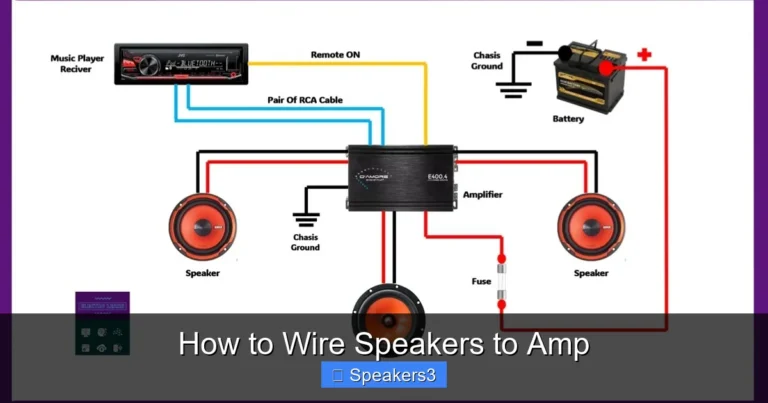
Imagine the amp’s positive (+) output split into two wires, each going to the positive terminal of a speaker. Do the same with the negative (–) side. The two positive wires are tied together, and the two negative wires are tied together, forming a “Y” shape.
Step 1: Measure and Cut Wire
Measure the distance from the amp to each speaker, add a few extra inches for slack, and cut two lengths for the positives and two for the negatives.
Step 2: Strip the Ends
Strip about ½ inch of insulation from each end. Make sure the copper is clean and bright.
Step 3: Connect to Speakers
Attach one positive wire to the + terminal of Speaker A and another positive wire to the + terminal of Speaker B. Repeat for the negatives.
Step 4: Join the Parallel Leads
Twist the two positive wires together (or solder them) and do the same with the negatives. This creates the parallel connection.
Step 5: Connect to the Amplifier
Run a single positive wire from the joined positives to the amp’s + output, and a single negative wire from the joined negatives to the amp’s – output.
Step 6: Secure and Insulate
Wrap each joint with heat‑shrink tubing or electrical tape. This prevents short circuits and keeps the connection solid.
Step 7: Test the System
Power the amp back on, start with a low volume, and listen for any distortion. Gradually increase volume while monitoring the amp’s temperature. If it gets too hot, back off the gain or reconsider the wiring.
Practical Examples: Real‑World Scenarios
Car Door Speakers
Many factory door speakers are 4 Ω. Upgrading to two high‑efficiency 4 Ω components in parallel can give you a louder, punchier soundstage without changing the factory amp—provided the amp is 2 Ω capable.
Home Theater Front‑Firing Speakers
In a home theater, you might want two bookshelf drivers to act as a single front‑firing unit. Wiring them in parallel reduces the load, letting a modest 2‑channel amp drive them with more headroom for movie explosions.
DIY Bluetooth Speaker Box
Building a portable Bluetooth box? Use two 4 Ω drivers in parallel, power them with a small 2 Ω‑rated Class D amp, and you’ll get higher SPL (sound pressure level) without blowing the amp.
Potential Pitfalls and How to Avoid Them
Overloading the Amplifier
If your amp isn’t rated for 2 Ω, the extra current can cause overheating, triggering protection circuits, or worse, permanent damage. Always check the spec sheet before wiring.
Unequal Speaker Characteristics
Mixing speakers with different power ratings or sensitivity can lead to uneven sound. The louder speaker will dominate, and the weaker one may distort. Stick to matched pairs.
Wire Gauge Issues
Using too thin a wire increases resistance, which can cause voltage drop and heat. For runs longer than a few feet, step up to 14‑gauge wire.
Distortion at High Volumes
Even with a proper 2 Ω amp, pushing the volume to the max can cause clipping. Listen for a harsh, metallic edge in the sound—that’s a sign to back off.
Advanced Topics: Boosting Performance Further
Using a Crossover Network
Adding a simple passive crossover lets you direct low frequencies to a subwoofer and highs to your 4 Ω tweeters, improving clarity and protecting the drivers.
Bi‑Amping with Separate Channels
If your amp has multiple channels, you can bi‑amp the pair—one channel drives the low frequencies, the other the highs. This keeps each channel within its comfortable impedance range.
Parallel Wiring with More Than Two Speakers
For larger setups, you can add more 4 Ω speakers in parallel, but the total impedance drops further (three speakers become 1.33 Ω). At that point you’ll need a professional‑grade amp designed for sub‑ohm loads.
Link to Related Car Audio Content
Looking for more ideas on matching speakers to your car’s audio system? Check out our guide on 6 3 4 Car Speakers for recommendations that pair well with parallel wiring.
Conclusion: Wire Smart, Sound Loud
Wiring two 4 ohm speakers in parallel is a straightforward way to lower the load, draw more power, and get louder sound—provided your amplifier can handle the 2 Ω load. By following the wiring steps, using the right gauge wire, and keeping an eye on temperature, you can enjoy a clean, powerful audio experience without risking damage.
Remember: match your speakers, respect your amp’s limits, and always test at low volume first. With these habits, you’ll get the most out of your 2 4 ohm speakers in parallel and keep the music playing for years to come.
Frequently Asked Questions
Can I wire two 4 ohm speakers in parallel on any amplifier?
No. Only connect them in parallel if the amp is rated to handle a 2 ohm load. Check the amplifier’s specifications before proceeding.
Will wiring two 4 ohm speakers in parallel double the volume?
It won’t exactly double the perceived volume, but it will allow the amp to deliver more power, which generally results in a louder and clearer sound.
Do I need a special crossover when using parallel wiring?
A crossover isn’t required, but it can improve sound quality by sending the right frequencies to each driver and protecting them from distortion.
What happens if I use thin speaker wire for the parallel connection?
Thin wire adds resistance, causing voltage drop and possible overheating. Use 16‑18 gauge wire for short runs and step up to 14 gauge for longer distances.
Is it safe to connect more than two 4 ohm speakers in parallel?
Adding more speakers lowers the total impedance further (three speakers become ~1.33 Ω). This requires a professional‑grade amp designed for sub‑ohm loads.
Can I use the same wiring method for a home theater system?
Yes, the same parallel wiring principles apply. Just ensure your home theater amp or receiver can handle the resulting 2 Ω load.