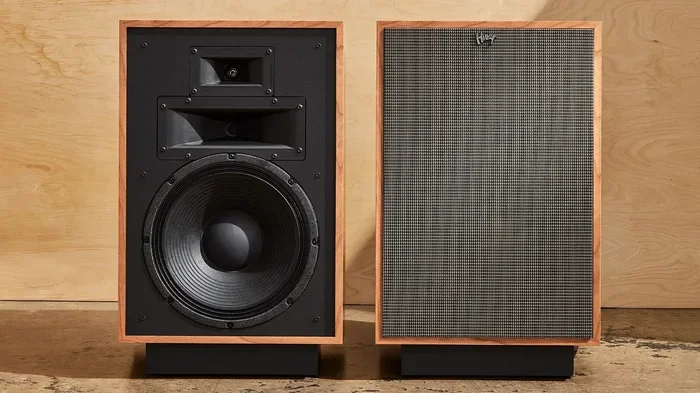
2 4 Ohm Speakers in Series

Connecting two 4 ohm speakers in series creates an 8 ohm load, matching many amplifiers and improving power distribution. This guide walks you through the math, wiring steps, and practical tips so you can set up your speakers safely and get the best sound quality.
Key Takeaways
- Series wiring raises total impedance: Two 4 Ω speakers in series become an 8 Ω load.
- Power handling adds up: The combined wattage is the sum of each speaker’s rating.
- Amplifier compatibility is crucial: Match the new impedance to your amp’s recommended range.
- Wire gauge matters: Use appropriate gauge to avoid loss and heating.
- Check phase polarity: Keeping drivers in phase preserves bass response.
- Series vs. parallel: Know when each wiring method is best for your setup.
- Safety first: Always disconnect power before wiring or testing.
📑 Table of Contents
- Introduction: Why Talk About 2 4 Ohm Speakers in Series?
- Understanding Impedance and How Series Wiring Works
- Calculating Power Handling in Series
- Step‑by‑Step: Wiring Two 4 Ω Speakers in Series
- When Series Wiring Isn’t the Best Choice
- Practical Examples: Real‑World Scenarios
- Maintaining Sound Quality: Phase, Crossover, and Placement
- Common Mistakes and How to Avoid Them
- Conclusion: Get the Most Out of Your 4 Ω Speakers
Introduction: Why Talk About 2 4 Ohm Speakers in Series?
If you’ve ever stared at the back of a car stereo or a home‑theater amp and wondered how to get the most out of two 4 Ω speakers, you’re not alone. The question pops up again and again in DIY forums, garage workshops, and even among seasoned audio installers.
Wiring those speakers in series is one of the simplest tricks to change the load your amplifier sees, protect your gear, and sometimes even improve sound quality. In this article we’ll break down the theory, walk through the step‑by‑step wiring process, and share real‑world tips that keep your system humming without a hitch.
Understanding Impedance and How Series Wiring Works
What Is Impedance?
Impedance, measured in ohms (Ω), is the electrical resistance a speaker offers to the alternating current (AC) from an amplifier. Think of it as the “push‑back” the speaker gives. A lower impedance (e.g., 2 Ω) lets more current flow, while a higher impedance (e.g., 8 Ω) restricts it.

Visual guide about 2 4 Ohm Speakers in Series
Image source: static.vecteezy.com
Series vs. Parallel: The Basic Math
When you connect two speakers in series, you add their impedances:
Total Impedance (Series) = Z₁ + Z₂
For two 4 Ω speakers:
4 Ω + 4 Ω = 8 Ω
In parallel, the formula is different:
Total Impedance (Parallel) = (Z₁ × Z₂) / (Z₁ + Z₂)
If you ever need a quick comparison, check out our guide on 2 8 Ohm Speakers In Series for a deeper dive.
Why Choose Series Wiring?
- Amplifier safety: Many amps are rated for 8 Ω loads. Dropping to 4 Ω can cause overheating.
- Power distribution: The total wattage handling of two speakers adds together, giving you more headroom.
- Simplicity: Series wiring requires just one wire between the two speakers, making it easy for beginners.
Calculating Power Handling in Series
Adding Wattage Ratings
Each speaker’s wattage rating tells you how much power it can safely absorb. When wired in series, the amp sees the same voltage across each speaker, so the power each receives is proportional to its own impedance.

Visual guide about 2 4 Ohm Speakers in Series
Image source: png.pngtree.com
In practice, you can treat the total power handling as the sum of both speakers’ ratings, provided the amp can deliver enough voltage without clipping.
Example:
- Speaker A: 4 Ω, 50 W RMS
- Speaker B: 4 Ω, 75 W RMS
- Total series rating ≈ 125 W RMS
Matching Amplifier Output
Check your amp’s specifications. If it’s rated at 100 W RMS into 8 Ω, you’ll be comfortably within the combined 125 W capacity of the two speakers. If the amp can push 150 W into 8 Ω, you have a safety margin, but you should still keep an eye on distortion.
Step‑by‑Step: Wiring Two 4 Ω Speakers in Series
What You’ll Need
- Two 4 Ω speakers (matched or similar)
- Speaker wire (16‑gauge is usually sufficient for car installs; 14‑gauge for high‑power home setups)
- Wire cutters/strippers
- Screwdriver (for terminal screws)
- Multimeter (optional, for checking continuity)
Safety First
Always disconnect the amplifier or power source before you start. Even a brief connection can send a surge through the speakers.

Visual guide about 2 4 Ohm Speakers in Series
Image source: i.pinimg.com
Wiring Diagram
Amplifier (+) ──► Speaker A (+) ──► Speaker A (–) ──► Speaker B (+) ──► Speaker B (–) ──► Amplifier (–)
Notice that the negative terminal of the first speaker connects to the positive terminal of the second speaker. This creates the series chain.
Detailed Steps
- Strip the wire: Remove about ½ inch of insulation from each end.
- Connect the amp’s positive lead: Attach it to the positive (+) terminal of Speaker A.
- Bridge the speakers: Run a second length of wire from the negative (–) terminal of Speaker A to the positive (+) terminal of Speaker B.
- Finish the loop: Connect the negative (–) terminal of Speaker B back to the amp’s negative (-) output.
- Secure all connections: Tighten terminal screws and make sure there’s no stray wire touching metal chassis.
- Test: Power the amp on low volume, play a familiar track, and listen for balanced sound. Use a multimeter to verify the total impedance reads around 8 Ω.
Tips for Clean Installation
- Route the wire away from power cables to avoid interference.
- Use heat‑shrink tubing or electrical tape on each soldered joint for extra protection.
- If you’re installing in a car, secure the wires with zip ties to prevent rattling.
When Series Wiring Isn’t the Best Choice
Low‑Power Amplifiers
If your amp can only deliver modest voltage, an 8 Ω load might sound thin. In that case, parallel wiring (resulting in a 2 Ω load) could give you more current, but only if the amp is designed for it.
Bi‑Amp or Active Crossover Setups
When using separate amplifiers for tweeters and woofers, you’ll often keep each driver at its native impedance (usually 4 Ω) and let the amp handle the load.
Matching Speakers of Different Impedances
Never mix 4 Ω and 8 Ω speakers in a series chain without recalculating the total impedance. The math gets trickier, and you can end up with an odd load like 12 Ω, which many amps don’t support.
Practical Examples: Real‑World Scenarios
Car Audio Upgrade
Imagine you have a modest 50 W factory amp that’s rated for 4 Ω loads. You want to add two aftermarket 4 Ω component speakers to the front doors. By wiring them in series, you present an 8 Ω load, which the amp can handle safely, while still delivering enough power for clear mids and highs.
Home Theater Surround Sound
In a budget home‑theater, you might have a 2‑channel receiver that only supports 8 Ω speakers. If you’ve purchased two 4 Ω bookshelf speakers for the left and right channels, series wiring lets you use the existing amp without buying a new one.
DIY Portable Bluetooth Speaker
Some hobbyists build a portable Bluetooth box using a small 8 Ω driver and a 4 Ω tweeter. By wiring the tweeter in series with the driver, the total load becomes 12 Ω. Most tiny amps can handle this range, but you’ll need to check the spec sheet.
Maintaining Sound Quality: Phase, Crossover, and Placement
Keeping Drivers In Phase
When you wire in series, the polarity of each speaker matters. If one speaker is wired out of phase, the bass will cancel out, sounding thin or muddy. Always double‑check that the positive terminals of both speakers face the same direction relative to the amp.
Using Crossovers
If your two speakers cover different frequency ranges (e.g., a woofer and a tweeter), a passive crossover will split the signal appropriately. Place the crossover before the series chain so each driver receives only its intended frequencies.
Placement Tips for Optimal Performance
- Mount woofers on sturdy surfaces to avoid vibration.
- Keep tweeters at ear level for balanced imaging.
- Leave at least 1‑2 inches of clearance behind the speakers for airflow.
Common Mistakes and How to Avoid Them
Using the Wrong Wire Gauge
Thin wire (e.g., 22‑gauge) can heat up under high power, leading to resistance loss and potential fire hazards. Stick with 16‑gauge for most car installs and 14‑gauge for home systems with >100 W per channel.
Neglecting Amplifier Ratings
Never assume an amp can handle any impedance. Always read the manual. Overloading an amp can cause clipping, distortion, and permanent damage.
Skipping Polarity Checks
One quick test: play a bass-heavy track. If the low end sounds weak, flip the connection on one speaker and listen again. If it improves, you had a phase issue.
Mixing Different Impedance Speakers
As mentioned earlier, pairing a 4 Ω and an 8 Ω speaker in series yields 12 Ω, which may be outside your amp’s sweet spot. Stick to matching impedances unless you’re comfortable recalculating the load.
Conclusion: Get the Most Out of Your 4 Ω Speakers
Wiring two 4 Ω speakers in series is a straightforward method to create an 8 Ω load, protect your amplifier, and combine the power handling of both drivers. By following the wiring steps, checking polarity, and matching the final impedance to your amp’s specifications, you’ll enjoy clearer sound, better bass response, and a safer system.
Remember to use the right gauge wire, secure all connections, and test at low volume before cranking up the music. With these simple practices, you’ll turn a basic pair of speakers into a reliable, high‑performing part of any audio setup.
Frequently Asked Questions
What happens if I wire two 4 Ω speakers in parallel?
Parallel wiring drops the total impedance to 2 Ω, which can overload most consumer amplifiers and cause overheating.
Can I use a single 8 Ω speaker instead of two 4 Ω speakers in series?
Yes, an 8 Ω speaker will present the same load to the amp, but you lose the combined wattage and stereo imaging that two speakers provide.
Do I need a crossover when wiring two speakers in series?
If the speakers cover different frequency ranges (woofer and tweeter), a crossover is recommended to send each driver the right signals.
Is series wiring suitable for car audio systems?
Absolutely. Many car amps are designed for 8 Ω loads, so wiring two 4 Ω speakers in series is a common, safe practice.
How can I check the final impedance after wiring?
Use a multimeter set to the resistance (Ω) mode across the amp’s speaker terminals; you should read close to 8 Ω.
What if my amplifier only supports 4 Ω loads?
In that case, keep the speakers separate (parallel wiring) or use a matching transformer to convert the impedance safely.