2 Way Versus 3 Way Speakers

2 way versus 3 way speakers is a common debate among audiophiles. Understanding the driver layout, crossover design, and room placement helps you choose the right system for crisp highs, deep lows, and balanced mids.
Key Takeaways
- Driver count matters: 2‑way speakers use a woofer and tweeter, while 3‑way adds a dedicated midrange for smoother mids.
- Crossover complexity: 3‑way designs need a more intricate crossover network, which can improve clarity but adds cost.
- Size vs. performance: Larger enclosures often favor 3‑way designs, yet compact rooms may benefit from 2‑way simplicity.
- Budget considerations: 2‑way systems usually cost less and are easier to integrate with existing gear.
- Placement flexibility: 2‑way speakers are more forgiving in tight spaces; 3‑way speakers shine in larger listening areas.
- Upgrade path: Adding a dedicated midrange to a 2‑way can transform it into a quasi‑3‑way setup.
- Listening preference: If you love vocal detail and instrument separation, a 3‑way may be worth the investment.
📑 Table of Contents
- Introduction: Why the Way Count Matters
- 1. Anatomy of a 2‑Way Speaker
- 2. Anatomy of a 3‑Way Speaker
- 3. The Role of Crossovers in 2‑Way vs 3‑Way Designs
- 4. Practical Considerations: Room Size, Placement, and Budget
- 5. Real‑World Examples and How to Choose
- 6. Maintenance, Upgrades, and Longevity
- Conclusion: Which Way Wins for You?
Introduction: Why the Way Count Matters
When you walk into an audio store and hear a salesperson mention “2‑way” or “3‑way” speakers, it can feel like a secret code. In reality, the number simply tells you how many separate drivers each cabinet houses. More drivers usually mean a smoother hand‑off of frequencies, but it also brings extra design challenges. This guide breaks down the core differences between 2 way versus 3 way speakers, so you can decide which system matches your music taste, room size, and budget.
We’ll explore the anatomy of each design, the role of crossovers, practical setup tips, and real‑world examples. By the end, you’ll know exactly why a 2‑way might be perfect for a cozy apartment, while a 3‑way could be the star of a home‑theater or dedicated listening room.
1. Anatomy of a 2‑Way Speaker
Driver Layout
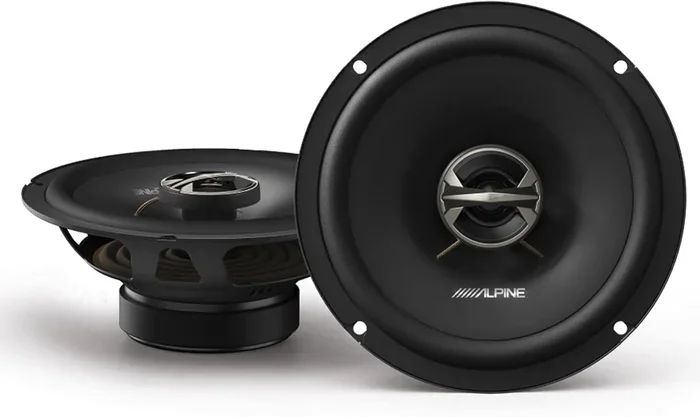
A 2‑way speaker typically contains two drivers:
Visual guide about 2 Way Versus 3 Way Speakers
Image source: static.vecteezy.com
- Woofer: Handles low to mid frequencies (roughly 40 Hz–2 kHz). It’s the workhorse that produces bass and the body of most instruments.
- Tweeter: Takes care of the high end (2 kHz–20 kHz). It adds sparkle to cymbals, strings, and vocal sibilance.
Because there are only two drivers, the crossover— the electronic “gatekeeper” that splits the audio signal— is relatively simple. Most 2‑way crossovers are either passive (built into the cabinet) or active (external unit) with just a few components.
Strengths and Weaknesses
Pros:
- Cost‑effective; fewer parts mean lower manufacturing expense.
- Compact size— ideal for bookshelf or small‑room setups.
- Easier to integrate with existing home‑theater receivers.
Cons:
- Midrange frequencies are shared between the woofer and tweeter, which can cause “muddy” vocals if the crossover isn’t tuned well.
- Limited ability to reproduce very low bass without a separate subwoofer.
2. Anatomy of a 3‑Way Speaker
Adding the Midrange Driver
The 3‑way design introduces a dedicated midrange driver, usually covering 500 Hz–5 kHz. This driver is specifically engineered to reproduce vocals, guitars, piano, and most orchestral instruments with high accuracy.
Now the system has three crossovers:
- Low‑pass for the woofer.
- Band‑pass for the midrange.
- High‑pass for the tweeter.
Because each driver handles a narrower frequency band, the overall sound can be clearer and more detailed.
When 3‑Way Shines
Three‑way speakers excel in larger rooms where you can place the cabinets far enough apart to allow each driver to breathe. They also pair well with high‑resolution audio sources (FLAC, DSD) that contain a wealth of detail across the spectrum.
One practical example is the 6 5 three‑way speakers series, which uses a 6.5‑inch woofer, a 4‑inch midrange, and a 1‑inch dome tweeter to deliver theater‑grade sound.
3. The Role of Crossovers in 2‑Way vs 3‑Way Designs
What Is a Crossover?
A crossover is an electronic circuit that divides the incoming audio signal into separate frequency bands for each driver. In a 2‑way system, the crossover is usually a simple second‑order (12 dB/octave) network. In a 3‑way system, you’ll often find a more complex third‑order (18 dB/octave) design.
Passive vs. Active Crossovers
Both 2‑way and 3‑way speakers can use passive or active crossovers. Passive units sit inside the cabinet and require no external power, but they can introduce a bit of signal loss. Active crossovers sit outside the speaker, need a power source, and offer precise control over filter slopes.
If you’re curious about the technical side of 3‑way crossovers, check out our deep dive on 3 way crossover for speakers. It explains how to match filter slopes to driver capabilities for optimal performance.
4. Practical Considerations: Room Size, Placement, and Budget
Room Size and Acoustic Volume
Small rooms (under 150 sq ft) usually benefit from 2‑way speakers because the bass from a single woofer can fill the space without overwhelming the mids. Larger rooms (250 sq ft or more) can accommodate the additional driver depth of a 3‑way, allowing the midrange to shine without being drowned out by excessive bass.
Speaker Placement Tips
- 2‑Way: Keep speakers at ear level, form an equilateral triangle with your listening position, and leave at least 2 ft from side walls to reduce reflections.
- 3‑Way: Give each cabinet a little extra breathing room (3‑4 ft from walls) so the midrange driver isn’t forced into a corner, which can cause boxy sound.
For those wiring multiple speakers in series, see our guide on 2 8 ohm speakers in series to avoid impedance mismatches.
Budget and Value
Because 3‑way speakers need an extra driver and a more sophisticated crossover, they often cost 30‑50 % more than comparable 2‑way models. If you’re on a tight budget, consider a high‑quality 2‑way pair and add a separate subwoofer for the low end. This combo can rival a modest 3‑way system in overall impact.
5. Real‑World Examples and How to Choose
Example 1: Compact Apartment Build‑Out
Imagine a 750 sq ft studio apartment with a love for indie rock and podcasts. A pair of bookshelf 2‑way speakers with a wall‑mountable design gives you clear highs and enough bass for most tracks. Pair them with a small powered subwoofer for movie nights.
Example 2: Dedicated Home‑Theater Room
Now picture a 300 sq ft dedicated theater room with a 7.1 surround setup. Here, a set of floor‑standing 3‑way speakers provides the cinematic impact: deep, controlled bass from a 12‑inch woofer, articulate mids from a 5‑inch cone, and airy highs from a silk dome tweeter. The extra midrange driver helps dialogue stay intelligible even during action‑packed scenes.
Example 3: Hybrid Approach
Some enthusiasts start with a solid 2‑way pair and later add a separate midrange driver (often called a “mid‑tower”) to create a quasi‑3‑way system. This upgrade path lets you test the benefits without a full replacement.
6. Maintenance, Upgrades, and Longevity
Keeping Your Speakers Happy
Regardless of the way count, treat your speakers with care:
- Keep them away from direct sunlight and extreme temperature changes.
- Dust the drivers gently with a soft brush or microfiber cloth.
- Check connections regularly; loose terminals can cause channel loss.
Future‑Proofing Your Audio Setup
If you anticipate upgrading to higher‑resolution sources (e.g., 24‑bit/96 kHz streaming), a 3‑way system may give you more headroom to appreciate the detail. Conversely, if you plan to expand your system with a subwoofer or soundbar, a high‑quality 2‑way can serve as a solid foundation.
Conclusion: Which Way Wins for You?
There’s no universal answer to “2 way versus 3 way speakers.” The decision hinges on your listening environment, budget, and sonic preferences. If you value simplicity, space‑saving design, and cost‑effectiveness, a well‑designed 2‑way will serve you admirably. If you crave pinpoint vocal clarity, expansive midrange detail, and have the room to let a larger cabinet breathe, a 3‑way speaker is worth the investment.
Take the time to audition both types, consider the tips above, and remember that the best speaker is the one that makes you want to press play again and again.
Frequently Asked Questions
What is the main advantage of a 3‑way speaker over a 2‑way?
A 3‑way speaker adds a dedicated midrange driver, which improves vocal and instrument clarity by allowing each driver to handle a narrower frequency band.
Do I need a special amplifier for 3‑way speakers?
Not necessarily. Most modern AV receivers can drive both 2‑way and 3‑way speakers, but ensure the amp can handle the total impedance and power requirements of the larger cabinet.
Can I convert a 2‑way speaker into a 3‑way?
Yes, by adding a separate midrange driver and an external crossover, you can create a hybrid setup. This is common among DIY enthusiasts looking to upgrade without buying a whole new pair.
Are 3‑way speakers louder than 2‑way speakers?
Loudness depends more on driver size, enclosure volume, and amplifier power than the number of ways. A small 2‑way can be louder than a large 3‑way if the latter is under‑driven.
Which type is better for small rooms?
2‑way speakers are generally more forgiving in small spaces because they have fewer drivers and require less room to avoid acoustic interference.
Do I need a separate subwoofer with a 3‑way system?
Many 3‑way floor‑standing speakers include a large enough woofer to handle deep bass, but adding a dedicated subwoofer can still enhance low‑frequency impact, especially for home‑theater use.