How to Update Ram on Laptop
Updating your laptop RAM is one of the easiest and most affordable ways to speed up your computer. This guide walks you through checking your current memory, choosing the right RAM, and installing it yourself. You will learn everything from compatibility checks to hands-on installation steps.
Is your laptop feeling slow? Do apps take forever to open or your browser crashes with too many tabs open? The answer might be simpler than you think. Updating the RAM on your laptop can breathe new life into an aging machine. It is one of the most effective upgrades you can do, and it does not cost a fortune.
Random Access Memory, or RAM, is the short-term memory your computer uses to handle tasks. More RAM means your laptop can juggle more things at once without breaking a sweat. Whether you are browsing the web, editing photos, or running heavy software, having enough computer memory makes a huge difference.
In this guide, we will walk you through the entire process. You will learn how to check what RAM you currently have, how to pick the right upgrade, and how to install it yourself. By the end, you will feel confident enough to do it all on your own.
Key Takeaways
- Know your current RAM: Checking what you have is the first step before any upgrade.
- Choose compatible RAM: Matching the right type, speed, and capacity saves time and money.
- Installation is simple: Most laptops let you swap RAM in under 15 minutes.
- Test after upgrading: Always verify your new memory is recognized and working properly.
- Avoid common mistakes: Skipping compatibility checks is the #1 error people make.
📑 Table of Contents
- Why Updating Your Laptop RAM Matters
- How to Check Your Current RAM
- Choosing the Right RAM for Your Laptop
- Step-by-Step Guide to Updating RAM on Your Laptop
- Common Mistakes to Avoid When Updating RAM
- When to Consider Professional Help
- Expert Insights on RAM Upgrades
- How to Verify Your RAM Upgrade Was Successful
- Key Takeaways
Why Updating Your Laptop RAM Matters
Many people ignore their laptop’s memory until things start lagging. But upgrading your RAM early can prevent a lot of frustration. Here is why it matters so much.
Better Multitasking
When you have too many programs open, your laptop slows down. This happens because your memory capacity gets used up. Adding more RAM lets you keep multiple apps running smoothly. You can have your browser, music player, and work documents all open at the same time.
Faster Performance
RAM affects how quickly your laptop responds to commands. When your system performance dips, it is often because the memory is full. A memory upgrade reduces load times and makes everything feel snappier. Even old laptops can feel brand new after a RAM boost.
Future-Proofing Your Device
Software keeps getting heavier. Newer apps and operating systems demand more from your hardware. Keeping your RAM up to date helps your laptop stay relevant longer. It is a small investment that pays off over time.
How to Check Your Current RAM
Before you buy anything, you need to know what you already have. Checking your current RAM takes just a few minutes. There are simple ways to find this information on any laptop.
Using Built-In Windows Tools
On Windows, you can check your RAM without downloading anything. Open the Task Manager by pressing Ctrl + Shift + Esc. Click on the Performance tab and look for Memory. You will see how much RAM is installed and how fast it runs.
Another easy method is to go to Settings, then System, and click About. This shows your total installed memory. Write this number down before shopping for upgrades.
Using Third-Party Tools
Tools like CPU-Z or Crucial System Scanner can give you detailed information about your RAM modules. These programs tell you the exact type, speed, and form factor of your memory. They also suggest compatible upgrades. This makes shopping much easier and less confusing.
You can also learn more about checking your RAM by visiting our guide on how to check the RAM on my laptop. It covers every method in detail.
Choosing the Right RAM for Your Laptop
Picking the right memory can feel overwhelming with so many options out there. But it does not have to be complicated. A few key factors will guide your choice.
Understand RAM Types
The two most common types today are DDR4 and DDR5. DDR4 RAM is widely used and offers great value. DDR5 is newer and faster but costs a bit more. Check what your laptop supports before buying. Using the wrong type will not work.
Match the Speed and Frequency
RAM speed is measured in megahertz, or MHz. Higher numbers mean faster data transfer. However, your laptop’s motherboard sets a limit on what speed it can handle. Always match your new RAM frequency to what your system supports. Going faster than your laptop allows will not give you any benefit.
Check the Capacity
Most laptops work best with 8GB to 16GB of RAM for everyday use. If you run heavy programs like video editors or games, 32GB is ideal. Think about what you use your laptop for most. That will help you decide the right RAM capacity for your needs.
Look at Your Memory Slots
Laptops have a limited number of memory slots. Some have one slot, others have two. If one slot is already filled, you might need to replace the existing module rather than add a second one. Knowing your slot count helps you plan the upgrade correctly.
Step-by-Step Guide to Updating RAM on Your Laptop
Now for the fun part. Installing new RAM is easier than most people think. You do not need to be a tech expert. Follow these steps carefully and you will be done in no time.
Step 1: Gather Your Tools
You will need a small Phillips-head screwdriver and your new RAM module. A soft cloth or anti-static mat is a good idea too. Working on a clean, flat surface prevents accidents.
Step 2: Power Down and Unplug
Turn off your laptop completely. Unplug the power cable and remove the battery if possible. This protects both you and your laptop from electrical damage. Never work on internal components while the laptop is powered on.
Step 3: Open the Back Panel
Flip your laptop over and locate the screws holding the back panel. Use your screwdriver to remove them carefully. Keep the screws in a safe place. Gently lift off the panel to expose the inside of your laptop.
If you are unsure about opening your specific model, our article on how to install RAM on a laptop provides detailed instructions for many popular models.
Step 4: Remove the Old RAM
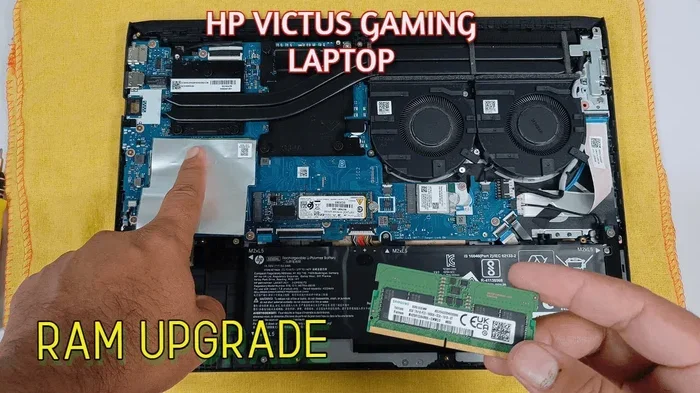
Locate the existing RAM sticks. You will see small metal clips on either side. Gently push these clips outward. The RAM module will pop up at an angle. Carefully pull it straight out of the slot.
Step 5: Insert the New RAM
Take your new module and align the notch on the bottom with the ridge in the slot. Press the RAM firmly and evenly until the side clips snap into place. You should hear a click. That means it is seated correctly.
If you want to learn about adding extra memory through alternative methods, check out our guide on how to get extra RAM on laptop with USB as a backup option.
Step 6: Close Up and Test
Replace the back panel and screw it back in. Reconnect the battery and power cable. Turn on your laptop and check if the new memory is recognized. You can verify this in the same Task Manager or Settings menu you used earlier.
Common Mistakes to Avoid When Updating RAM
Even simple tasks can go wrong if you are not careful. Here are the most common mistakes people make when upgrading their memory.
- Buying incompatible RAM: Not all RAM works with every laptop. Always double-check the type, speed, and form factor before purchasing.
- Forcing the module: RAM should slide in smoothly. If you need to force it, something is wrong. Check the alignment and try again.
- Skipping the power-off step: Working on a powered laptop can damage components. Always disconnect everything first.
- Ignoring the warranty: Some laptops have sealed memory that voids the warranty if you open them. Check your warranty terms before starting.
- Not testing after installation: Always verify the new RAM is working before closing everything up. It saves a lot of rework.
When to Consider Professional Help
Most RAM upgrades are straightforward. But some situations call for expert help. If your laptop has a sealed body or soldered memory, you cannot upgrade it yourself. In these cases, a professional technician can advise you on other options. Some models also have very small internal spaces that make handling RAM difficult. If you feel uncomfortable at any point, it is perfectly fine to seek help.
For specific HP laptop models, our detailed guide on how to upgrade RAM on HP laptop walks you through model-specific steps and precautions.
Expert Insights on RAM Upgrades
We asked a few tech professionals what they wish people knew before upgrading their memory. Here is what they shared.
Start with a clean slate. Before installing new RAM, dust out the internal components with compressed air. Dust buildup can cause overheating, which affects memory performance. A clean laptop runs cooler and lasts longer.
Match pairs for dual-channel mode. If your laptop supports dual-channel memory, installing matching RAM sticks in pairs boosts performance significantly. Look for the same brand, speed, and capacity for best results.
Do not overspend. More RAM is not always better. If your usage is basic, 16GB is more than enough. Spending extra on 32GB or 64GB will not give you noticeable benefits for everyday tasks. Match your upgrade to your actual needs.
How to Verify Your RAM Upgrade Was Successful
After installing your new memory, you want to make sure everything is working correctly. Here is how to confirm the upgrade went smoothly.
First, restart your laptop and enter the BIOS or UEFI settings. This is usually done by pressing F2, F12, or Del during startup. Look for the memory section to confirm the new capacity is detected.
Next, go back into Windows and check Task Manager again. The memory bar should show your upgraded capacity. Run a memory-intensive task like a video edit or a heavy game. If the laptop runs smoother than before, your upgrade was a success.
If the new RAM is not recognized, try reseating the module. Sometimes it needs a gentle push to make proper contact. You can also run Windows Memory Diagnostic to check for errors.
Key Takeaways
- Check before you buy: Knowing your current RAM and supported type prevents wasted money.
- DDR4 is the sweet spot: It offers great performance at an affordable price for most users.
- Installation is quick: Most people complete the upgrade in under 15 minutes.
- Match your RAM pairs: Dual-channel setups deliver noticeably better performance.
- Test everything after installing: A quick verification step ensures your upgrade works perfectly.
- Do not forget compatibility: Wrong RAM type or speed is the most common upgrade mistake.
Frequently Asked Questions
Can I upgrade the RAM on any laptop?
Not all laptops allow RAM upgrades. Some have memory that is soldered directly to the motherboard. Before attempting an upgrade, check your laptop’s specifications or consult the manufacturer’s documentation. If your laptop has accessible memory slots, you can upgrade it yourself.
How much RAM do I actually need?
For everyday tasks like browsing and word processing, 8GB is usually enough. Power users who edit videos or play games should aim for 16GB or more. Think about what you use your laptop for most and choose accordingly. Upgrading beyond your needs will not improve performance noticeably.
Is it hard to install RAM on a laptop?
No, it is one of the simplest laptop upgrades you can do. You just need a small screwdriver and about 10 to 15 minutes. The process involves opening the back panel, removing the old module, and inserting the new one. As long as you handle the RAM carefully, it is very beginner-friendly.
Will adding more RAM make my laptop faster?
Yes, if your current RAM is causing bottlenecks. More memory allows your laptop to handle more tasks at once without slowing down. However, if your processor or storage drive is the main limitation, RAM alone may not solve all performance issues. It is best to look at your whole system when diagnosing slow performance.
Can I mix different RAM brands or speeds?
You can, but it is not ideal. Mixing RAM can sometimes cause compatibility issues or prevent dual-channel mode from working. For the best results, use matching RAM sticks from the same brand and with the same speed. If you must mix, try to keep the frequency and type the same.
How do I know if my RAM is DDR4 or DDR5?
You can check this in your system information or using a tool like CPU-Z. The type is clearly listed in the memory section. You can also look up your laptop model online to find the exact specifications. Always verify before purchasing to avoid buying the wrong type.
=== CONCLUSION ===
Updating the RAM on your laptop is one of the smartest upgrades you can make. It is affordable, easy to do, and delivers noticeable results. Whether your laptop feels sluggish or you simply want to handle more tasks at once, a memory upgrade gets the job done. Follow the steps in this guide, avoid the common mistakes, and you will enjoy a faster, more responsive laptop in no time. Start today and give your laptop the boost it deserves.