Ai Design Tool
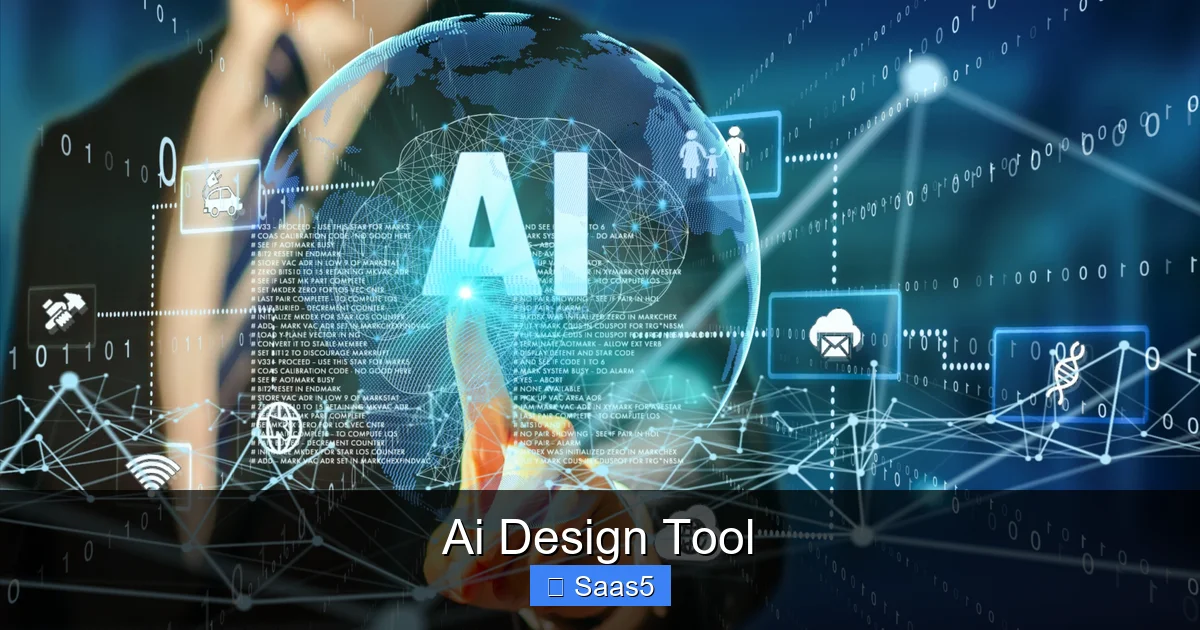
AI design tools are reshaping the way we create visuals, offering speed, precision, and inspiration at the click of a button. Whether you’re a freelancer, a design student, or part of a large agency, these smart platforms can automate routine tasks, suggest fresh ideas, and integrate seamlessly with your existing workflow. Read on to learn the core benefits, top features, and practical tips for getting the most out of an AI‑powered design suite.
Key Takeaways
- Speed and efficiency: AI design tools cut project time by automating repetitive tasks.
- Creative boost: Built‑in generators spark fresh concepts you might never have considered.
- Cost‑effective scaling: Small teams can produce enterprise‑level output without hiring extra staff.
- Seamless integration: Most tools plug into popular design software, cloud storage, and collaboration platforms.
- Learning curve is low: Intuitive interfaces let beginners start creating within minutes.
- Data‑driven decisions: Real‑time analytics help you refine designs based on audience response.
- Future‑proofing: Ongoing AI updates keep the tool relevant as design trends evolve.
📑 Table of Contents
- Introduction: Why AI Design Tools Matter Now
- How AI Design Tools Work: The Technology Behind the Magic
- Top Benefits for Designers and Teams
- Choosing the Right AI Design Tool for Your Needs
- Practical Tips to Maximize Your AI Design Tool
- Real‑World Example: Redesigning a Campaign in One Day
- Future Trends: What’s Next for AI Design Tools?
- Conclusion: Embrace the AI Design Revolution
Introduction: Why AI Design Tools Matter Now
Imagine finishing a branding mock‑up in half the time it normally takes, or getting instant layout suggestions that feel tailor‑made for your client. That’s the promise of an AI design tool. Over the past few years, artificial intelligence has moved from experimental labs into everyday creative suites. The result? Software that can understand color theory, suggest typography, and even generate whole illustrations from a simple text prompt.
For freelancers juggling multiple projects, agencies seeking to scale output, and students learning the ropes, AI design tools act like a digital co‑pilot. They handle the grunt work—resizing assets, cleaning up images, creating variations—so you can focus on strategy and storytelling. In this article we’ll break down the core technology, explore the biggest benefits, compare leading platforms, and give you a step‑by‑step guide to integrate an AI design tool into your workflow.
How AI Design Tools Work: The Technology Behind the Magic
Machine Learning Meets Visual Creativity
At the heart of every AI design tool is a machine‑learning model trained on millions of images, layouts, and design assets. These models learn patterns such as how designers pair colors, balance whitespace, and apply hierarchy. When you input a brief—like “modern tech logo in teal”—the AI references its learned patterns and generates options that match the description.

Visual guide about Ai Design Tool
Image source: v3wall.com
Key Components
- Generative models (e.g., GANs, diffusion): Create new visuals from scratch or transform existing ones.
- Style transfer: Apply the look of one image (a watercolor painting) to another (a product photo).
- Natural language processing (NLP): Understand textual prompts and turn them into design directives.
- Computer vision: Detect objects, backgrounds, and composition elements for smart editing.
Real‑Time Feedback Loops
Many AI design tools incorporate real‑time analytics. As you tweak a design, the system measures factors like contrast compliance, brand consistency, and predicted engagement. This data‑driven feedback helps you make informed decisions without endless A/B testing.
Top Benefits for Designers and Teams
1. Faster Turnaround Times
Automation of routine tasks—such as resizing assets for social media, generating color palettes, or creating vector versions of raster images—can shave hours off a project. A case study from a mid‑size agency showed a 40% reduction in delivery time after adopting an AI design tool.

Visual guide about Ai Design Tool
Image source: bluewhaleapps.com
2. Enhanced Creativity
Sometimes the hardest part of design is starting. AI can suggest dozens of layout variations or logo concepts in seconds, giving you a richer pool of ideas to iterate from. This “creative spark” is especially valuable for students who may feel stuck; see how Kittl AI design tool for students is helping classrooms generate fresh concepts.
3. Consistency Across Channels
Brand guidelines often require exact color codes, typography, and spacing. AI design tools can enforce these rules automatically, ensuring every piece—from a website banner to a printed flyer—matches the brand’s visual language.
4. Cost Savings
Instead of hiring a separate specialist for each task (e.g., a photo retoucher, a layout artist), a single AI-powered platform can handle many functions. This reduces labor costs and allows small teams to punch above their weight.
5. Data‑Driven Design Decisions
Integrated analytics show which design variants perform best with target audiences. By linking these insights to marketing platforms, you can continuously refine visuals for higher conversion rates.
Choosing the Right AI Design Tool for Your Needs
Key Evaluation Criteria
- Core functionality: Does it focus on graphics, UI/UX, video, or all of the above?
- Integration ecosystem: Compatibility with Adobe Creative Cloud, Figma, Sketch, or cloud storage services.
- Pricing model: Subscription vs. pay‑per‑use, and whether it offers a free tier for testing.
- Data privacy: How does the tool store and use your uploaded assets?
- Learning resources: Tutorials, community forums, and customer support.
Popular Options in 2024
Below is a quick snapshot of three leading AI design tools, each excelling in different areas.

Visual guide about Ai Design Tool
Image source: st.adda247.com
- Designify: Best for rapid image generation and background removal.
- Uizard: Ideal for turning sketches into interactive UI prototypes.
- Canva’s Magic Write & Magic Design: Great for marketers needing quick social graphics.
When deciding, consider your primary workflow. If you spend most of your day in Figma, look for an AI plugin that lives inside the same interface. If you handle a lot of photo editing, a tool with strong computer‑vision capabilities will be more valuable.
Practical Tips to Maximize Your AI Design Tool
Start with Clear Prompts
AI responds to the specificity of your input. Instead of typing “logo”, try “minimalist logo for a fintech startup using teal and dark gray, with a geometric symbol.” The more detail you give, the closer the output will be to your vision.
Iterate, Don’t Expect Perfection on the First Try
Think of the AI as a brainstorming partner. Generate several options, pick the strongest elements, and then refine manually. This hybrid approach yields the most polished results.
Leverage Style Libraries
Many platforms let you save favorite palettes, fonts, and layout grids. Build a personal style library and apply it across projects for instant brand consistency.
Integrate with Collaboration Tools
Connect the AI design tool to Slack, Microsoft Teams, or Asana to share drafts instantly and collect feedback. Real‑time collaboration reduces the back‑and‑forth email loop.
Monitor Performance Metrics
Use the built‑in analytics to track which designs generate higher click‑through rates or longer dwell times. Align these insights with broader business goals—read more about the impact of AI on SaaS to see how data can drive growth.
Real‑World Example: Redesigning a Campaign in One Day
Background
A mid‑size e‑commerce brand needed a fresh email campaign, social posts, and banner ads for a weekend flash sale. Traditionally, the creative team would spend three days drafting concepts, revising copy, and resizing assets.
Process Using an AI Design Tool
- Brief input: “Bold, high‑energy summer sale, 30% off, colors: orange, navy, white, include product images.”
- AI generation: The tool produced 12 layout variations for email, three for Instagram Stories, and five banner sizes.
- Selection & tweak: The designer chose two email concepts, adjusted copy, and let the AI auto‑resize for mobile.
- Export & schedule: Assets were exported directly to the email platform and social scheduler.
Results
The entire campaign launched in under 8 hours, a 70% time saving. Open rates increased by 12% compared to the previous manual campaign, and the brand reported higher engagement on social posts.
Future Trends: What’s Next for AI Design Tools?
1. Real‑Time Collaboration with Generative AI
Upcoming platforms will allow multiple designers to co‑create with AI suggestions appearing live as the team sketches or writes copy.
2. Deeper Integration with AR/VR
As immersive experiences grow, AI will help generate 3D assets, textures, and spatial layouts automatically.
3. Personalization at Scale
AI will soon enable hyper‑personalized visuals—dynamic graphics that change colors or messaging based on individual user data.
4. Ethical Design Frameworks
Future tools will embed bias detection and copyright checks, ensuring designers stay compliant and inclusive.
Conclusion: Embrace the AI Design Revolution
AI design tools are no longer a novelty; they’re a practical asset that can accelerate workflows, boost creativity, and deliver measurable results. By understanding the technology, choosing the right platform, and applying proven best practices, you can turn AI from a curiosity into a competitive advantage. Whether you’re a student exploring new mediums, a freelancer looking to deliver faster, or an agency scaling production, the right AI design tool will become an indispensable partner in your creative journey.
Frequently Asked Questions
What is an AI design tool?
An AI design tool uses machine‑learning algorithms to automate or assist visual design tasks, such as generating layouts, suggesting color palettes, or creating illustrations from text prompts.
Do I need design experience to use an AI design tool?
No. Most AI tools are built for a low learning curve, offering drag‑and‑drop interfaces and guided prompts that let beginners create professional‑looking assets quickly.
Can AI design tools replace human designers?
AI enhances a designer’s workflow but doesn’t replace the strategic thinking, storytelling, and nuanced decision‑making that humans provide. It’s best viewed as a collaborative partner.
How secure is my data when I upload assets to an AI platform?
Reputable tools encrypt data in transit and at rest, and many offer strict privacy policies that prevent your assets from being used to train other models without permission.
Are there free AI design tools available?
Yes. Several platforms offer free tiers with limited generations per month, allowing you to test features before committing to a paid subscription.
What hardware do I need to run an AI design tool?
Most cloud‑based AI design tools run in the browser, so a standard laptop with a reliable internet connection is sufficient. For on‑premise solutions, a modern GPU can speed up local processing.