Top 10 Best In Ear Monitors For Vocalists: Expert Picks
Finding the right in-ear monitors (IEMs) as a vocalist is non-negotiable. You need crystal-clear feedback of your own voice and the mix, reliable isolation from stage noise, and a comfortable fit that lasts through long rehearsals and gigs. A poor IEM can lead to vocal strain, missed cues, and a subpar performance. That’s why we’ve tested and rounded up the best in-ear monitors for vocalists, covering everything from budget-friendly wired options to full wireless systems, to help you hear yourself perfectly and own the stage.
Quick Product Comparison
Our Top 10 Best In Ear Monitors For Vocalists Reviews – Expert Tested & Recommended
1. Xvive U4 Wireless IEM System
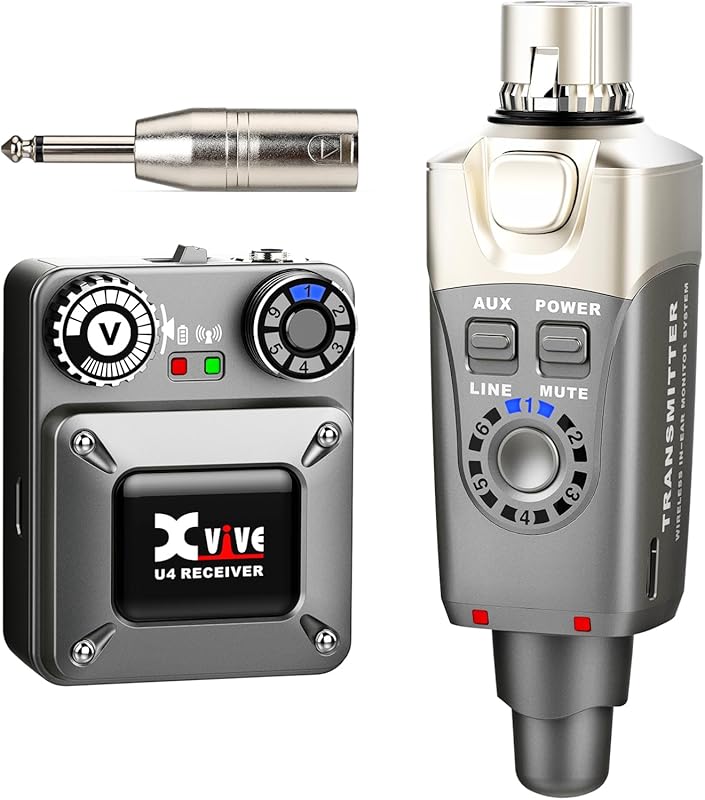
The Xvive U4 is our top pick for vocalists wanting a reliable, no-fuss wireless system. It uses a 2.4GHz band for clear, uncompressed audio with less than 5ms latency, so you won’t hear any distracting delay. The system supports up to 6 channels, perfect for a whole band, and offers a solid 100+ foot range. With a 5-hour battery life on the beltpack and simple setup, it’s a fantastic workhorse for rehearsals and live gigs.
Key Features That Stand Out
- ✓ Ultra-low latency & clear audio: Less than 5ms delay and 107dB signal-to-noise ratio for a clean, wired-like feel.
- ✓ Multi-channel support: Operate up to 6 systems simultaneously without interference.
- ✓ Simple, rugged design: Easy-to-use transmitter and beltpack receiver built for the road.
- ✓ Good battery life: Rechargeable lithium battery provides about 5 hours of continuous use.
Why We Recommend It
For vocalists, the U4 delivers exactly what matters: a stable connection and clear, latency-free sound. The setup is genuinely plug-and-play, which is a huge relief when you’re focusing on your performance. It’s the most complete and dependable wireless package in this price range.
Best For
Singers and small-to-medium bands who need a reliable, all-in-one wireless monitoring solution for both practice and stage without a complicated setup or premium price tag.
Pros and Cons
Pros:
- Exceptionally easy to set up and use.
- Very low latency and clean sound quality.
- Supports multiple pairs for full band use.
- Durable build quality for touring.
Cons:
- Battery life (5 hours) may require swapping or charging during very long gig days.
- No built-in limiter to protect against sudden volume spikes from a bad mix.
Customer Reviews
Customer Review: “I am the singer in a classic rock band that can be very loud! I was looking for an easy, reliable, and great quality IEM. This unit (xvive45) works perfectly with zero lag, zero WiFi interference, and very clear sound to your in ear monitors. Super easy set up. Just plug into your mixer… and you are ready to go! I walked about 125 to 150 feet away from the mixer and it still was connected! The quality is there in this product! Would recommend to anyone wanting a great in ear monitor device for singers.”
Customer Review: “I’m a saxophonist and play live events regularly… The XVIVE U45 exceeded my expectations — the connection is stable, the range is solid… and the audio quality is clean with no noticeable latency. I also use other XVIVE systems (U35 and U7), and as long as you assign different channels to each, everything works flawlessly. I highly recommend it for musicians who want clear in-ear monitoring and full mobility without the complexity or high price.”
2. UE 150 Universal IEMs
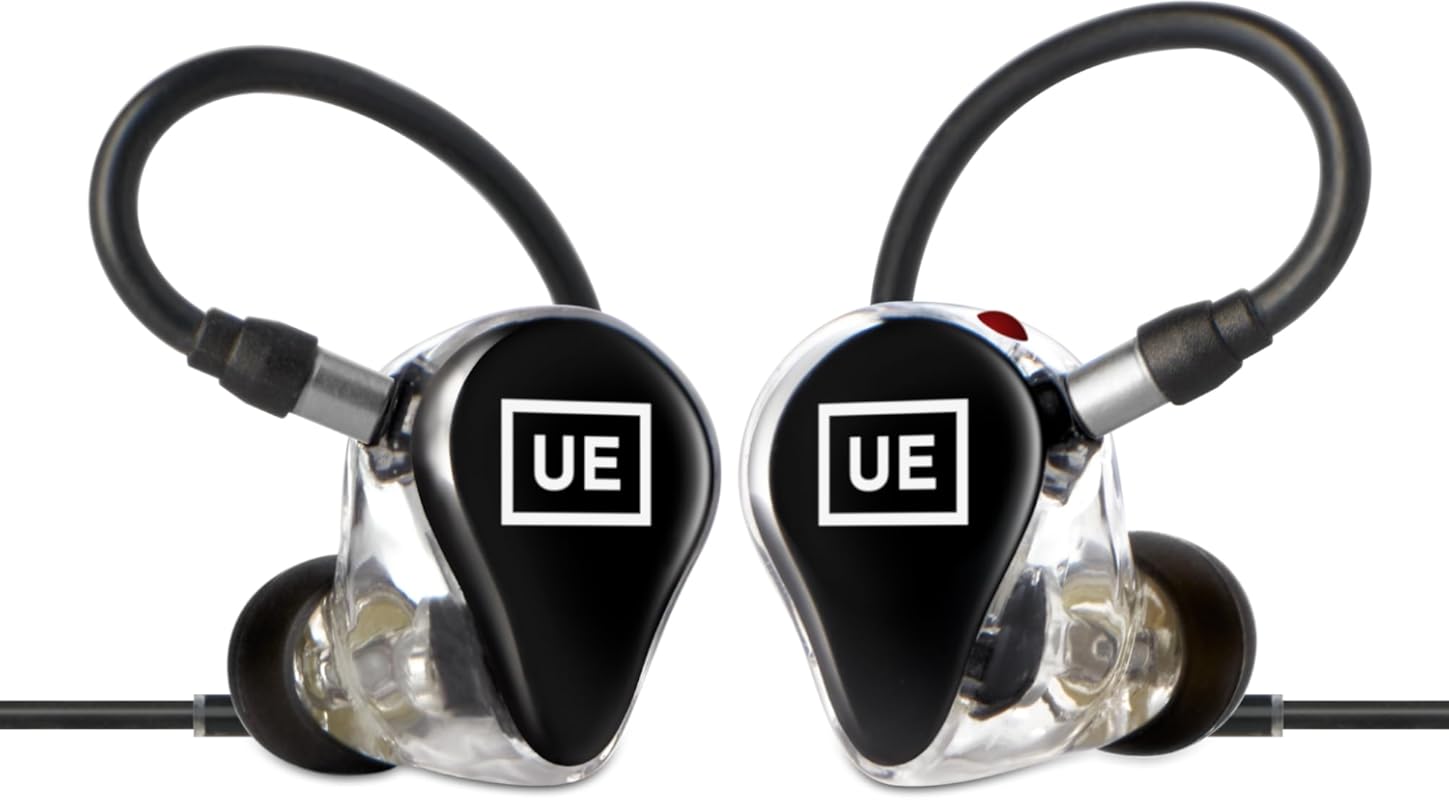
The UE 150 is a benchmark for neutral, accurate sound in a single-driver IEM. For vocalists who want to hear their pure tone and the mix exactly as it is, without any artificial bass boost or hype, this is a brilliant choice. Its “perform fit” design ensures a secure, comfortable seal that blocks stage noise effectively. The tactile red dot on the right earpiece is a simple but genius touch for quick identification on a dark stage.
Key Features That Stand Out
- ✓ Neutral, reference-grade sound: Single dynamic driver delivers honest, uncolored audio crucial for vocal monitoring.
- ✓ Secure and comfortable fit: Ergonomic design with multiple tip sizes for a long-lasting seal.
- ✓ Stage-friendly details: Red dot tactile marker for easy right/left identification in the dark.
- ✓ Excellent noise isolation: Effectively reduces ambient stage sound so you can hear your mix at safer volumes.
Why We Recommend It
We love the UE 150 for its honesty. As a vocalist, you need to trust what you’re hearing. These IEMs provide a flat, accurate response that lets you judge your pitch, tone, and blend with the band perfectly. They are the definition of “what you hear is what you get.”
Best For
Vocalists and audio engineers who prioritize sonic accuracy over enhanced bass, ideal for studio recording, vocal coaching, and stage monitoring where a true representation of the mix is critical.
Pros and Cons
Pros:
- Incredibly accurate and neutral sound signature.
- Superb comfort and secure fit for hours of wear.
- Fantastic passive noise isolation.
- Simple, rugged, and professional design.
Cons:
- Lacks the bass “thump” some singers prefer for feel.
- Single driver can’t match the detail of multi-driver setups on complex mixes.
Customer Reviews
Customer Review: “The bass really is tight. The fit with the foam ear tips is excellent and comfortable. These IEMs are worth the price and a bargain… They are excellent for monitoring the mix as you record bass.”
Customer Review: “These are fantastic. I’m hard of hearing and have used other IEMs, and these sound better and fit better. The sound quality is markedly better than my cheaper IEMs. I sometimes forget that I have them in. My only wish is that they weren’t so expensive.”
3. Xvive U45 Wireless IEM System
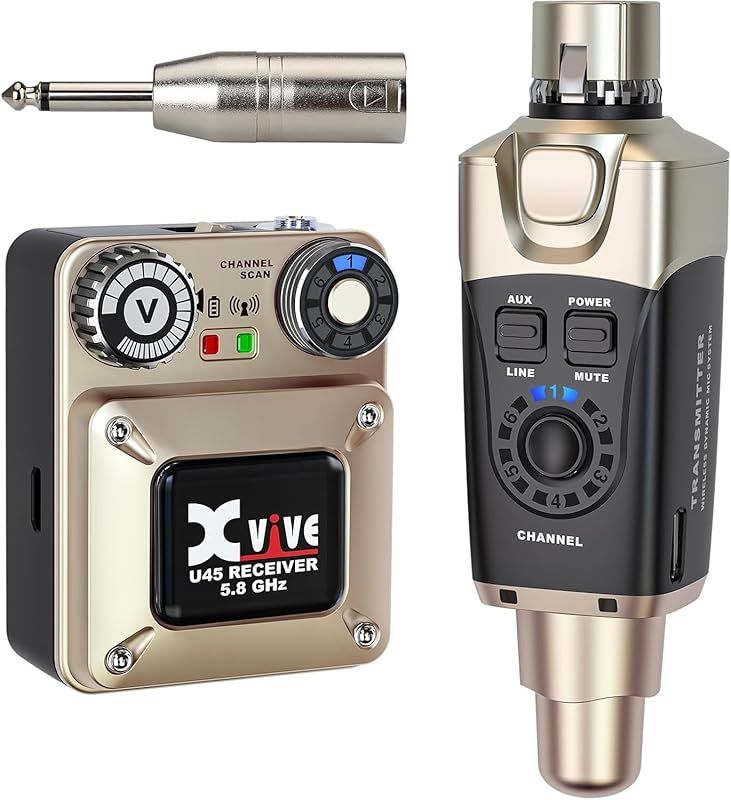
The Xvive U45 is the best budget wireless IEM system that doesn’t feel cheap. It upgrades to a 5.8GHz frequency band, which often means less congestion and more stability than 2.4GHz in some venues. It features a handy channel scan mode to find a clean frequency and delivers 24-bit/48kHz audio with a 110dB signal-to-noise ratio. For vocalists needing wireless freedom on a tight budget, this system punches way above its weight.
Key Features That Stand Out
- ✓ Stable 5.8GHz connection: Less prone to Wi-Fi interference than 2.4GHz systems.
- ✓ Auto channel scan: One-button scanning finds the best available frequency.
- ✓ High-resolution audio: 24-bit/48kHz depth and 110dB SNR for clear, detailed sound.
- ✓ Compact and rechargeable: Built-in battery in the bodypack, no 9V batteries needed.
Why We Recommend It
The U45 makes professional wireless monitoring truly accessible. The 5.8GHz band is a smart upgrade for reliability, and the sound quality is excellent for the price. It has all the essential features—like auto-scan and a solid build—without any confusing extras. For a vocalist on a budget, it’s the smartest wireless investment you can make.
Best For
Budget-conscious vocalists, solo performers, and gigging musicians who need a dependable wireless IEM system without spending hundreds more.
Pros and Cons
Pros:
- Incredible value for a full wireless system.
- Stable 5.8GHz connection with good range.
- Simple auto-scan for finding clean channels.
- Rechargeable battery saves on 9V costs.
Cons:
- Battery life (6-8 hours) is good but not class-leading.
- Build quality is plastic, not as rugged as metal-bodypack systems.
Customer Reviews
Customer Review: “I am the singer in a classic rock band… This unit (xvive45) works perfectly with zero lag, zero WiFi interference, and very clear sound… Super easy set up… I walked about 125 to 150 feet away from the mixer and it still was connected! The quality is there in this product!”
Customer Review: “I’m a saxophonist and play live events regularly… The XVIVE U45 exceeded my expectations — the connection is stable, the range is solid even in large venues, and the audio quality is clean with no noticeable latency… Pairing is quick and intuitive, and I haven’t experienced any dropouts… I highly recommend it for musicians who want clear in-ear monitoring and full mobility without the complexity or high price.”
4. UE 350 Triple Driver IEMs
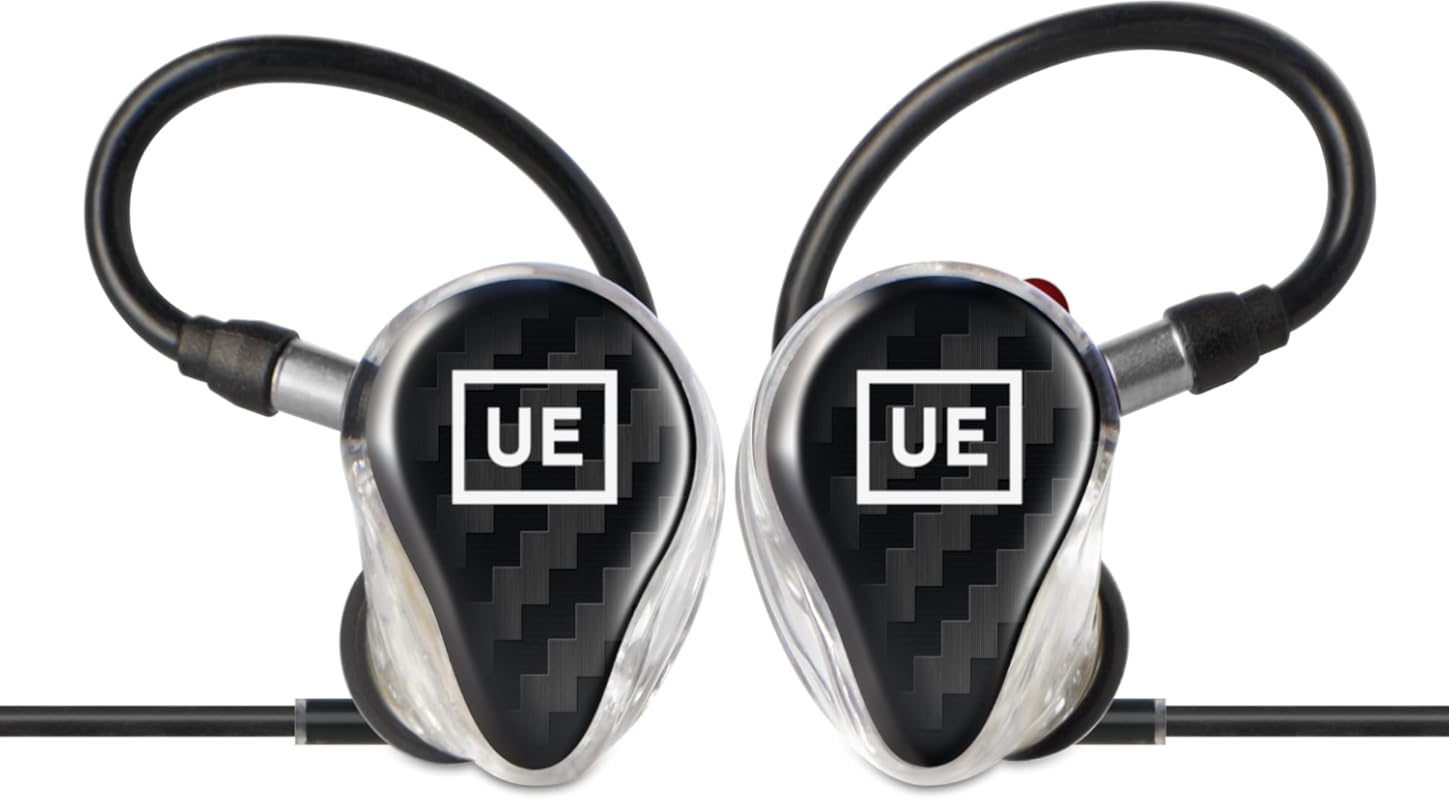
The UE 350 steps up from the 150 with a triple-driver armature setup, giving you more headroom and dynamic range. This means better detail in complex mixes and a touch more low-end punch, which many vocalists appreciate for feel. It uses a two-way crossover to send the right frequencies to the dedicated drivers. If you found the UE 150 a bit too flat, the 350 offers a more engaging, full-bodied sound while still staying professional and clear.
Key Features That Stand Out
- ✓ Triple balanced armature drivers: Two low-mid drivers and one high-frequency driver for extended range.
- ✓ Two-way crossover network: Precisely directs frequencies for cleaner, more efficient sound.
- ✓ Enhanced dynamic headroom: Handles louder, more complex mixes without distortion.
- ✓ Professional secure fit: Same comfortable, isolating design as the UE 150.
Why We Recommend It
For vocalists who want a significant upgrade in clarity and impact over a single-driver IEM without going to a hybrid or multi-driver flagship, the UE 350 is a perfect middle ground. It delivers that professional “studio monitor” sound in an in-ear package, with enough low-end to make your voice feel present and full.
Best For
Vocalists performing with full bands or in genres with dense mixes (rock, pop, gospel) who need more detail and headroom than a single driver can provide.
Pros and Cons
Pros:
- Significantly more detail and clarity than single-driver IEMs.
- Better low-end extension and impact.
- Excellent isolation and comfortable fit.
- Professional, neutral-leaning sound signature.
Cons:
- Still not a “bass cannon” – prioritizes accuracy over boosted low end.
- Price jump from the UE 150 is notable.
Customer Reviews
Customer Review: “The bass really is tight. The fit with the foam ear tips is excellent and comfortable. These IEMs are worth the price and a bargain until 3/31 at 20% off. They are excellent for monitoring the mix as you record bass.”
Customer Review: “These are fantastic. I’m hard of hearing and have used other IEMs, and these sound better and fit better. The sound quality is markedly better than my cheaper IEMs. I sometimes forget that I have them in. My only wish is that they weren’t so expensive.”
5. BASN BmasterX Hybrid 6-Driver IEMs
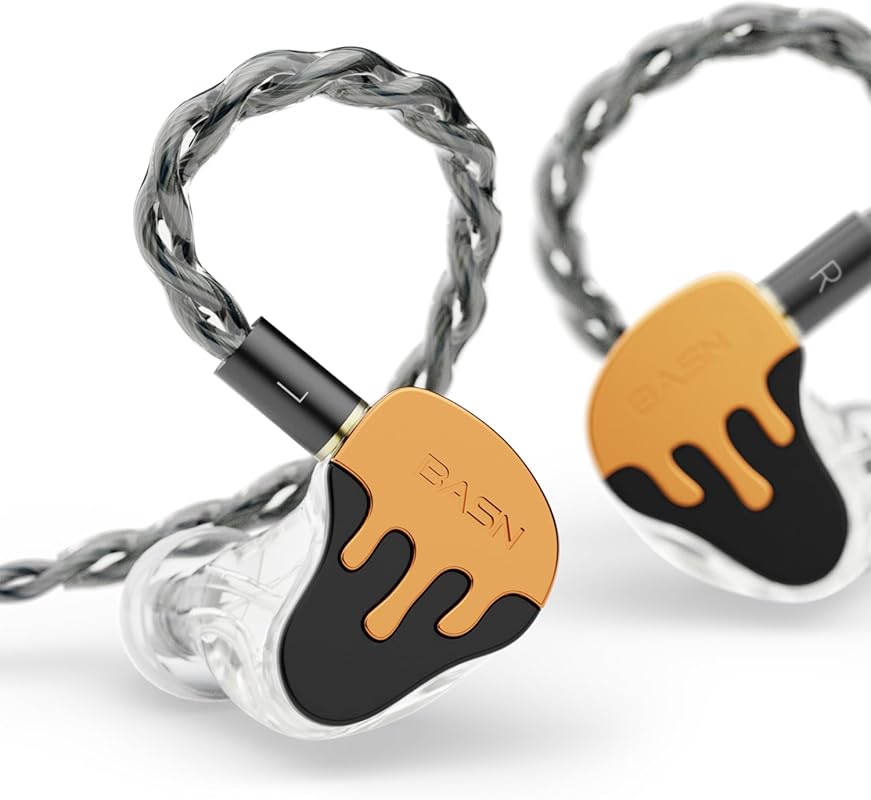
The BASN BmasterX is a powerhouse hybrid design using one dynamic driver for warm bass and five balanced armatures for crystal-clear mids and highs, including two piezoelectric drivers for extreme high-frequency extension. This 6-driver setup is aimed at the most demanding vocalists and musicians who need to hear every single nuance, from the deepest chest voice to the finest breath textures. The build is robust, with a resin/aluminum shell and a detachable cable.
Key Features That Stand Out
- ✓ Hybrid 6-driver configuration: 1DD + 3BA + 2Piezo for a full, incredibly detailed spectrum.
- ✓ Exceptional high-frequency clarity: Piezoelectric drivers capture airiness and overtones other IEMs miss.
- ✓ Professional stage-ready build: Ergonomic metal/resin shell, multiple tip sets, and a detachable cable.
- ✓ Strong noise isolation: Designed specifically for musicians on loud stages.
Why We Recommend It
If your performance depends on hearing the finest details—like a subtle harmony, a specific reverb tail, or the exact texture of your vocal fry—the BmasterX delivers. It’s for the vocalist who is also an audio geek, who wants to analyze their own performance and the mix with surgical precision. The hybrid design gives you both impact and pinpoint accuracy.
Best For
Professional vocalists, back-up singers, and musicians in highly complex or acoustic genres (jazz, classical, intricate prog rock) who need ultimate detail and reference-level monitoring.
Pros and Cons
Pros:
- Unmatched detail and clarity across all frequencies.
- Excellent high-frequency extension thanks to piezo drivers.
- Good bass impact from the dedicated dynamic driver.
- Premium, durable construction with detachable cable.
Cons:
- Very high price point.
- Sound signature is so neutral it can feel “bright” or revealing of poor source material.
- Requires a good seal to hit its full potential.
Customer Reviews
Customer Review: “Definitely worth the upgrade! I was using their triple driver iems which worked great but once they finally gave out and I switched over to these it was like a night and day difference in quality, clarity and tone! The design looks even better in person. Also for it having 6 drivers it’s not too bulky or heavy.”
Customer Review: “Impressive but it’s seriously lacking in the bass Department. Fits in comfortably and the sound quality is nice and crisp but the bass is not too impressive.”
6. BASN Triple Driver IEM Earphones
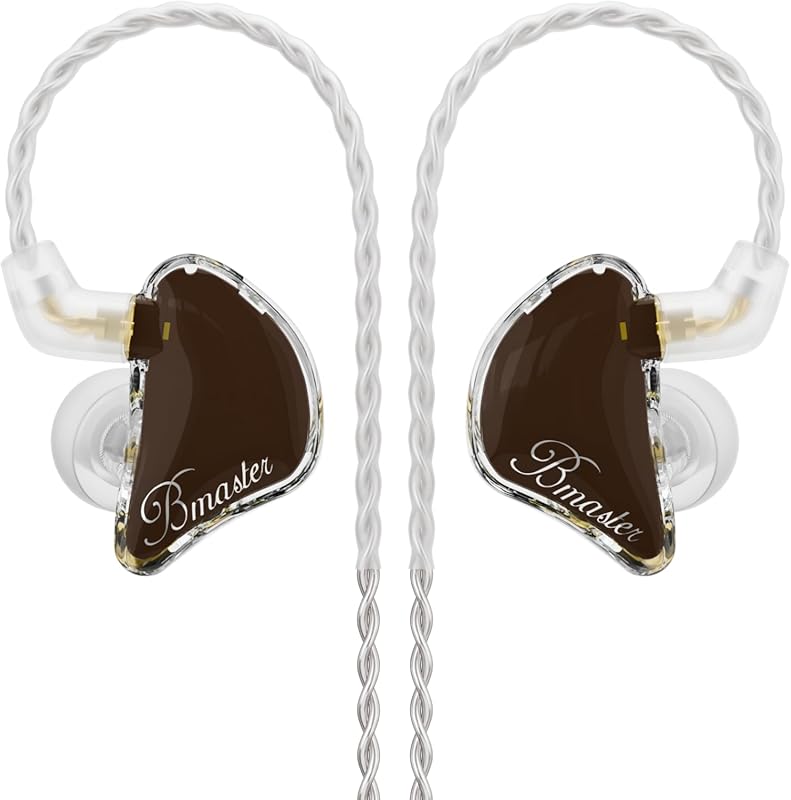
The BASN Triple Driver takes a different approach, using two dynamic drivers for powerful, unified bass and one balanced armature for crisp highs. This dual-DD setup is designed to give vocalists and drummers a more visceral, physical feel to the low end, which many singers prefer for pitch reference and stage energy. It’s a HiFi stereo IEM focused on delivering a full, engaging sound with strong noise isolation, all in a lightweight, comfortable package.
Key Features That Stand Out
- ✓ Dual dynamic driver bass system: Creates a powerful, cohesive low-end response for feel and impact.
- ✓ Single balanced armature tweeter: Provides clear, non-fatiguing highs for vocal detail.
- ✓ Lightweight & secure fit: Ergonomic design with earhooks, weighs only 2.3g per side.
- ✓ Excellent passive noise isolation: Multiple foam and silicone tips block out loud stage volumes.
Why We Recommend It
For the vocalist who wants to *feel* their monitor mix as much as hear it, the BASN Triple Driver is an excellent choice. The dual-DD bass is punchy and satisfying, giving you a solid低频 foundation for your voice. It’s a more musical, less analytical sound than pure armature IEMs, which can be more enjoyable for long performances.
Best For
Vocalists in rock, pop, or worship bands who prioritize a full, bass-inclusive sound for monitoring, as well as drummers and bass players who need strong low-end representation.
Pros and Cons
Pros:
- Powerful, engaging bass response.
- Very comfortable and secure for active stage movement.
- Great noise isolation.
- Excellent value for a triple-driver hybrid design.
Cons:
- Midrange clarity can be slightly veiled compared to all-armature designs.
- Soundstage is intimate, not exceptionally wide.
Customer Reviews
Customer Review: “I frequently serve on my churches worship team and these work great for me as a vocalist and acoustic guitar player! I have tried many different Amazon pairs because I cannot get myself to buy custom molds, and these really held their own! Feel good in my ears with a somewhat molded feel. The sound quality is great and I’d say they are made very well. Overall a great value!”
Customer Review: “i’ve been using this for almost 1 year for live streaming, love the color and the quality. I haven’t had any problem with it so far.”
7. LEKATO MS-02 Wireless IEM System
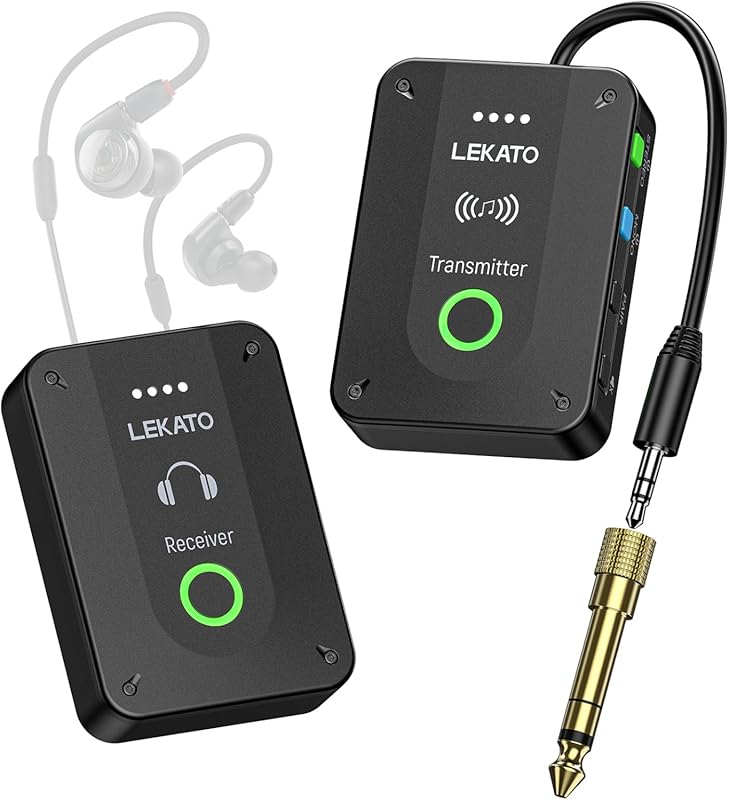
The LEKATO MS-02 is a strong competitor in the budget wireless space, touting an upgraded latency of under 4.5ms in mono mode. It uses 2.4GHz and features a “one-to-many” function, allowing one transmitter to send to up to four receivers—great for bands. The bodypack has a built-in rechargeable battery rated for 6-8 hours and includes volume control and a battery LED. It’s a feature-packed system for singers wanting wireless on a very tight budget.
Key Features That Stand Out
- ✓ Ultra-low latency (<4.5ms mono): Very respectable performance for the price.
- ✓ One-to-many support: One TX can feed multiple RX units, simplifying band setups.
- ✓ Good battery life: 6-8 hours from a built-in rechargeable pack.
- ✓ Compact and simple: Easy to set up and use, with on-body volume control.
Why We Recommend It
The MS-02 delivers the core wireless functionality most vocalists need—low latency, decent range, and multi-receiver support—at an entry-level price. The one-to-many feature is a huge practical advantage for group rehearsals. While the build is plastic, it gets the job done reliably for gigs and practice.
Best For
Solo gigging vocalists, church worship teams, and rehearsal spaces needing multiple wireless monitor feeds without a high-cost investment.
Pros and Cons
Pros:
- Extremely affordable for a full wireless system.
- Low latency is good enough for most live singing.
- One transmitter can support multiple receivers.
- Decent 6-8 hour battery life.
Cons:
- Build quality (plastic bodypack) feels less durable than Xvive or higher-end systems.
- 2.4GHz band can be more prone to Wi-Fi interference in crowded environments.
- Sound quality is good but not as refined as more expensive systems.
Customer Reviews
Customer Review: “Connection is easy and the sound is top notch! Considering how expensive in ear monitors can be these are an inexpensive and worthy alternative… I didn’t notice any lag at all which was great. They’re a great size, easy to clip onto your clothes. The sound was clear and full. Like I said, my only issue was the amount of time a charge lasted but I was trying to see how long it took before I needed to recharge, which turned out to be about 4 hours. Overall, worth every penny.”
Customer Review: “I play out weekly And got these MS-02 wireless monitor system a couple weeks ago.I’ve used them six different times and I am very pleased with my purchase.They charge quickly, and have lasted easily through two sets… The tone is great!… Great price, great performance, awesome Battery life, mono or stereo.I highly recommend these for budget Wireless in ears.”
8. Pyle Pro Metal Wireless IEM System
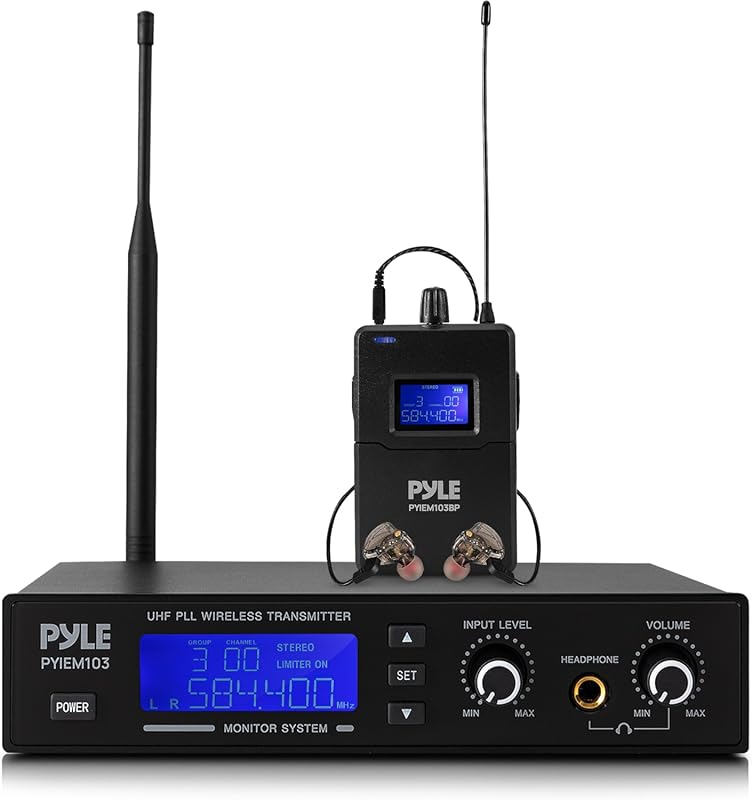
The Pyle Pro system stands out for its professional, rugged design featuring a metal bodypack receiver and a metal transmitter base station. It operates on the UHF band with 220 selectable frequencies across 10 groups, offering excellent interference rejection. With a claimed 164ft (50m) range and stereo inputs, it’s built for serious stage use. The passive noise cancellation from the included earbuds is a plus. It’s a workhorse system from a brand known for pro audio gear.
Key Features That Stand Out
- ✓ UHF frequency band with 220 channels: Highly stable, less congested than 2.4GHz, with easy frequency scanning.
- ✓ Metal construction: Durable metal bodypack and transmitter feel built to last.
- ✓ Long range: Up to 164ft (50m) line-of-sight for freedom on large stages.
- ✓ Stereo inputs and outputs: Maintains a stereo field for a more immersive monitoring experience.
Why We Recommend It
For vocalists who want the reliability of a traditional UHF system and the peace of mind that comes with a metal chassis, the Pyle Pro is a compelling choice. The UHF band is a proven technology for live sound, and the 220-channel frequency agility means you can almost always find a clean channel, even in RF-congested cities.
Best For
Working musicians, church audio teams, and venues that need a robust, traditional UHF wireless IEM system with a professional feel at a mid-range price.
Pros and Cons
Pros:
- Very stable UHF connection with many frequency options.
- Durable metal bodypack feels road-worthy.
- Good range for large stages.
- Stereo capability for a wider soundstage.
Cons:
- Setup can be slightly more technical than plug-and-play 2.4GHz systems.
- Included earbuds are functional but not high-end; you’ll likely want to upgrade.
- Battery life on the bodypack (using 2x AA) depends on your battery choice.
Customer Reviews
Customer Review: “Compré este sistema de monitor inalámbrico intrauditivo Pyle para usarlo en presentaciones en vivo y prácticas musicales, y realmente superó mis expectativas. La señal es estable, el sonido es claro y sin interferencias, y me permite escuchar con precisión mi voz y la música.Es fácil de configurar y cómodo de usar durante sesiones largas. La construcción se siente resistente y profesional.”
Customer Review: “Using this in-ear monitor system has been a fantastic experience… The audio quality is surprisingly clean and detailed… I found that the passive noise cancellation really helps isolate vocals… The build quality feels professional with a metal bodypack receiver that seems durable enough to handle stage wear… With so many selectable frequencies finding a clean channel is straightforward… The included earbuds are comfortable for long sessions and the overall system represents excellent value…”
9. YINYOO KBEAR Storm IEMs
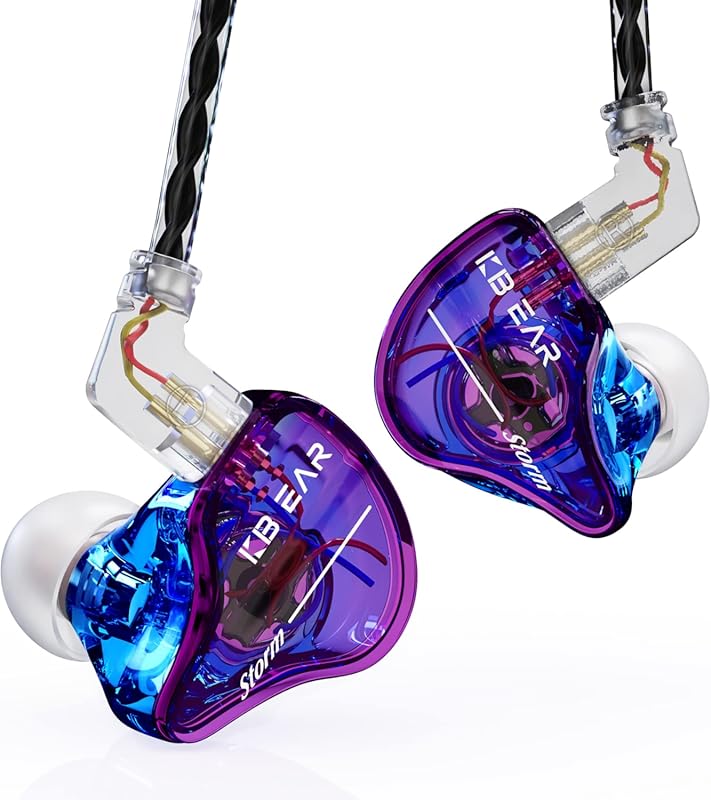
The YINYOO KBEAR Storm is a popular budget audiophile IEM that many vocalists adopt for stage use. It features a single 10mm dynamic driver with a strong magnetic field and a PEEK+PU composite diaphragm. This setup aims for a balanced yet engaging sound with good bass texture. The ergonomic, ultra-lightweight resin cavity is designed for comfort during long wear, and it comes with a detachable, high-quality cable. It’s a fantastic value-for-money wired option.
Key Features That Stand Out
- ✓ Single 10mm dynamic driver with strong magnet: Delivers a coherent, natural sound with good bass texture.
- ✓ Ergonomic, ultra-lightweight design: Comfortable for hours, with a secure fit from the earhook style.
- ✓ Hi-Res detachable cable: Upgradeable cable with a standard 3.5mm or MMCX connector.
- ✓ Skin-friendly resin housing: Smooth, comfortable finish that feels premium for the price.
Why We Recommend It
The Storm proves you don’t need to spend a fortune to get a great-sounding, comfortable wired IEM. Its sound signature is musical and balanced, making it easy to listen to for entire sets. For vocalists who want a reliable, high-performance wired monitor without breaking the bank, this is a top contender. The build quality and comfort are surprisingly good for the price point.
Best For
Budget-conscious vocalists, singer-songwriters, and musicians who want a high-quality wired IEM for rehearsals, studio work, and smaller gigs.
Pros and Cons
Pros:
- Excellent sound quality for the price.
- Very comfortable and lightweight fit.
- Detachable, high-quality cable.
- Simple, effective design with good isolation.
Cons:
- Single driver can’t separate instruments as precisely as multi-driver IEMs.
- Soundstage is average, not huge.
- No carrying case included on some versions.
Customer Reviews
Customer Review: “For the cost the clarity, quality, and comfort are great. they are easy to use and good durability. noise cancellation is good as well. very easy to assemble and use.”
Customer Review: “These in-ears are an amazing value. Clear sound, comfortable fit, and they hold up well for regular use. Perfect budget-friendly option that still delivers great audio quality. Highly recommend if you want something solid without spending a fortune.”
10. CCZ Yinyoo Melody IEMs
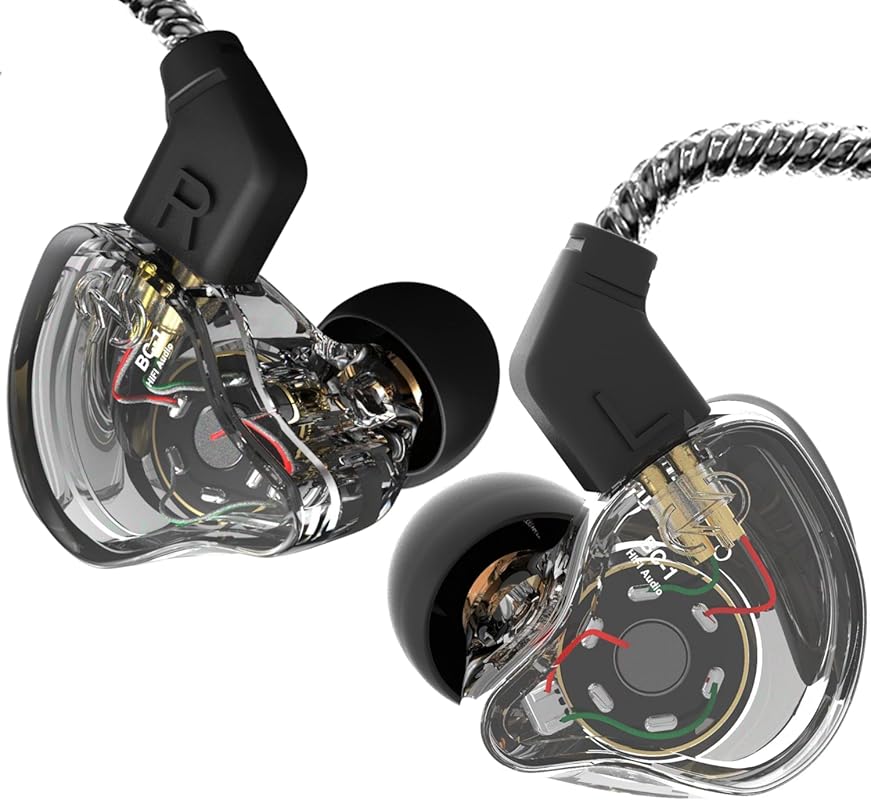
The CCZ Yinyoo Melody is a hybrid 1DD+1BA design that aims for a balanced, HIFI sound signature with a focus on bass quality. It combines a dynamic driver for warm, natural low end with a balanced armature for crisp, detailed highs. The design includes ear fins for a secure fit and a professional 4-core 4N OFC cable. It’s a great entry point into hybrid driver technology for vocalists wanting a bit more bass punch than a pure BA monitor provides.
Key Features That Stand Out
- ✓ Hybrid 1DD + 1BA configuration: Blends dynamic driver warmth with BA driver detail.
- ✓ HIFI bass response: The dynamic driver provides satisfying, textured low frequencies.
- ✓ Secure fit with ear fins: Includes earhooks to keep IEMs stable during movement.
- ✓ Upgradeable 4N OFC cable: High-quality, replaceable cable with a standard 3.5mm jack.
Why We Recommend It
The Melody is a fantastic “first hybrid” IEM for a vocalist moving up from a single-driver model. You get a noticeable upgrade in clarity from the BA driver, especially on vocals and cymbals, while the dynamic driver maintains a natural, non-fatiguing bass. It’s a very musical and forgiving sound that works well for monitoring.
Best For
Vocalists who want a warmer, more bass-inclusive sound than a pure balanced armature IEM offers, but still want better clarity than a basic single-driver model. Great for everyday use and entry-level stage monitoring.
Pros and Cons
Pros:
- Excellent value for a hybrid driver design.
- Warm, musical sound with good bass texture.
- Comfortable and secure fit with ear fins.
- Nice, replaceable OFC cable included.
Cons:
- Midrange can be slightly recessed compared to upper models.
- Soundstage is not particularly wide.
- Cable can tangle easily.
Customer Reviews
Customer Review: “I use these for my home studio and I have to say I love these things. The quality is spot on, the sound quality is amazing. They’re not clipping or they don’t cause spikes in tone, they don’t sound tinny. I like the fact that they come with additional ear foams… They connect very well, they’re nice and snug. They’re durable.”
Customer Review: “I’ve typically only used the freebies that come with Samsung phones… Wanting to treat myself to a new pair, I went with these because of the raving reviews for the price… The earbuds fit so well, like premium fitment on a budget, and the sound is incredible, full spectrum… Overall a great purchase.”
Complete Buying Guide for Best In Ear Monitors for Vocalists
Essential Factors We Consider
When choosing in-ear monitors, vocalists must prioritize sound signature, isolation, and fit. A neutral or slightly warm sound is often preferred for monitoring, as it accurately represents your voice and the mix. Look for IEMs with multiple ear tip sizes (especially foam tips) for a deep seal that blocks stage noise. For wireless systems, latency (under 10ms is ideal), frequency band stability (UHF vs. 2.4/5.8GHz), and battery life are critical. A secure, comfortable fit is non-negotiable for long performances—look for over-ear hooks or ergonomic shapes.
Budget Planning
You can find excellent wired IEMs for vocal monitoring between $50-$200. Budget wireless systems start around $150-$300, while professional UHF systems can exceed $500. Set a budget based on your frequency of use: touring professionals should invest in top-tier wireless and custom-molded IEMs, while weekly giggers can find fantastic value in the $100-$250 range for wired or the $200-$400 range for wireless.
Final Thoughts
The “best” in-ear monitor for a vocalist is the one that provides a reliable, clear, and comfortable listening experience night after night. For most, a solid wired IEM like the UE 150 or UE 350 is the perfect starting point. If you need freedom of movement, a modern digital wireless system like the Xvive U4 or U45 offers incredible performance for the price. Don’t underestimate the importance of a proper fit—spend time finding the right ear tips, as they make a bigger difference than any spec sheet.
Frequently Asked Questions
Q: Do I really need in-ear monitors as a vocalist?
A: Absolutely. Stage monitors (wedges) can cause feedback, are inconsistent across the stage, and blast sound into the audience, creating a loud, muddy environment. IEMs give you a consistent, clear, and isolated mix directly in your ears, protecting your hearing and improving your performance control.
Q: What’s the difference between balanced armature (BA) and dynamic driver (DD) IEMs?
A: Dynamic Drivers (like in the BASN Triple Driver) use a moving coil and diaphragm, excelling at bass and having a natural sound. Balanced Armature drivers (common in UE models) are tiny, precise, and excel at mids and highs but often lack deep bass. Hybrid IEMs (like the BASN BmasterX or CCZ Melody) combine both for the best of both worlds.
Q: How important is latency in wireless IEMs?
A: Extremely important. Latency is the delay between your voice going into the mic and you hearing it in your ear. Anything over 10ms can feel unnatural and make timing difficult. Modern digital systems (Xvive, LEKATO) achieve under 5ms, which is virtually imperceptible. Older analog systems or poor digital ones can have noticeable lag.
Q: Should I get custom-molded IEMs?
Q: Can I use the same IEMs for both stage monitoring and studio listening?
A: Yes, but with a caveat. IEMs with a neutral sound signature (like the UE 150) are perfect for both. However, some stage-focused IEMs are tuned for durability and isolation over ultimate soundstage. For pure studio critical listening, dedicated audiophile IEMs might be better, but a good stage IEM will serve you very well in both roles.
Finding the perfect in-ear monitor is one of the most impactful upgrades a vocalist can make. It directly translates to better pitch, more confidence, and healthier hearing. Whether you need the untethered freedom of a wireless system like the Xvive U4 or the reference accuracy of the UE 150, there’s an option here for you. Think about your specific needs—budget, wireless necessity, and preferred sound signature—and make your choice. Your voice and your ears will thank you.
Ready to hear yourself perfectly? Click the “Check Price on Amazon” buttons above to find the best deals on these top-rated in-ear monitors for vocalists!