Does Wattage Matter for Car Speakers

Yes, wattage matters for car speakers, but it’s only one piece of the puzzle. Understanding the difference between RMS (continuous) and peak power is critical for matching your car stereo head unit and/or amplifiers to your speakers properly. True power handling is about RMS, not inflated peak numbers. More importantly, speaker sensitivity and system design often have a bigger impact on loudness and sound quality than raw wattage alone.
Key Takeaways
- RMS is King: Always focus on RMS (Root Mean Square) wattage ratings for both your speakers and amplifier. This is the true, continuous power a speaker can handle and an amp can deliver safely.
- Peak Power is Marketing: Peak or “max” power numbers are often exaggerated and represent a very short, unsustainable burst. They are not useful for system matching.
- Matching is Mandatory: Your amplifier’s RMS output per channel should closely match your speaker’s RMS rating. Under-powering can cause distortion (clipping), while over-powering can physically damage speakers.
- Sensitivity is a Secret Weapon: A speaker’s sensitivity rating (dB) tells you how efficiently it converts power into sound. A high-sensitivity speaker will get louder with less wattage than a low-sensitivity one.
- Wattage ≠ Loudness Alone: Loudness is a combination of wattage, speaker sensitivity, and the vehicle’s acoustics. Doubling the wattage only gives you a 3dB increase, which is a barely noticeable change.
- Distortion is the Real Killer: Sending a distorted (clipped) signal from an underpowered amp turned up too high is far more likely to destroy a speaker’s tweeter than moderate over-powering with a clean signal.
- System Design Trumps Specs: Proper installation, component placement, crossover settings, and sound deadening often yield greater audible improvements than simply adding more watts.
📑 Table of Contents
- Does Wattage Matter for Car Speakers? The Short Answer
- Understanding Power: RMS vs. Peak (The Critical Difference)
- Matching Amplifiers to Speakers: The Goldilocks Principle
- The Unseen Hero: Speaker Sensitivity (dB)
- Head Unit Power vs. External Amplifiers: The Power Hierarchy
- Building a Smart System: Putting It All Together
- Conclusion: It’s About the System, Not Just the Number
Does Wattage Matter for Car Speakers? The Short Answer
You’re standing in the car audio aisle, staring at two sets of speakers. One boasts “300 Watts Peak!” while the other lists a more modest “50 Watts RMS.” Which one is better? Which one will be louder? The question “does wattage matter for car speakers?” is one of the most common—and most misunderstood—in all of car audio. The short, honest answer is: Yes, it matters immensely, but not for the reasons most people think, and not in the way the big numbers on the box want you to believe.
Think of wattage as the engine in your car. A bigger engine (more watts) can potentially go faster (play louder), but only if it’s connected to the right transmission (properly matched amp), good tires (quality speakers with good sensitivity), and you’re not trying to drive a tank (a massive, inefficient speaker in a huge vehicle). A tiny, highly tuned engine in a lightweight sports car can outperform a massive, unrefined V8 in a clumsy SUV. The same is true for car audio systems. Let’s pop the hood and see what really makes the difference.
Understanding Power: RMS vs. Peak (The Critical Difference)
This is the absolute foundation of everything. If you only learn one thing from this article, make it this: Ignore “Peak” or “Max” power ratings. They are virtually meaningless for system design.

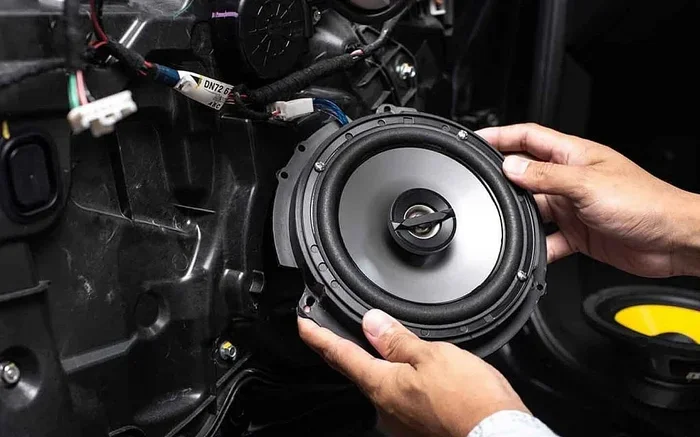
Visual guide about Does Wattage Matter for Car Speakers
Image source: thedjsguru.com
What is RMS (Root Mean Square) Power?
RMS is the scientific measurement of continuous power. It’s the amount of power a speaker can handle hour after hour without overheating or distorting. It’s also the amount of power an amplifier can deliver continuously, without overheating or distorting. When you see a speaker rated at “50 Watts RMS,” that means it can comfortably and safely handle 50 watts of continuous power. This is the number you must use for matching.
Amplifiers are also rated in RMS. A good, honest amp manufacturer will tell you “50 Watts RMS x 4 @ 4 ohms.” This means each of the four channels can deliver a clean, continuous 50 watts into a 4-ohm load. This is the usable, sustainable power.
What is Peak or Max Power?
Peak power is a theoretical, instantaneous maximum. It’s the absolute ceiling a speaker’s diaphragm could theoretically withstand for a few milliseconds before something gives way. It’s also the absolute, brief, often distorted burst an amp can put out before its protection circuits kick in. The problem? There’s no industry standard for measuring peak power. One manufacturer’s “300 Watt Peak” might be another’s “150 Watt Peak.” It’s a marketing number designed to make a product look more powerful on a shelf tag. You cannot use peak power to match an amp to a speaker. Doing so is a recipe for disaster.
Why the Confusion Exists
In the 1990s and early 2000s, it was a wild west of inflated ” Peak” ratings. A speaker with a true 50W RMS rating might have a “1000W Peak!” sticker. This misled an entire generation of buyers. The industry has largely cleaned up its act, but the legacy of these big numbers persists in consumer minds. Always, always look for the RMS rating. If it’s not listed, be extremely skeptical. Reputable brands like Morel, Focal, Hertz, JL Audio, and Audison will always list RMS power handling first and foremost.
Matching Amplifiers to Speakers: The Goldilocks Principle
Now that we know to focus on RMS, we can talk about matching. The goal is to provide your speakers with the amount of clean, continuous power they are designed to receive. Think of it like filling a glass with water.

Visual guide about Does Wattage Matter for Car Speakers
Image source: allforturntables.com
Under-Powering: The “Clipping” Trap
This is the most common mistake. Someone buys a nice 100W RMS speaker but only has a 25W RMS per channel head unit (the stereo in your dash). To get the volume they want, they turn the head unit volume to 100%. The head unit, trying to push the speaker beyond its clean capability, begins to distort. This distortion is called clipping. The audio signal’s peaks are chopped off, turning a smooth sine wave into a square wave. This distorted, “clipped” signal is essentially DC current and extreme heat being sent to the speaker’s voice coil. This is the number one cause of burned-out tweeters and blown speakers. You are trying to get a big, clean sound from a small, dirty engine, and you’re destroying the components in the process.
- Practical Tip: If you must use a low-power head unit with high-end speakers, set the head unit volume to about 80-90% of its max and use the amplifier’s gain control to make up the difference. The head unit should never be the source of distortion.
Over-Powering: The Mechanical Threat
This is what people fear most: connecting a 200W RMS amp to a 50W RMS speaker. If you keep the volume at a reasonable level, the extra power is like having a reserve. The speaker will play cleaner, with more dynamic headroom. The danger comes when you exploit that extra power. Turning the amp up so high that the speaker’s cone is violently over-excursion—pushed beyond its mechanical limits—can tear the spider, blow the surround, or even push the voice coil out of the magnetic gap. This is a mechanical failure, often catastrophic and obvious.
- Practical Tip: Over-powering with a clean amp is generally safer than under-powering with a distorted one. You are in control of the volume knob. A 200W amp on a 50W speaker, used responsibly at moderate volumes, will likely sound fantastic and last for years. But the temptation to “see what it can do” is strong and risky.
The Sweet Spot: Ideal Matching
The ideal scenario is an amplifier that can deliver its rated RMS power into the impedance (ohms) of your speaker, and that RMS figure is equal to or slightly higher (by 10-50%) than the speaker’s RMS rating. For example, a pair of speakers rated at 75W RMS @ 4 ohms would be perfectly happy with an amplifier that delivers 75-100W RMS per channel @ 4 ohms. This gives you clean headroom without constant stress.
Example: You have a component speaker set rated 60W RMS. A basic, quality 4-channel amp that puts out 60W RMS x 4 is a perfect, safe match. A more powerful amp that puts out 100W RMS x 4 is also a great match, giving you more reserve power for dynamic peaks (like a drum hit) without straining.
The Unseen Hero: Speaker Sensitivity (dB)
Here’s where the “engine vs. sports car” analogy really hits home. Wattage tells you about the power source. Speaker sensitivity tells you how efficiently that power is turned into actual sound pressure (volume).

Visual guide about Does Wattage Matter for Car Speakers
Image source: allforturntables.com
What is a Sensitivity Rating?
It’s measured in decibels (dB) and is usually listed as something like “90dB (1W/1m).” This means the speaker will produce 90 decibels of sound pressure when powered with 1 watt of RMS power and measured at a distance of 1 meter. It’s a standardized efficiency test.
Why 3dB is the Magic Number
Every time you double the amplifier wattage, you gain approximately 3 decibels of volume, all else being equal. But here’s the game-changer: every time you increase a speaker’s sensitivity by 3dB, you get the same volume increase as doubling the amplifier’s power.
- Scenario A: Speaker A (88dB) with a 50W amp.
- Scenario B: Speaker B (91dB) with a 50W amp. Speaker B will sound about twice as loud as Speaker A, even though they have the exact same amount of power!
This means a high-sensitivity speaker (92dB+) can achieve very high volume levels with very little power. A low-sensitivity speaker (86dB or less) will require much more power to reach the same volume. This is why some audiophile-grade, low-sensitivity speakers (often with massive magnets and exotic materials) demand high-wattage, high-current amplifiers to shine. Conversely, many efficient pro-sound or vintage-style speakers can get ear-splitting loud on a simple head unit.
Practical Application
When choosing speakers, don’t just look at the wattage. Look at the sensitivity. If you have a low-power factory head unit (15-20W RMS per channel), you should prioritize speakers with a sensitivity of 90dB or higher. If you’re planning a massive multi-kilowatt amplifier setup, you can afford to look at lower-sensitivity speakers that may offer better control and sound quality at high volumes.
Head Unit Power vs. External Amplifiers: The Power Hierarchy
Your car’s factory or aftermarket stereo (the head unit) has a built-in amplifier. Its power output is typically weak—often 15-25W RMS per channel at best. This is fine for getting clear, moderate-volume sound from efficient speakers. But if you want real volume, dynamic bass, or are using lower-sensitivity speakers, you will need external amplifiers.
The Role of the Head Unit
Think of the head unit as the source and the controller. Its primary jobs are to play media (radio, USB, Bluetooth), provide tone controls (bass/mid/treble), and output a low-level, clean signal. Its internal amp is usually an afterthought, designed just to get you by. Its power rating is rarely the limiting factor in a high-performance system; its pre-out voltage (often 2V, 4V, or 5V) is more important for telling an external amp how much signal to amplify.
When You Need an Amp (Almost Always for Upgrades)
- For Louder Volume: To overcome road noise and achieve concert-level sound.
- For Better Bass: Subwoofers are power-hungry. A dedicated sub amp is non-negotiable for good bass.
- For Component Speakers: High-end separate-component sets (separate woofer and tweeter) often have higher power requirements to sound their best.
- To Eliminate Distortion: A proper amp with more headroom will play cleaner at higher volumes than a weak head unit being pushed to its limit.
Amplifier Classes and Quality
Not all watts are created equal. A cheap, 100W RMS “no-name” amp might sound distorted and noisy at 50W. A high-quality, 50W RMS amp from a brand like Audison or Helix will sound cleaner, more detailed, and more powerful. Amplifier class (A, A/B, D, G/H) affects efficiency, heat, and sonic character. For most car audio applications, a high-quality Class A/B or modern Class D amp is the best choice. Don’t judge an amp solely by its printed wattage; its Total Harmonic Distortion (THD) rating at its rated power is key. Look for THD figures below 1% (often 0.1% or less for quality amps).
Building a Smart System: Putting It All Together
Now let’s use this knowledge to design a system. Let’s say you want a serious front stage with good bass.
Step 1: Choose Your Speakers
You pick a set of high-quality 6.5″ component speakers. Their spec sheet reads: 60W RMS, 91dB sensitivity, 4 ohms. This tells you they are moderately efficient and need a moderate amount of clean power to shine.
Step 2: Choose Your Amplifier
You need a 4-channel amp. You look for one that can reliably deliver 60-90W RMS per channel @ 4 ohms. A amp rated at 75W RMS x 4 @ 4 ohms is a perfect match. You also check its THD—it’s 0.08% at rated power. Excellent. This amp will give your speakers the clean power they need with plenty of headroom.
Step 3: The Subwoofer Equation
You add a single 10″ subwoofer in a sealed box. Its spec: 300W RMS, 86dB sensitivity, 4 ohms (Dual 2-ohm voice coils). Its low sensitivity means it needs power. You need a dedicated mono sub amp that can deliver 300-450W RMS @ 4 ohms (or 2 ohms, depending on how you wire the coils). You find a solid mono amp that does 500W RMS @ 2 ohms. You wire the sub’s dual 2-ohm coils to present a 4-ohm load to the amp, and the amp will deliver about 300W RMS—a perfect match. The extra potential power is your headroom for deep bass notes.
Step 4: The Final Check – The Head Unit
Your aftermarket head unit has 4V pre-outs. This is good; it sends a strong, clean signal to your amps. You set the head unit volume to 100% (its maximum clean output) and then use the gain controls on your amplifiers to fine-tune the input level, ensuring no distortion enters the amps. Your system is now properly powered, efficiently matched, and poised for excellent sound.
Conclusion: It’s About the System, Not Just the Number
So, does wattage matter for car speakers? Absolutely. But its importance is as a constraint and a requirement, not as a bragging right. The correct, matched RMS wattage is the clean energy your speakers need to operate safely and perform as designed. However, chasing the highest wattage number without considering sensitivity, amplifier quality, and system integration is a fool’s errand. You can have a 1000-watt system that sounds harsh, distorted, and unbalanced, and a 50-watt system that sounds pristine, detailed, and satisfyingly loud if the components are well-matched and of high quality.
The real goal is synergy. A moderately powered, high-sensitivity speaker on a clean, well-matched amp will often outperform a high-power, low-sensitivity speaker on a cheap, underpowered amp every single time. Focus on RMS ratings, respect the sensitivity number, invest in a quality amplifier, and ensure your installation is done with care. Understand that wattage is the fuel, but the engineering of the speaker, the purity of the amp, and the acoustics of your car are what determine whether you arrive at a destination of great sound or a crash of distortion and disappointment. Match your power wisely, listen for clarity first, and let the music—not the spec sheet—be your final judge.
Frequently Asked Questions
Does more wattage always mean louder sound in a car?
Not necessarily. While more power can increase volume potential, speaker sensitivity plays a huge role. A highly efficient (high dB) speaker with 50W RMS can often be louder than a less efficient (low dB) speaker with 100W RMS. Additionally, vehicle acoustics and speaker placement greatly affect perceived loudness.
Can I damage my car speakers with too much power?
Yes, but it’s less common than damage from under-powering. Over-powering can cause mechanical failure if you push the speaker beyond its physical limits (torn surround, blown voice coil). However, using a high-quality amp with excessive power and simply not turning the volume to extreme levels is generally safe. The greater risk is thermal damage from sustained clipping due to an underpowered, distorted amp.
My factory head unit says “50W x 4.” Can I just use that with aftermarket speakers?
Be very skeptical of this number. Most factory and even many aftermarket head units’ “50W” claims are peak power, not RMS. Their true, clean RMS output is typically 15-25W per channel. This is often insufficient for high-performance aftermarket speakers, especially at higher volumes, and will likely lead to clipping and distortion. For any significant upgrade, an external amplifier is strongly recommended.
What’s the most important spec to look at when buying car speakers?
>After ensuring the speaker fits your car, the two most critical specs are RMS power handling (to know what amp to pair it with) and sensitivity (dB) (to understand how loud it will get with a given amount of power). Frequency response is also important for tonal balance, but sensitivity and power handling are the keys to system integration.
Is it better to have an amp that is slightly under or over the speaker’s RMS rating?
It is generally better and safer to have an amplifier that can deliver slightly more RMS power than the speaker’s rating (e.g., a 75W amp for a 60W speaker). This gives you clean headroom, meaning the amp doesn’t have to work at its absolute limit to drive the speaker, resulting in cleaner sound. An amp that is significantly under-powered (e.g., 30W for a 100W speaker) will be forced into clipping at moderate volumes, which is destructive.
Do I need a separate amplifier for my door speakers and my subwoofer?
For the best sound quality and control, yes. Door/cowl speakers (midrange and tweeters) and subwoofers (bass) have vastly different power requirements and frequency ranges. A dedicated subwoofer amplifier is almost always required for good bass. Your mid/high speakers can be powered by a separate multi-channel amp or, in a basic system, by the head unit. Using a single amp for everything (a “5-channel” amp) is a convenient and popular solution that works very well when properly configured.