Harley Davidson Tour Pack with Speakers
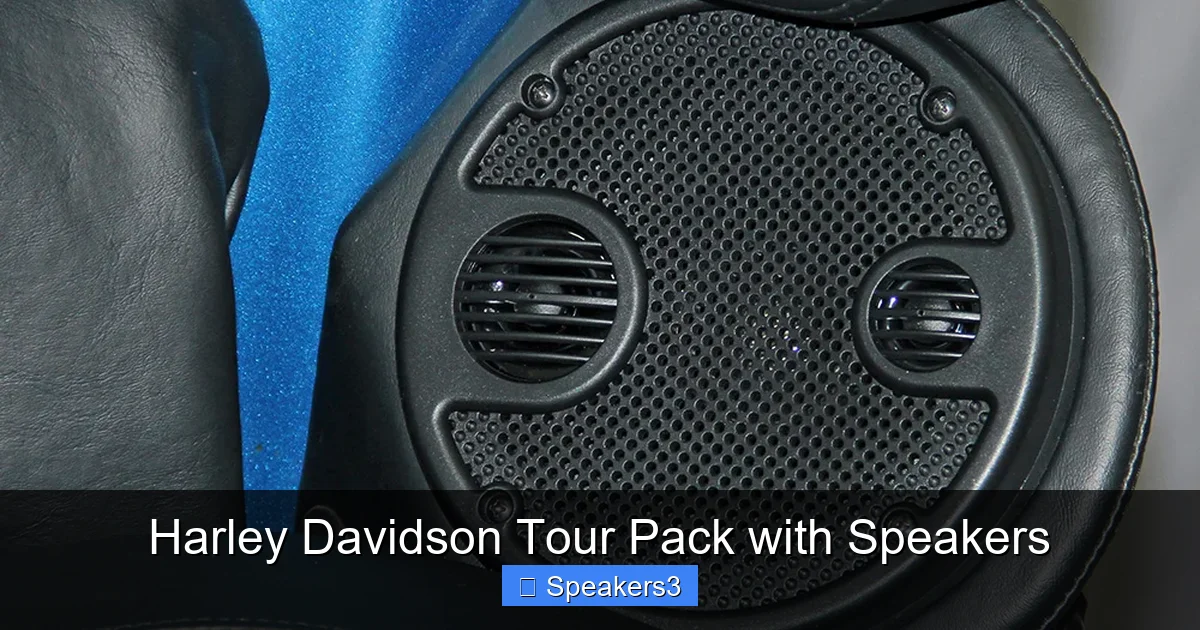
Upgrade your Harley touring experience with an integrated audio system. Factory-installed or aftermarket tour packs with speakers deliver powerful, clear sound directly from your luggage, eliminating helmet audio hassles. They’re designed for weather resistance, seamless bike integration, and booming bass that makes every mile more enjoyable.
Let’s be honest, one of the greatest joys of riding a Harley-Davidson tourer is the open road. But even the most scenic byway can feel a little quiet. That’s where a Harley Davidson tour pack with speakers comes in. It transforms your motorcycle from a simple transporter into a rolling concert hall, turning every fuel stop and highway stretch into a personal audio experience. For years, riders relied on helmet speakers or bulky external systems. The integrated tour pack audio solution changed the game. It’s the difference between hearing a faint melody over the wind and feeling the rhythm of your favorite track in your chest as you carve through the mountains.
This isn’t just about blasting music. It’s about seamless integration, clean aesthetics, and sound that matches the machine’s character. Whether you’re considering a factory upgrade from your Harley dealer or exploring the vibrant aftermarket scene, understanding these systems is key to making the right choice. We’re going to dive deep into everything you need to know about Harley Davidson tour packs with speakers. From the engineering behind the enclosures to the nitty-gritty of installation and sound optimization, consider this your ultimate owner’s guide.
Key Takeaways
- Integrated Convenience: Tour pack audio systems keep speakers and wiring hidden within factory or aftermarket luggage, offering a clean, stock look without external helmet speakers or wires.
- Superior Sound for Touring: These systems provide full-range sound with dedicated subwoofers, delivering volume and bass response that helmet speakers can’t match at highway speeds.
- Weather-Ready Design: OEM and premium aftermarket packs are built to withstand rain, road grime, and sun, with sealed enclosures and corrosion-resistant components.
- Plug-and-Play Compatibility: Genuine Harley tour packs connect directly to the bike’s factory audio harness for simple installation and full control via the infotainment system.
- Versatile Storage: The tour pack remains a functional luggage compartment; speaker enclosures are engineered to maximize interior space for your gear.
- Aftermarket Flexibility: Third-party kits allow you to add speakers to almost any Harley tour pack, offering customization for sound quality and power.
- Resale Value Boost: A factory-installed or professionally done audio tour pack is a highly desirable feature that can increase your Harley’s market appeal.
📑 Table of Contents
- The Evolution of Touring Audio: From Helmet to Luggage
- Dissecting the System: What Makes a Great Tour Pack Audio Setup?
- Choosing Your Perfect Harley Tour Pack Audio Solution
- Installation Insights: What to Expect
- Maximizing Your Riding Soundtrack: Practical Tips & Tricks
- Top Contenders: A Snapshot of Popular Systems
- Conclusion: Finding Your Sound on the Open Road
The Evolution of Touring Audio: From Helmet to Luggage
To appreciate the tour pack system, we need a quick history lesson. Early Harley touring audio was an afterthought. Riders who wanted music used portable radios with earphones or, later, basic helmet speaker systems. These had major drawbacks: limited soundstage, poor bass, and the constant hassle of wired connections or battery packs. The sound was trapped in your helmet, lacking the immersive, open-air experience that matches a motorcycle’s scale.
The Factory Solution: Integrated Audio Systems
Harley-Davidson’s answer was to leverage its most iconic touring feature: the Tour-Pak. Starting in the late 2000s and expanding with the Project Rushmore and subsequent model years, Harley began offering premium audio systems where speakers were mounted *inside* the hard luggage. The tour pack became a resonant speaker enclosure. This solved the aesthetic problem—no ugly brackets or wires on the bike—and the acoustic problem. A large, sealed box (your tour pack) is the perfect environment for a speaker to produce deeper bass and higher volume efficiently.
The Aftermarket Revolution
Not to be outdone, companies like Kuryakyn, Hogworks, and others saw the potential. They developed retrofit kits that allowed owners of older Harley tourers—from Road Kings to Electra Glides—to install high-performance speakers into their existing factory or aftermarket tour packs. This democratized the experience, making powerful integrated audio accessible to virtually any Harley tourer on the road. The aftermarket also pushed innovation with higher-wattage amplifiers, custom enclosures, and component speaker setups for audiophiles.
Dissecting the System: What Makes a Great Tour Pack Audio Setup?
A “Harley Davidson tour pack with speakers” is more than just two speakers glued to a lid. It’s a complete, engineered audio system. Understanding its core components helps you evaluate options, whether you’re buying a new bike or upgrading your current ride.
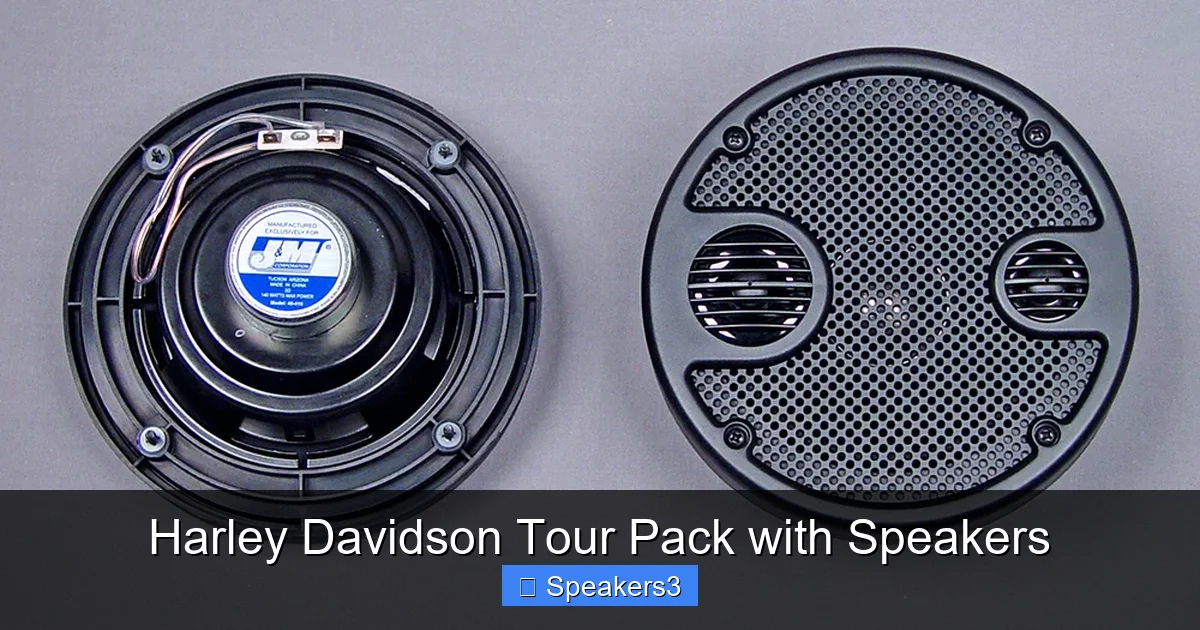
Visual guide about Harley Davidson Tour Pack with Speakers
Image source: jmcorp.com
1. The Speaker Enclosure (The Tour Pack Itself)
The tour pack is the heart of the system. Its construction matters immensely.
- Material & Seal: Fiberglass or heavy-duty plastic. The key is a tight, consistent seal around the speaker mounting hole. Any air leak kills bass response. Factory packs use precision-molded baffles. Aftermarket kits often include custom-molded enclosures that fit inside the pack, creating a dedicated air space.
- Speaker Placement: Most systems mount speakers on the lid, firing forward or slightly downward. This projects sound toward the rider and passenger. Some advanced setups add a subwoofer in the base of the pack or even speakers in the lower fairing for a full surround effect.
- Grilles: Essential for protection. They must be acoustically transparent—meaning they don’t muffle sound—while keeping debris, rain, and curious fingers away from the delicate speaker cones.
2. The Speakers: Coaxial vs. Component
This is where sound quality is determined.
- Coaxial Speakers: The most common type. A single speaker frame houses a woofer (for mids/bass) and a tweeter (for highs) on the same axis. They’re compact, affordable, and provide a good all-around sound. Factory systems typically use high-quality coaxial units.
- Component Speakers: The audiophile choice. The woofer and tweeter are separate, allowing optimal placement (tweeter near ear level for highs, woofer lower for mids/bass). This creates a wider, more detailed soundstage. Aftermarket kits often offer component options for serious listeners.
- Key Specs: Look for power handling (RMS watts), sensitivity (dB), and frequency response. A higher sensitivity means they get louder with less power. For Harley systems, 60-100 watts RMS per channel is a sweet spot for clear, powerful sound at speed.
3. The Amplifier: The System’s Muscle
Your bike’s stock radio has limited power. To make speakers move air effectively, you need an amp. Factory integrated systems have a dedicated, often hidden, amplifier module. Aftermarket kits include compact, high-efficiency Class-D amps that can be mounted under the seat or in the tour pack itself. A good amp provides clean, distortion-free power. Many aftermarket amps also include crossovers, which direct specific frequency ranges (highs to tweeters, lows to woofers/sub) for better efficiency and sound clarity.
4. The Source & Controls
How do you control it all? Factory systems integrate seamlessly with the Harley Infotainment system. Volume, track selection, and source (AM/FM, Bluetooth, SiriusXM) are controlled from the hand grips or touchscreen. Aftermarket systems typically connect to your existing radio’s pre-amp outputs and come with their own wired remote that mounts on the handlebar for easy control. Bluetooth connectivity is standard for streaming from your phone.
Choosing Your Perfect Harley Tour Pack Audio Solution
The path you take depends heavily on your bike, your budget, and your sonic ambitions. Let’s break down the three main avenues.
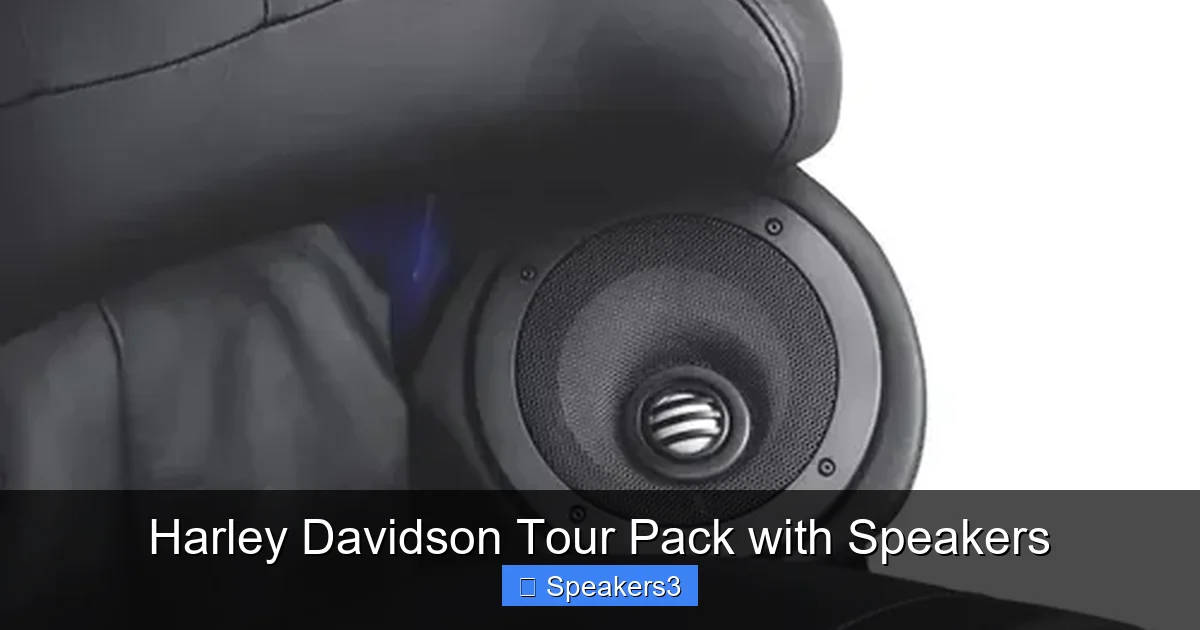
Visual guide about Harley Davidson Tour Pack with Speakers
Image source: http2.mlstatic.com
Option 1: Factory-Installed (OEM) on a New Harley
If you’re buying a new Harley Touring or Trike model (Road Glide, Street Glide, Ultra Limited, etc.), this is the simplest, most integrated route.
- The Experience: You select the premium audio package (often called “Premium Audio” or “Boom! Audio”) as an option at purchase. It’s installed at the factory, meaning perfect fit, finish, and warranty coverage. The system is designed specifically for that model’s tour pack geometry.
- Pros: Flawless integration. No wiring to run; it plugs into the bike’s CANbus system. Full control via the factory infotainment screen. Complete warranty coverage. Resale value is maximized.
- Cons: You’re locked into the specific speaker and amp specs Harley and its OEM supplier (often Harman Kardon or Boom!) provide for that model year. Upgradability is limited. It’s the most expensive upfront cost, bundled into the bike’s price.
- Best For: The rider who wants a turnkey, “it just works” solution with zero DIY hassle and maximum factory support.
Option 2: Dealer-Installed OEM Accessory
Harley’s parts department sells accessory audio kits for many older models that didn’t originally have them.
- The Experience: You purchase the kit from your dealer, and their technicians install it. It’s genuine Harley parts, designed for your specific model year and tour pack style (like the traditional King or Premium Tour-Pak).
- Pros: Genuine Harley fit and finish. Professional installation. Warranty on the parts (and sometimes labor). It maintains a very stock appearance. Often uses the same high-quality speakers as the factory systems.
- Cons: Can still be pricey due to OEM pricing. May have limited customization options compared to the aftermarket. Availability depends on your specific bike’s part number.
- Best For: The rider who values OEM quality and dealer support but missed the factory-installed option on their used bike.
Option 3: Aftermarket Kits (The Power User’s Playground)
This is where the real customization happens. Companies like Kuryakyn (their “Speaker Lids” are legendary), Hogworks, and Mustard Fuel offer kits for nearly every Harley tour pack ever made.
- The Experience: You buy a kit—which can range from simple speaker lids to full systems with amp and wiring—and either install it yourself or take it to a trusted shop. The level of performance can be dramatically higher than stock.
- Pros: Unmatched sound quality potential. You can choose every component: high-end component speakers, powerful subwoofers, multi-channel amps with digital signal processing (DSP). Often more affordable than OEM for equivalent sound. Can be tailored to your exact listening preferences (more bass? clearer highs?).
- Cons: Requires research to ensure compatibility with your specific tour pack (size, hinge type). Installation can be complex, involving running power from the battery, tapping into the radio’s signal, and custom mounting. Warranty is limited to the component manufacturer. May not integrate with the factory radio’s controls without extra adapters.
- Best For: The enthusiast who wants superior sound, enjoys the process of building their system, or has an older bike not supported by OEM kits.
Installation Insights: What to Expect
Whether you’re DIY-ing or hiring a pro, knowing the process helps manage expectations.
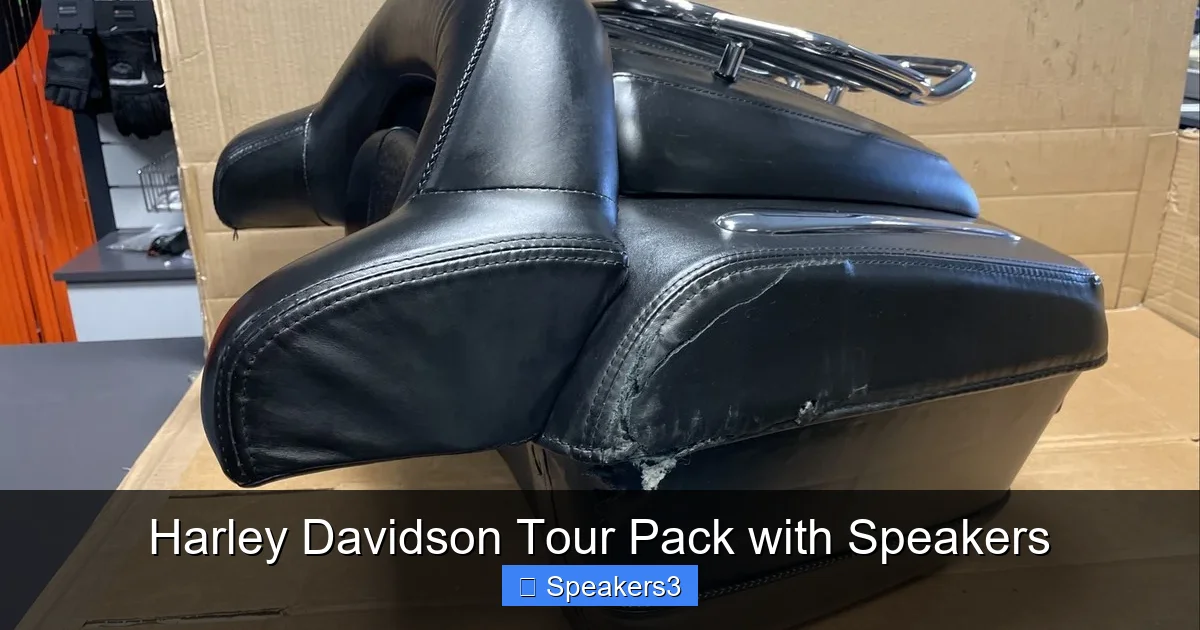
Visual guide about Harley Davidson Tour Pack with Speakers
Image source: i.ebayimg.com
Factory/Dealer Install: The Seamless Process
This is straightforward. The technician removes the existing tour pack lid, disconnects the old wiring (if any), and installs the new speaker-equipped lid. They plug the new system’s harness into the bike’s existing audio port, often located under the seat or behind the radio. The system is then calibrated through the bike’s menu. Time: 1-2 hours. It’s clean, factory-looking, and done.
Aftermarket Install: A Deeper Dive
This is a multi-step electrical and mechanical project:
- Preparation: The tour pack must be removed from the bike. This usually involves unbolting it from the frame and disconnecting any existing wiring.
- Enclosure Work: If it’s a speaker lid, you simply replace the old lid. If it’s an internal kit, you may need to cut openings in the existing lid or install a custom enclosure inside the pack. This requires precision to avoid damaging the luggage.
- Wiring Run: This is the most invasive part. A power wire (usually 8-10 gauge) must be run from the battery (with an inline fuse) to the amplifier. A ground wire is attached to the frame. Speaker wires run from the amp to the speakers in the lid. A signal cable (RCA) runs from the radio’s pre-amp outputs back to the amp. A remote turn-on wire tells the amp to power on with the bike.
- Integration: To control volume/track from your grips, you need a steering wheel control interface (like a PAC or GROM unit) that translates your Harley’s button signals into commands your aftermarket amp understands.
- Testing & Tuning: Everything is connected, power is restored, and the system is tested. Amps have adjustable crossovers and gain controls that need to be set correctly to protect speakers and optimize sound.
Pro Tip: Always disconnect the battery before starting any electrical work on your Harley. If you’re not comfortable with this, a reputable motorcycle audio shop is worth every penny.
Maximizing Your Riding Soundtrack: Practical Tips & Tricks
You’ve got the system in. Now, make it sing.
Weatherproofing is Non-Negotiable
Even “weather-resistant” systems need help. Always ensure the tour pack lid seals perfectly against the base. Use a silicone-based spray on the lid gasket to maintain pliability. After riding in heavy rain, wipe down the speaker grilles and check for any pooled water inside the pack. A small desiccant packet can help absorb residual moisture.
Tuning for the Open Road
Sound behaves differently at 70 mph with wind noise. Use an EQ (if your amp or source has one) to boost the mid-range (1kHz-3kHz) where human speech and many vocal-centric tracks live, helping them cut through wind and engine noise. A slight boost in the lower bass (80-100Hz) adds feel. Don’t overdo the extreme highs; they can sound harsh and brittle with wind noise. Many modern amps with DSP allow you to create a “riding profile” that compensates for speed-related noise.
The Subwoofer Secret
If your budget and tour pack space allow, adding a dedicated subwoofer (like a 8” or 10” marine-style speaker mounted in the base of the tour pack) is the single biggest upgrade you can make. It handles the deep bass frequencies that standard 6×9” or 6.5” speakers struggle with, providing that physical “thump” you feel as much as hear. It makes music sound full and powerful, not tinny.
Power Management
High-power audio systems can drain your battery if the bike is off. Always use a proper amplifier with a remote turn-on wire, so it only runs when the bike’s ignition is on. For bikes with small batteries or lots of accessories, consider upgrading to a high-output stator/alternator and a larger, AGM (Absorbent Glass Mat) battery to ensure reliable starting and endless audio playtime.
Top Contenders: A Snapshot of Popular Systems
While specific models change, here’s the landscape:
- Harley-Davidson Boom! Audio Premium: The factory standard. Reliable, integrated, and surprisingly good. Often features 6×9” speakers and a subwoofer in the tour pack. Sound is balanced and loud enough for most.
- Kuryakyn Speaker Lids: The aftermarket icon. They replace your entire tour pack lid with one that has high-quality coaxial speakers (often by brands like JL Audio or Kicker) pre-installed. Available in many styles (Satin Chrome, Gloss Black). Sound is a massive upgrade over stock, with excellent bass for a lid-only system.
- Hogworks Audio Tour-Pak Systems: Known for their powerful, all-in-one kits. They often include a loaded speaker lid, a compact amplifier, and all necessary wiring. Their systems are praised for hitting hard and being relatively straightforward to install.
- Custom Component Install: The pinnacle. A shop like “Loud & Proud” or “Bikers’ Audio” will build a completely custom system: a sound-deadened and reinforced tour pack, a high-end component speaker set, a powerful multi-channel amp with full DSP tuning, and a stealthy subwoofer. This is for the rider for whom audio is the primary mod.
Conclusion: Finding Your Sound on the Open Road
A Harley Davidson tour pack with speakers is more than an accessory; it’s an extension of the riding experience. It bridges the gap between the mechanical soul of the motorcycle and the personal soundtrack of the journey. The rumble of the engine and the whistle of the wind become part of the mix, creating a unique, immersive environment you can’t get in a car.
Your choice boils down to priorities. If you want flawless integration, zero fuss, and factory support, the OEM route on a new bike or a dealer-installed kit is perfect. If you crave earth-shaking bass, crystal-clear highs, and the thrill of customization, the aftermarket world is your oyster. There’s a solution for every Sportster, Softail, and CVO out there.
Remember, the best system is the one that reliably delivers your favorite songs, mile after mile, without a worry. Do your research, choose components from reputable brands, prioritize proper installation, and protect your investment from the elements. Then, just point your front wheel down the highway, hit play, and let the good times roll—loudly. Your perfect touring soundtrack is waiting, tucked neatly inside your tour pack.
Frequently Asked Questions
Can I add speakers to my existing Harley tour pack?
Yes, almost certainly. Aftermarket companies offer speaker lids that replace your entire tour pack lid, or internal kits that install speakers inside your existing pack. Compatibility depends on your specific model year and pack style (King, Premium, etc.), so check the kit’s fitment guide carefully.
Are tour pack speaker systems weatherproof?
Quality systems are designed to be weather-resistant, with sealed enclosures and marine-grade speakers. However, they are not submersible. The tour pack lid must seal properly against the base, and grilles should be kept clear of debris. Heavy, prolonged rain can eventually find its way in, so it’s good practice to check for moisture after a storm.
How does the sound quality compare to helmet speakers?
>It’s not even a fair contest. Tour pack systems have a massive advantage in speaker size, power, and enclosure design. They deliver full-range sound with deep bass and high volume that helmet speakers physically cannot reproduce. The soundstage is open and immersive, not trapped inside your helmet.
Will installing an aftermarket system void my Harley warranty?
It shouldn’t, thanks to the Magnuson-Moss Warranty Act. A dealer cannot void your entire bike’s warranty because of an aftermarket part. However, if a failure occurs with a component directly related to the aftermarket part (e.g., your new audio system’s amp fails), the warranty on *that part* is obviously with its manufacturer. Always use quality wiring and installation to avoid electrical issues that could affect other bike systems.
Do I need to upgrade my bike’s battery or charging system?
For a moderate-power system (50-100 watts per channel), your stock charging system is usually sufficient if the bike is running. However, if you’re adding a powerful subwoofer and amp (200+ watts total), or you do a lot of stationary listening with the engine off, consider upgrading to a high-output stator and a high-capacity AGM battery to prevent voltage drain and ensure reliable starting.
Can I still use the tour pack for storage with speakers installed?
Absolutely. That’s the genius of the design. The speakers are mounted in the lid or in a way that maximizes usable interior space. You can still pack helmets, clothes, and gear inside. Just be mindful not to place heavy, sharp, or hard objects directly against the speaker cones or grilles from the inside. A soft liner or padding helps protect the speakers and your cargo.