How Do Traffic Cameras Work

Ever wondered how those bright lenses on highways actually catch speeding cars or monitor congestion? Traffic cameras blend optics, sensors, and digital tech to record, analyze, and transmit real‑time footage. Understanding their inner workings reveals why they’re essential for safety, traffic management, and future‑ready streets.
Key Takeaways
- Core components: A traffic camera system includes the lens, image sensor, processor, and communication module.
- Types of cameras: Fixed, pan‑tilt‑zoom (PTZ), and radar‑integrated cameras each serve specific monitoring needs.
- Data flow: Captured video is compressed, encoded, and sent to a central traffic management center via wired or wireless networks.
- Trigger mechanisms: Sensors such as inductive loops, infrared beams, and radar detect vehicles and activate recording.
- Privacy safeguards: Many jurisdictions blur faces and license plates unless required for law enforcement.
- Smart integration: AI algorithms now read license plates, count vehicles, and predict congestion.
- Future trends: Edge computing, 5G, and solar‑powered units will make cameras more autonomous and eco‑friendly.
📑 Table of Contents
- Introduction: Why Traffic Cameras Matter
- 1. The Physical Parts of a Traffic Camera
- 2. How Cameras Detect When to Record
- 3. From Video Capture to the Traffic Management Center
- 4. Smart Features: AI, License Plate Recognition, and More
- 5. Privacy, Legal, and Ethical Considerations
- 6. Future Trends: What’s Next for Traffic Cameras?
- Conclusion
Introduction: Why Traffic Cameras Matter
When you drive down a busy boulevard, you might notice a small black box perched on a pole, sometimes flashing red or green. Those are traffic cameras, and they do far more than just “watch” you. They help keep roads safe, reduce congestion, and provide evidence for traffic violations. In many cities, the footage you see on a news broadcast is coming from a network of cameras that talk to each other in real time.
But how do these devices actually work? The answer is a mix of old‑school optics, modern electronics, and clever software. In this guide we’ll break down every step—from the moment a vehicle rolls over a sensor to the instant a traffic manager sees a clear video feed on a screen. By the end, you’ll have a solid grasp of the technology that powers today’s smart streets.
1. The Physical Parts of a Traffic Camera
1.1 Lens and Optics
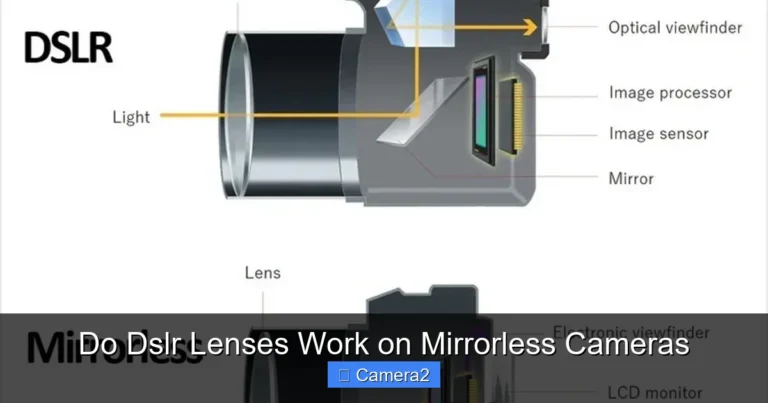
The lens is the eye of the camera. It gathers light and focuses it onto the image sensor. Most traffic cameras use wide‑angle lenses to capture an entire lane or intersection. Some high‑resolution units have motorized zoom lenses that can “zoom in” on a specific vehicle when needed.
Visual guide about How Do Traffic Cameras Work
Image source: docs.masso.com.au
1.2 Image Sensor (CMOS vs. CCD)
Behind the lens sits the image sensor, usually a CMOS chip because it uses less power and can process data faster than a CCD. The sensor converts light into electrical signals, creating a digital image frame every fraction of a second.
1.3 Processor and Encoding Chip
Every frame is sent to an on‑board processor. Here, the raw data is compressed using codecs like H.264 or H.265, which makes the video file smaller without losing much quality. Compression is crucial because it reduces the bandwidth needed to send the video to a control center.
1.4 Communication Module
Depending on the installation, the camera may use fiber‑optic cables, Ethernet, cellular 4G/5G, or even microwave links to transmit its feed. Modern units often have dual‑path options—wired for reliability and wireless as a backup.
1.5 Power Supply
Most cameras draw power from the municipal grid, but solar‑powered or battery‑backed models exist for remote locations. A small Power over Ethernet (PoE) injector can deliver both power and data through a single cable, simplifying installation.
2. How Cameras Detect When to Record
2.1 Inductive Loop Sensors
These are coils of wire embedded in the pavement. When a metal object (like a car) passes over, it changes the loop’s magnetic field, sending a signal to the camera to start recording.
Visual guide about How Do Traffic Cameras Work
Image source: weather.chadcalsyn.com
2.2 Infrared (IR) Beam Sensors
Two IR emitters face each other across a lane. If a vehicle breaks the beam, the sensor triggers the camera. IR sensors work day and night because they rely on invisible light.
2.3 Radar and Lidar Triggers
Advanced cameras incorporate radar or lidar to measure speed and distance. When a vehicle exceeds a preset speed, the system flags the event and marks the video for review.
2.4 Motion Detection Algorithms
Some newer cameras use built‑in AI to detect motion without external sensors. The processor constantly analyzes pixel changes; when it sees a vehicle, it starts recording and can even classify the object (car, bike, pedestrian).
3. From Video Capture to the Traffic Management Center
3.1 Compression and Encoding
After the processor compresses each frame, the video is packaged into packets. H.265, also known as HEVC, cuts bandwidth usage by up to 50% compared to H.264, which is why many municipalities are upgrading.

Visual guide about How Do Traffic Cameras Work
Image source: static.digit.in
3.2 Transmission Pathways
Urban cameras typically use fiber‑optic cables because they offer high speed and low latency. Rural or temporary installations might rely on 4G/5G cellular networks. In either case, the data travels to a central server known as the Traffic Management Center (TMC).
3.3 Storage and Retrieval
At the TMC, video streams are saved on network‑attached storage (NAS) or cloud servers. Footage is usually retained for 30‑90 days, depending on local regulations. When an incident occurs, operators can pull the exact clip using timestamps or event markers.
3.4 Real‑Time Monitoring
Operators view live feeds on large dashboards. Some systems overlay additional data—like vehicle counts, speed readings, or weather conditions—directly onto the video.
4. Smart Features: AI, License Plate Recognition, and More
4.1 Automatic Number Plate Recognition (ANPR)
ANPR software scans each frame for license plates, reads the characters, and matches them against databases. This is how many cities issue instant tickets for red‑light violations.
4.2 Vehicle Counting and Classification
Machine‑learning models can differentiate cars, trucks, buses, and bikes. The data helps city planners understand peak traffic times and design better signal timing.
4.3 Congestion Prediction
By feeding real‑time vehicle counts into predictive algorithms, traffic centers can forecast bottlenecks minutes before they happen and adjust signal phases accordingly.
4.4 Integration with Other Smart City Sensors
Traffic cameras often share data with air‑quality monitors, public‑transport GPS, and emergency‑response systems, creating a holistic view of urban mobility.
5. Privacy, Legal, and Ethical Considerations
5.1 Data Anonymization
Many jurisdictions require that faces and license plates be blurred unless the footage is needed for a legal case. This is usually done automatically by the camera’s onboard software.
5.2 Retention Policies
Local laws dictate how long video can be stored. For example, some states keep footage for 30 days, while others allow up to a year for serious incidents.
5.3 Public Transparency
Cities often post live feeds on public websites. This transparency builds trust, showing that cameras are used for safety, not surveillance.
5.4 Related Reading
If you’re curious about other public‑camera setups, check out What Are The Cameras On Top Of Traffic Lights for a deeper dive into traffic‑light‑mounted units.
6. Future Trends: What’s Next for Traffic Cameras?
6.1 Edge Computing
Instead of sending every frame to a central server, future cameras will process data locally (“at the edge”). This reduces latency and bandwidth use, enabling instant alerts for accidents.
6.2 5G Connectivity
5G’s high speed and low latency make it perfect for high‑definition video streams, especially in dense urban cores where fiber can be costly.
6.3 Solar‑Powered and Energy‑Harvesting Units
Solar panels on camera poles can power the device and even feed excess energy back to the grid, making installations greener.
6.4 Integration with Autonomous Vehicles
Road‑side cameras will share real‑time data with self‑driving cars, helping them navigate complex intersections safely.
6.5 Example: Coastal Monitoring
In places like the Outer Banks, cameras are used not only for traffic but also for monitoring storms. See how NC Traffic Cameras Outer Banks blend weather data with road monitoring.
Conclusion
Traffic cameras are far more than static eyes on the road. They combine optics, sensors, processors, and sophisticated software to capture, analyze, and share video in real time. From basic loop‑triggered recordings to AI‑driven license‑plate reading, each component plays a vital role in making our streets safer and smarter. As technology advances—thanks to edge computing, 5G, and renewable power—these systems will become even more autonomous, efficient, and integrated with the broader smart‑city ecosystem.
Understanding how traffic cameras work helps us appreciate the invisible network that keeps traffic flowing, reduces accidents, and supports law enforcement. The next time you see a camera blinking at an intersection, you’ll know exactly what’s happening behind the lens.
Frequently Asked Questions
How do traffic cameras detect speeding vehicles?
Most speed‑enforcement cameras pair a video unit with radar or lidar sensors. When a vehicle exceeds the preset speed, the sensor flags the event and the camera records a high‑resolution clip for review.
Are traffic camera feeds available to the public?
Many cities stream live feeds on official websites for transparency. However, some feeds are restricted to law‑enforcement or traffic‑management personnel only.
Do traffic cameras work at night?
Yes. They use infrared illumination or low‑light sensors to capture clear images in darkness without blinding drivers.
What happens to the video after it’s recorded?
Footage is compressed, encrypted, and sent to a central traffic management center where it’s stored for a set retention period, usually 30‑90 days, before being deleted or archived.
Can traffic cameras be hacked?
Like any networked device, they can be vulnerable if not properly secured. Municipalities use firewalls, VPNs, and regular firmware updates to protect against unauthorized access.
Do parking garages have cameras similar to traffic cameras?
Yes, many garages install cameras to monitor vehicle flow, enforce parking rules, and enhance security. Learn more at Do Parking Garages Have Cameras.