How to Stop Engine Noise Coming Through Speakers
Engine noise through speakers can ruin your music experience. You can fix it by checking your wiring, grounding your amplifier properly, and using quality RCA cables. Simple steps like separating power and audio lines often solve the problem fast.
Key Takeaways
- Check your ground connection: A loose or poor ground is the most common cause of engine noise in speakers.
- Separate power and audio cables: Running them parallel creates interference; cross them at right angles instead.
- Use high-quality RCA cables: Shielded cables block electrical noise from reaching your amplifier.
- Test with a different power source: Plugging your amp into a separate battery line can isolate the issue.
- Inspect head unit wiring: Poorly connected factory wires often pick up engine vibrations and electrical hum.
- Add a noise filter: A simple inline filter can clean up remaining alternator whine.
- Keep wiring neat and secure: Loose wires vibrate and pick up noise; zip ties and loom keep signals clean.
📑 Table of Contents
- Why Engine Noise Comes Through Your Speakers
- How to Stop Engine Noise Coming Through Speakers: Start With the Ground
- Separate Power and Audio Cables to Reduce Interference
- Check Your RCA Cables and Signal Path
- Inspect the Head Unit and Factory Wiring
- Test the Amplifier and Power Delivery
- Comparison of Common Noise Fixes
- Final Checks and Long-Term Quiet Performance
- Key Takeaways for a Quiet Car Audio System
Why Engine Noise Comes Through Your Speakers
You turn up your favorite song. Then you hear a low hum or a high whine. It gets louder as you drive faster. This is engine noise coming through your speakers. It is frustrating. It ruins the music. But you can fix it.
The noise usually comes from electrical interference. Your car has many wires. Some carry power. Some carry audio signals. When these wires mix poorly, noise slips into your speakers. The alternator also creates electrical hum. Poor grounding makes it worse. Loose connections add vibration noise too.
You do not need to be an expert to solve this. You just need to follow a clear path. Start with the easy checks. Move to the wiring. Test your gear. Most car audio noise problems have simple fixes.
How to Stop Engine Noise Coming Through Speakers: Start With the Ground
The ground wire is the first place to look. A bad ground causes more audio noise than any other issue. Your amplifier needs a clean path back to the battery. If that path is weak, the amp seeks noise elsewhere. It pulls that noise through your speakers.
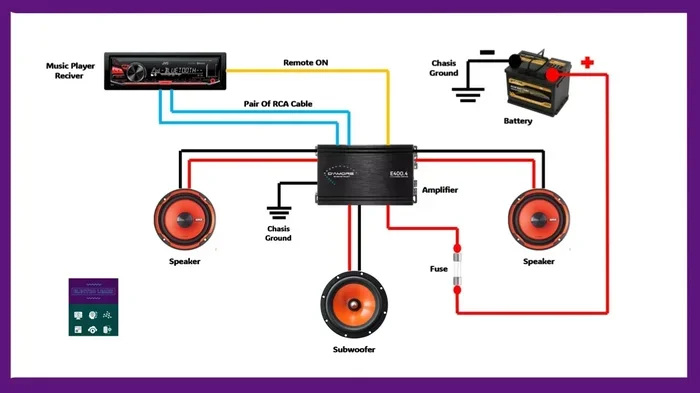
Visual guide about car stereo speaker wiring
Image source: i.ytimg.com
Find your amp ground point. Check the bolt. Make sure it is tight. Look at the metal under the bolt. Paint, rust, or plastic blocks a good connection. Sand the spot until it is shiny metal. Reattach the ground wire. Tighten it well.
Move the ground point closer to the amp if possible. Long ground wires create resistance. Resistance invites noise. Keep the ground wire short and thick. Use the right gauge for your amp power. A strong ground gives you a quiet system.
Test the Ground With a Simple Check
You can test your ground with a basic multimeter. Set it to DC voltage. Put the black probe on the amp ground. Put the red probe on the battery negative. Turn on the car. Watch the reading. A small number is normal. A large number means a bad ground. Fix that first before you change anything else.
If you want a full walkthrough on checking speaker wiring and polarity, see how to check polarity on speakers with a multimeter. It helps you confirm your connections are clean and correct.
Separate Power and Audio Cables to Reduce Interference
Car audio noise often comes from wire routing. Power cables carry strong current. RCA cables carry weak audio signals. When they run side by side, the power cable can induce noise into the audio cable. The result is a buzz or whine in your speakers.
Route power and audio lines on opposite sides of the vehicle. Keep them apart whenever you can. If they must cross, make them cross at a right angle. This reduces interference a lot. Do not bundle them together in the same loom. Keep them separate.
Secure the wires with zip ties. Loose wires move and vibrate. Movement can create crackling noise over time. A neat install is a quiet install. Clean routing also protects your wires from heat and sharp edges.
Quick Tips for Clean Wire Routing
- Run power on the left side and audio on the right side.
- Cross wires at ninety degrees when they must meet.
- Use wire loom only for each cable type, not both together.
- Avoid running wires near the alternator or ignition coils.
- Keep RCA cables away from dashboard electronics and motors.
Check Your RCA Cables and Signal Path
Bad RCA cables are a common noise source. Cheap cables have weak shielding. Weak shielding lets engine noise enter the signal path. The noise then goes straight to your amp and speakers. Good cables block that interference.
Inspect your RCA cables for damage. Look for pinched spots, cuts, or loose connectors. Replace any cable that looks worn. Choose shielded cables with a solid build. A braided shield helps a lot. Keep the cable run as short as you can. Long runs pick up more noise.
Also check where the RCA plugs connect. A loose plug can cause static. Push them in firmly. If the head unit has multiple outputs, try a different one. Sometimes one output is noisier than another. This simple test can save you time.
When to Add a Noise Filter
If the noise stays after you fix the wiring, add a noise filter. A filter sits between the head unit and the amp. It cleans the signal before it reaches the amp. This helps with alternator whine and some electrical hum. Pick a filter that matches your system size. Install it close to the amp for best results.
If you are wiring component speakers or adding new speakers to your setup, good signal quality matters even more. You can learn more in how to wire component speakers. Clean signal paths make every speaker sound better.
Inspect the Head Unit and Factory Wiring
The head unit is the brain of your audio system. If its wiring is poor, noise can enter early. Factory wires are often thin and close together. They can pick up engine noise easily. Aftermarket harnesses can help, but they must be connected well.
Check the head unit ground first. Then check the power wire at the back of the unit. Make sure the constant and switched power wires are secure. A loose power wire can cause popping and static. Also check the antenna wire if you use one. Antenna wires can carry noise from outside sources.
If your system has a factory radio, consider a clean bypass or a quality harness. Some factory setups share grounds in ways that create noise. A separate ground for the head unit can help. Keep the changes simple and safe.
Common Mistakes That Create Head Unit Noise
- Using a thin ground wire for the head unit.
- Leaving factory ground points painted or rusty.
- Mixing constant and switched power wires loosely.
- Running RCA cables right next to the head unit power line.
- Ignoring a bad antenna connection or mast.
Test the Amplifier and Power Delivery
Your amp can also be the source of noise. A failing amp may amplify electrical noise instead of music. Test the amp by feeding it a clean signal from a known good source. If the noise disappears, the issue is upstream. If the noise stays, the amp or its power setup may be the problem.
Check the amp power wire. Make sure it is fused properly. A weak fuse or loose fuse holder can cause issues. Check the inline fuse near the battery too. Clean connections matter here. Also check the remote turn-on wire. A weak remote signal can cause odd behavior.
Try a different power source for testing. Run a temporary power line from the battery to the amp. If the noise drops, your original power path has a problem. This test helps you isolate the issue fast. It also shows if the car electrical system is the culprit.
If You Are Expanding Your Speaker Setup
Some people add more speakers and then notice noise. More speakers mean more wiring and more possible ground loops. If you are connecting several speakers to one amp, plan the wiring carefully. You can read how to wire 4 speakers to a 2 channel amp for a clear wiring approach. A balanced setup reduces noise and strain on the amp.
Comparison of Common Noise Fixes
Not every fix works the same for every car. Use this quick comparison to choose your next step. Start at the top. Move down only if needed.
| Fix | Best For | Effort | Result Speed |
|---|---|---|---|
| Tighten and clean the amp ground | Most engine noise and whine | Low | Fast |
| Separate power and RCA cables | Buzzing and induced noise | Low to medium | Fast |
| Replace RCA cables with shielded ones | Static and weak signal noise | Medium | Fast |
| Add a noise filter | Alternator whine and residual hum | Low | Fast |
| Improve head unit grounding and wiring | Noise present at low volume | Medium | Medium |
| Test with a separate amp power line | Isolating power delivery issues | Medium | Medium |
Final Checks and Long-Term Quiet Performance
Once the noise is gone, do a final review. Turn the car on and off. Drive at different speeds. Play music at low and high volume. Make sure the noise does not return. A good fix stays quiet in real driving conditions.
Keep your wiring secure over time. Vibration can loosen connections. Check your ground bolt after a few weeks. Check RCA plugs too. A small maintenance habit keeps your system quiet. It also protects your gear from damage.
Use quality parts when you can. Good cables, good grounds, and solid connectors cost little extra. They save you time later. They also make your music sound cleaner. A quiet system is a better system.
Expert Insight on Persistent Noise
If the noise only appears at certain engine speeds, think about the alternator. Alternator noise often changes with RPM. A dirty power line or poor filtering can cause this. Clean power and good shielding usually fix it. If the noise is more like a rattle or buzz, check for loose panels or vibrating wires near the speakers. Sometimes the problem is mechanical, not electrical.
If you ever need to connect extra speakers or change your layout, plan the signal path first. A clean layout prevents noise before it starts. You can also review how to wire speakers to an amp for basic connection habits that keep your system stable.
Key Takeaways for a Quiet Car Audio System
Fixing engine noise is mostly about clean power, clean signal, and solid grounds. Start with the ground. Then separate your cables. Then check your RCA lines and head unit wiring. Test the amp if needed. Add a filter only after the basics are solid. Most car audio noise problems are solvable with patience and a methodical check.
Keep your install neat. Keep your grounds short and tight. Keep your signal cables away from power cables. These habits give you clear music and less frustration. Your speakers should sound like music, not like an engine.
Frequently Asked Questions
Why do my speakers buzz when the engine is running?
This usually happens because electrical interference is entering your audio signal. A poor ground, unshielded RCA cables, or power lines running too close to audio cables are common causes. Fix the ground first, then separate the wires and check your cables.
How do I know if the noise is from my amp or my head unit?
Test the system by feeding a clean signal directly to the amp if possible. If the noise disappears, the issue is likely upstream at the head unit or wiring. If the noise stays, focus on the amp power, ground, and internal condition.
Can a bad ground really cause engine noise in speakers?
Yes, a bad ground is one of the most common causes of speaker noise. The amp may pick up electrical noise when it cannot return current cleanly. Cleaning and tightening the ground point often reduces or removes the noise.
Do shielded RCA cables really help with engine noise?
They can help a lot, especially when the noise is induced from nearby power cables. Shielded cables block outside electrical interference better than cheap unshielded cables. Replace damaged or thin cables for the best result.
Should I use a noise filter to stop alternator whine?
A noise filter can help if the whine remains after you fix grounding and cable routing. Install it close to the amp and make sure it matches your system. Use a filter as a final step, not a first fix.
What is the easiest first step to stop engine noise coming through speakers?
Check and clean the amplifier ground connection. It is the simplest and most effective first step for many cars. After that, separate power and audio cables and inspect your RCA connections.