Is Mini Hdmi the Same as Usb C 2
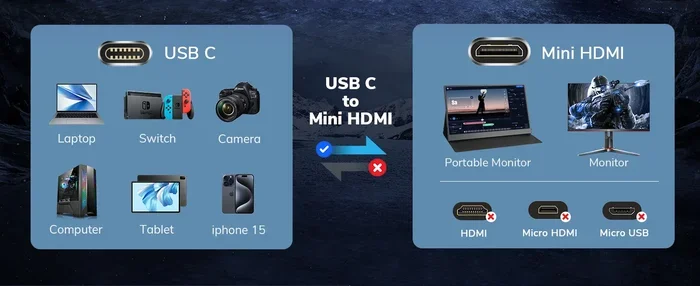
Mini HDMI and USB C 2 are not the same. They are two different connector types used for video and data transfer. While both carry audio and video signals, they differ in shape, function, and device compatibility. This guide breaks down every difference so you can pick the right connection for your setup.
Many people wonder whether Mini HDMI and USB C 2 are the same thing. They look different, they work differently, and they serve different purposes. If you have ever stared at two cables and thought they looked similar, you are not alone.
The short answer is no, they are not the same. Mini HDMI is a video and audio output port, while USB-C is a universal connector that handles video, data, and power. Understanding the difference matters when you are setting up a display, choosing cables, or buying adapters.
In this article, we will walk through everything you need to know. We will compare the two connectors side by side, explain how they work, and help you decide which one fits your needs. Whether you are connecting a camera to a TV or plugging a laptop into a monitor, this guide has you covered.
Key Takeaways
- Mini HDMI and USB-C are different connectors designed for different devices and purposes.
- Mini HDMI is a smaller version of the standard HDMI port found on cameras and tablets.
- USB-C is a universal connector that supports video, data, and charging through a single cable.
- Adapters exist to convert between Mini HDMI and USB-C, but they are not interchangeable by default.
- USB-C offers more versatility than Mini HDMI in modern devices.
- Check your device specs before buying any cable or adapter.
📑 Table of Contents
What Is Mini HDMI?
Mini HDMI is a smaller version of the standard HDMI connector. It was introduced to support thinner and more portable devices that still needed high-quality video and audio output. You will find Mini HDMI on devices like digital cameras, small tablets, and some older laptops.
The Mini HDMI port carries uncompressed video and audio signals. This means the quality stays high from the source to the display. It supports resolutions up to 1080p and even 4K on some newer devices. The connector has 19 pins, just like a standard HDMI port.
Devices That Use Mini HDMI
Not every device uses Mini HDMI, but many do. Here are some common examples:
- Digital cameras and camcorders
- Portable media players
- Small tablets and e-readers
- Some older laptops and netbooks
- Gaming handhelds
If your device has a Mini HDMI port, you will need a Mini HDMI cable or an adapter to connect it to a larger display. The port itself is quite small, about half the size of a standard HDMI connector.
What Is USB-C?
USB-C is a modern, reversible connector that has become the standard for many devices. It is small, oval-shaped, and can do a lot more than just transfer data. USB-C supports video output, data transfer, and power delivery all through one cable.
USB-C is not the same as Mini HDMI. It is a much more versatile connector. With the right USB-C docking station or adapter, you can connect to almost any display, transfer files at high speeds, and charge your device simultaneously.
Why USB-C Became So Popular
There are several reasons why USB-C took over the market:
- Reversible design — you can plug it in either way
- Fast data transfer — up to 40 Gbps with Thunderbolt 4
- Video output support — through DisplayPort Alt Mode or HDMI Alt Mode
- Power delivery — up to 240W with USB Power Delivery
- Universal compatibility — works with phones, laptops, tablets, and more
Because of these features, many people now use USB-C as their go-to connection for everything. It replaced older connectors like Mini HDMI in most modern devices.
Key Differences Between Mini HDMI and USB-C
Now that you know what each connector is, let us look at the main differences. These are the details that matter when you are choosing cables or setting up your devices.
Connector Shape and Size
Mini HDMI is flat and has a rectangular shape with one corner beveled. USB-C is oval and symmetrical, meaning it can be plugged in either direction. They are completely different shapes, so you cannot confuse them physically.
What They Carry
Mini HDMI carries only video and audio signals. It does not carry power or data. USB-C, on the other hand, can carry video, audio, data, and power all at the same time. This makes USB-C far more flexible for everyday use.
Compatibility
Mini HDMI is found on specific devices, mostly older or niche ones. USB-C is found on almost all modern devices, from smartphones to professional laptops. If you buy a new device today, there is a very good chance it will use USB-C instead of Mini HDMI.
Speed and Bandwidth
USB-C supports much faster data transfer than Mini HDMI. With USB 3.1 or Thunderbolt over USB-C, you can move large files quickly. Mini HDMI only handles video and audio, so it has no data transfer capability at all.
| Feature | Mini HDMI | USB-C |
|---|---|---|
| Shape | Rectangular, flat | Oval, symmetrical |
| Video Support | Yes | Yes (via Alt Mode) |
| Audio Support | Yes | Yes (via Alt Mode) |
| Data Transfer | No | Yes |
| Power Delivery | No | Yes |
| Reversible | No | Yes |
| Common Devices | Cameras, tablets | Phones, laptops, tablets |
Can You Use a USB-C to Mini HDMI Adapter?
Yes, you can use an adapter to connect a USB-C device to a display that has a Mini HDMI port. These adapters convert the USB-C signal into a Mini HDMI output. They are handy when you have a modern laptop but an older display or projector.
When shopping for an adapter, make sure it supports the resolution you need. A basic USB-C to Mini HDMI adapter will handle 1080p easily. If you need 4K support, check the adapter specs carefully. Not all adapters support high resolutions.
You can also find USB-C cables that have a Mini HDMI plug on one end. These are useful for travel because you only need one cable. Just make sure the cable is certified and reliable.
Quick Tips for Using Adapters
- Always check the adapter’s maximum resolution support
- Buy adapters from trusted brands to avoid signal loss
- Make sure your USB-C port supports video output
- Keep your adapter cables short to reduce signal degradation
- Test the connection before relying on it for important presentations
Which One Should You Choose?
The right choice depends on your devices and what you need to do. If you are connecting a camera to a TV, Mini HDMI is likely your best bet. If you are setting up a modern laptop with a single cable for video, data, and charging, USB-C is the way to go.
Choose Mini HDMI If
- Your device has a Mini HDMI port
- You are connecting older equipment
- You only need video and audio output
- You are using cameras or handheld gaming devices
Choose USB-C If
- Your device has a USB-C port
- You want one cable for everything
- You need data transfer and charging too
- You are buying new accessories for a modern setup
Most people today will benefit from USB-C accessories. It is the future of connectivity. But if you have older devices, keeping a Mini HDMI cable or adapter on hand is still smart.
Common Mistakes to Avoid
Here are some mistakes people make when dealing with these two connector types:
- Assuming they are interchangeable. They are not. You need an adapter or the correct cable for each port type.
- Buying the wrong adapter. There is a difference between a USB-C to HDMI adapter and a USB-C to Mini HDMI adapter. Make sure you get the right one.
- Ignoring bandwidth limits. Cheap adapters may not support 4K or high refresh rates. Always check the specs.
- Forgetting about power delivery. USB-C can charge your device while it outputs video. Mini HDMI cannot do this.
- Using damaged cables. A worn-out cable can cause signal issues, flickering, or no connection at all.
Expert Insight
When setting up a new device, always check the port type first. This simple step saves time and money. If you are unsure, look up the device manual or check the manufacturer’s website. Knowing whether your device uses Mini HDMI or USB-C helps you buy the right cables and accessories from the start.
For those who work with external storage, you might also come across USB-C connections for SSD enclosures. A M 2 Nvme Ssd Enclosure Adapter Usb 3 1 uses USB-C to connect fast NVMe drives to your computer. This is a great example of how versatile USB-C has become across different tech accessories.
Conclusion
Mini HDMI and USB C 2 are two very different connectors. Mini HDMI serves a single purpose: video and audio output. USB-C is a powerhouse that handles video, data, audio, and power through one small port. While they are not the same, both have their place in the tech world.
If you are buying new accessories, USB-C is almost always the better choice. It is faster, more versatile, and more widely supported. But if you have older devices with Mini HDMI ports, keep those cables and adapters handy. They still work perfectly fine for what they were designed to do.
The best approach is to understand your devices and their ports. Once you know what you are working with, choosing the right cable or adapter becomes simple. Keep this guide bookmarked for reference, and you will never buy the wrong connector again.
Frequently Asked Questions
Is Mini HDMI the same as USB-C?
No, they are not the same. Mini HDMI is a smaller video and audio output port, while USB-C is a universal connector that supports video, data, and power. They have different shapes and serve different purposes.
Can I plug a Mini HDMI cable into a USB-C port?
Not directly. You need an adapter to convert the signal. A USB-C to Mini HDMI adapter will let you connect a device with a USB-C port to a display with a Mini HDMI input.
Does USB-C support 4K video output?
Yes, USB-C supports 4K and even 8K video output when using the right cable and adapter. Look for adapters that support DisplayPort Alt Mode or HDMI Alt Mode for the best results.
Which devices still use Mini HDMI?
Many digital cameras, small tablets, portable media players, and some older laptops still use Mini HDMI. If you own any of these devices, you will need a Mini HDMI cable or adapter for external displays.
Is USB-C better than Mini HDMI?
For most users, yes. USB-C is more versatile because it handles video, data, and power in one connector. Mini HDMI only handles video and audio. However, if your device only has Mini HDMI, it is the right choice for that setup.
Do I need a special cable for USB-C to Mini HDMI?
Yes, you need either a dedicated USB-C to Mini HDMI cable or a USB-C to Mini HDMI adapter with a standard Mini HDMI cable. Regular USB-C cables will not work directly with a Mini HDMI port.