4 Ohm Speakers in Parallel

Connecting 4 ohm speakers in parallel can double your output power and improve efficiency, but it requires careful matching with your amplifier. This guide breaks down the math, wiring methods, and safety tips so you can enjoy louder, richer sound without risking equipment failure. Read on for practical examples, troubleshooting tricks, and expert advice.
Key Takeaways
- Impedance halves: Wiring two 4 ohm speakers in parallel creates a 2 ohm load for the amp.
- Amplifier rating matters: Only use an amp that safely handles 2 ohm loads.
- Power distribution: Each speaker receives roughly half the total power, keeping volume balanced.
- Wire gauge counts: Use thicker speaker wire to reduce resistance and maintain sound quality.
- Safety first: Add fuses or protectors when driving low‑impedance loads.
- Series vs. parallel: Parallel boosts power, while series raises impedance—choose based on your amp’s specs.
- Practical testing: Check voltage, heat, and distortion after installation to ensure a clean setup.
📑 Table of Contents
- Introduction: Why Talk About 4 Ohm Speakers in Parallel?
- Understanding Impedance and Parallel Wiring
- Choosing the Right Amplifier
- Step‑by‑Step Wiring Guide
- Practical Tips for Optimal Performance
- Common Problems and How to Fix Them
- When to Choose Series Wiring Instead
- Advanced Topics: Bi‑amping and Multi‑Speaker Sets
- Conclusion: Get Bigger Sound Safely
Introduction: Why Talk About 4 Ohm Speakers in Parallel?
If you’ve ever stared at the back of your car or home theater and wondered how to get more volume without buying a new amp, you’re not alone. Many hobbyists discover that the secret lies in how they connect their speakers. A 4 ohm speaker is a common rating for both car and home audio, and wiring two of them in parallel can give you a louder, fuller sound—*if you do it right*.
In this article we’ll walk you through the basics of impedance, the math behind parallel wiring, and the practical steps you need to take. We’ll also share real‑world examples, troubleshooting tips, and a few safety tricks that keep your gear humming happily for years.
Understanding Impedance and Parallel Wiring
What Is Impedance?
Impedance is the resistance a speaker offers to the flow of alternating current (AC). It’s measured in ohms (Ω) and varies with frequency. Most consumer speakers are rated at 4 Ω, 8 Ω, or sometimes 2 Ω for high‑power car models.

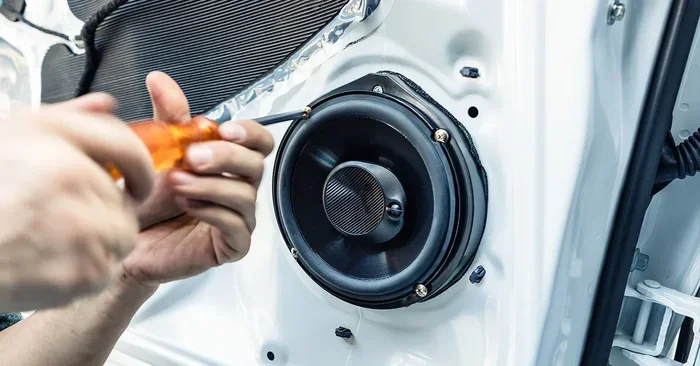
Visual guide about 4 Ohm Speakers in Parallel
Image source: media.baselineresearch.com
How Parallel Wiring Changes Impedance
When you connect two speakers in parallel, the total impedance drops. The formula is simple:
1 ÷ Total Ω = (1 ÷ Speaker 1 Ω) + (1 ÷ Speaker 2 Ω)
For two 4 Ω speakers:
1 ÷ Total Ω = (1 ÷ 4) + (1 ÷ 4) = 0.25 + 0.25 = 0.5 → Total Ω = 2 Ω
This lower impedance means the amp sees a heavier load and can deliver more current, which translates to higher output power—*provided the amp can handle it*.
Choosing the Right Amplifier
Check Your Amp’s Minimum Load Rating
Every amp lists a minimum impedance it can safely drive, often 2 Ω, 4 Ω, or 8 Ω. If your amp’s spec says “2 Ω stable,” wiring two 4 Ω speakers in parallel is fine. If it only supports 4 Ω or higher, you risk overheating and distortion.
Power Ratings and Headroom
Look at the amp’s RMS (continuous) power at 2 Ω. For example, an amp rated at 100 W RMS at 4 Ω might deliver 150 W RMS at 2 Ω. This extra headroom can make a noticeable difference in loudness and dynamic range.
Real‑World Example
Imagine you have a 200 W RMS car amp that’s stable down to 2 Ω. Pairing two 4 Ω, 100 W speakers in parallel lets each speaker safely receive up to 100 W, while the amp can still operate within its limits.
Step‑by‑Step Wiring Guide
Materials You’ll Need
- Two 4 Ω speakers
- Speaker wire (16‑ gauge for car, 14‑ gauge for home)
- Wire cutters/strippers
- Electrical tape or heat‑shrink tubing
- Optional: Inline fuse (2‑A to 5‑A) for protection
Wiring Diagram
Connect the positive (+) terminal of the amp to the positive terminals of both speakers. Do the same with the negative (–) terminals. This creates a parallel “Y” shape.
Detailed Steps
- Turn off power. Disconnect the amp from the battery or outlet.
- Measure and cut wire. Leave a few extra inches for routing.
- Strip ½‑inch of insulation. Expose the copper conductors.
- Join the positives. Twist the two speaker‑positive wires together, then connect them to the amp’s positive lead. Secure with solder or a crimp connector.
- Join the negatives. Repeat for the negative leads.
- Secure connections. Use tape or heat‑shrink to prevent short circuits.
- Optional fuse. Slide an inline fuse onto the positive lead before it reaches the amp.
- Reconnect power and test. Play music at low volume, then gradually increase while listening for distortion or overheating.
Practical Tips for Optimal Performance
Use the Right Wire Gauge
Long runs of thin wire increase resistance, which can mute bass and add heat. For runs under 10 ft, 16‑ gauge is usually fine. For longer runs or higher power, step up to 14‑ gauge.
Mind the Heat
Amp heat sinks are designed for specific loads. If you notice the amp getting unusually hot, add a cooling fan or improve ventilation.
Balance Volume Between Speakers
Even though each speaker gets half the power, slight variations in sensitivity can cause one to sound louder. Adjust the amp’s gain or use a small resistor (a “pad”) on the louder speaker to even things out.
Protect Against Shorts
Never let speaker wire strands touch each other or the vehicle chassis. A short can blow the amp instantly.
Common Problems and How to Fix Them
Problem: Distortion at High Volume
Distortion often means the amp is being over‑driven or the speakers are receiving too much power. Try lowering the gain, checking that the amp is rated for 2 Ω, or adding a small series resistor to each speaker.
Problem: Amp Overheating
If the amp’s temperature gauge stays in the red, consider adding an external cooling fan or upgrading to an amp with better heat dissipation. Also verify that you’re not exceeding the amp’s power rating.
Problem: One Speaker Is Quieter
Check all connections for solid contact. A loose wire can cause a drop in power. Also measure the speaker’s impedance with a multimeter; a faulty speaker might read higher than 4 Ω.
Related Issue: Crackling Sound
If you hear crackling, it could be a loose connector or damaged wire. For a deeper dive on this symptom, see our article Why Do My Speakers Crackle.
When to Choose Series Wiring Instead
Series Wiring Basics
Connecting speakers in series adds their impedances together. Two 4 Ω speakers in series become an 8 Ω load. This is the opposite of parallel wiring and is useful when your amp cannot handle low impedances.
Trade‑offs
- Lower power: The amp delivers less current, so volume may drop.
- Safer for weak amps: If your amp is only stable at 8 Ω, series wiring protects it.
For a side‑by‑side comparison, read our guide on 2 8 Ohm Speakers In Series.
Advanced Topics: Bi‑amping and Multi‑Speaker Sets
Bi‑amping Explained
Bi‑amping splits the frequency range between two amplifiers—one drives the tweeters, the other the woofers. While this article focuses on parallel wiring, the same impedance principles apply.
Using More Than Two Speakers
When you add a third 4 Ω speaker in parallel, the total impedance drops to 1.33 Ω, which most amps cannot handle. In such cases, a combination of series‑parallel wiring can keep the load within safe limits.
Conclusion: Get Bigger Sound Safely
Wiring 4 ohm speakers in parallel is a straightforward way to boost power and enjoy richer audio, as long as you match the load to a compatible amplifier, use proper wiring, and keep an eye on heat. Follow the steps and tips above, test carefully, and you’ll hear the difference instantly.
Remember, the key is balance—between power and safety, loudness and clarity. With a little know‑how, you can transform a modest speaker system into a head‑bang‑worthy experience without breaking the bank.
Ready to wire your speakers? Grab the right wire, double‑check your amp’s specs, and start listening. Happy listening!
Frequently Asked Questions
Can I connect more than two 4 ohm speakers in parallel?
Yes, but each added speaker lowers the total impedance further. Three speakers become 1.33 Ω, which most amps cannot safely drive. Use a series‑parallel combo to stay above the amp’s minimum load.
What happens if my amplifier isn’t rated for 2 Ω?
The amp may overheat, distort, or shut down. Always check the amp’s specifications; if it isn’t 2 Ω stable, consider wiring the speakers in series or using a different amp.
Do I need a special fuse when wiring speakers in parallel?
Adding an inline fuse (2‑A to 5‑A) on the positive lead helps protect against short circuits and can prevent catastrophic amp failure.
How can I improve sound quality after wiring in parallel?
Use thicker speaker wire, ensure all connections are tight, add a small resistor to balance volume if needed, and verify the amp’s gain settings are appropriate.
Is there a difference between car and home audio wiring for parallel speakers?
The principles are the same, but car systems often use 16‑ gauge wire and must handle vibration. Home audio can use 14‑ gauge or thicker and may benefit from longer cable runs.
Where can I learn more about proper speaker wiring?
Our detailed guide How To Wire Speakers To Amp walks you through various wiring configurations and safety tips.