Employee Management Strategies for Success
Effective employee management is the bedrock of any successful SaaS company. It directly impacts productivity, innovation, and employee retention. This guide explores actionable strategies—from setting crystal-clear goals to fostering autonomy—that transform management from a task into a competitive advantage. By prioritizing communication, recognition, and development, you build a resilient, motivated team ready to drive growth and navigate the fast-paced SaaS landscape.
Let’s be honest: in the high-stakes, fast-moving world of SaaS, your product is only as strong as the people building, selling, and supporting it. You could have the most innovative code or the sharpest marketing strategy, but without a cohesive, motivated, and well-managed team, execution falters. Employee management isn’t just an HR checkbox—it’s the operational core that dictates whether your company scales smoothly or sputters under pressure. The right employee management strategies for success can be your most powerful lever for sustainable growth, turning your workforce from a cost center into your greatest engine of innovation and customer satisfaction.
But what does “effective management” actually mean in a SaaS context? It’s more than assigning tasks and tracking hours. It’s about creating an environment where talent thrives, where ambiguity is replaced with purpose, and where every team member feels equipped and inspired to do their best work. This means shifting from a command-and-control mindset to one of coaching, empowerment, and strategic alignment. In this comprehensive guide, we’ll dissect the essential pillars of modern employee management, moving beyond theory into actionable, day-to-day practices you can implement starting tomorrow.
Key Takeaways
- Clarity is King: Define roles, goals, and expectations using frameworks like SMART goals or OKRs to eliminate ambiguity and align individual efforts with company objectives.
- Feedback is a Two-Way Street: Implement regular, structured feedback loops (both top-down and peer-to-peer) to foster continuous improvement, psychological safety, and rapid problem-solving.
- Empower, Don’t Micromanage: Grant autonomy within clear boundaries. Trust your team to own their work, which boosts engagement, creativity, and accountability.
- Recognize and Reward Proactively: Celebrate wins, big and small, through both formal programs and informal praise. Tailor recognition to individual preferences for maximum impact.
- Invest in Growth: Provide clear career pathways, mentorship, and learning budgets. Employees who see a future stay longer and contribute more.
- Prioritize Flexibility & Well-being: Support work-life integration with flexible schedules and mental health resources. A healthy team is a sustainable, high-performing one.
- Lead with Data, Not Hunches: Use people analytics (e.g., engagement surveys, retention metrics) to identify trends, measure strategy effectiveness, and make informed management decisions.
📑 Table of Contents
- 1. Setting the Foundation: Crystal-Clear Expectations and Goals
- 2. Mastering Communication: The Lifeline of Remote and Hybrid SaaS Teams
- 3. Empowerment and Autonomy: Fueling Intrinsic Motivation
- 4. Recognition, Rewards, and Retention: More Than Just a Paycheck
- 5. Continuous Development: Building a Learning Culture
- 6. Well-being and Flexibility: The Sustainable Performance Engine
- Conclusion: Management as Your Ultimate Leverage
1. Setting the Foundation: Crystal-Clear Expectations and Goals
Imagine asking a developer to “build a feature” or a salesperson to “close more deals.” Without context, these instructions are meaningless and lead to frustration, wasted effort, and missed targets. The absolute first cornerstone of successful employee management is establishing absolute clarity. Every single team member must understand what is expected of them, why it matters to the company’s mission, and how their success will be measured.
The Power of Structured Goal-Setting Frameworks
Vague aspirations won’t cut it. You need a framework. Two of the most effective for SaaS teams are SMART Goals (Specific, Measurable, Achievable, Relevant, Time-bound) and OKRs (Objectives and Key Results). SMART goals are perfect for individual contributor tasks. For example, instead of “improve the onboarding flow,” a SMART goal is: “Reduce new user drop-off in the signup process by 15% within Q3 by implementing a two-step tutorial, measured via our analytics dashboard.”
OKRs, popularized by Intel and Google, excel at creating alignment and stretch goals. A team Objective might be “Become the market leader in mid-market CRM,” with Key Results like “Achieve 95% customer satisfaction (CSAT) score” and “Increase net revenue retention (NRR) to 120%.” The magic lies in cascading company OKRs down to departments and individuals, ensuring everyone’s daily work pulls in the same direction. Tools like Asana, ClickUp, or dedicated OKR software like Gtmhub can make this process transparent and dynamic.
Role Clarity and the “Position Charter”
Beyond goals, every role needs a clear charter. Go beyond a standard job description. Create a living document that outlines: core responsibilities, decision-making authority, key stakeholders (who they report to and who they collaborate with), and success metrics. This prevents territory disputes and empowers employees to make decisions within their domain. For a SaaS customer success manager, this might specify they have the authority to offer a one-month credit for service issues up to a certain dollar value without managerial approval, speeding up resolution and boosting customer delight.
2. Mastering Communication: The Lifeline of Remote and Hybrid SaaS Teams
SaaS companies are often pioneers of remote and hybrid work. This flexibility is a huge talent magnet, but it makes intentional communication non-negotiable. Poor communication is the silent killer of productivity and morale, leading to silos, duplicated work, and a feeling of isolation. Successful employee management in this environment means over-communicating with clarity and purpose.
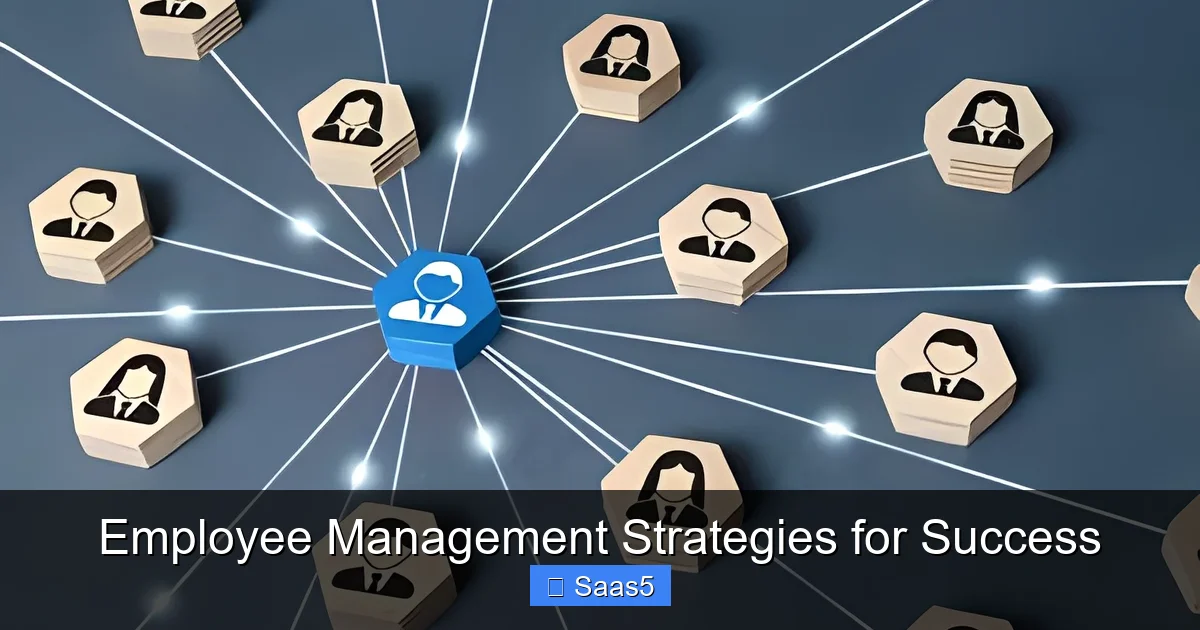
Visual guide about Employee Management Strategies for Success
Image source: akriviahcm.com
Structured Rhythms vs. Ad-Hoc Chaos
Establish predictable communication rhythms. This includes:
- Daily Stand-ups (15 mins): Not for status reporting to a manager, but for team syncs: “What did I do? What will I do? Any blockers?”
- Weekly One-on-Ones: The most critical manager-employee touchpoint. This is employee-owned time to discuss career growth, challenges, feedback, and support needs—not just a project status update.
- Monthly Team Retrospectives: A blameless forum to discuss what went well, what didn’t, and how to improve processes.
- Quarterly All-Hands: Leadership shares company metrics, wins, and strategic shifts to maintain transparency and connection to the bigger picture.
The Art of Active Listening and Psychological Safety
Communication isn’t just about broadcasting information. It’s about listening. Practice active listening in meetings: paraphrase what you hear, ask clarifying questions, and validate feelings. This builds psychological safety—the belief that one won’t be punished for speaking up with ideas, questions, or mistakes. In a psychologically safe team, a junior engineer will flag a potential security flaw, a support agent will suggest a product tweak, and a salesperson will admit a competitor’s strength. This is where true innovation and risk mitigation happen. Leaders model this by admitting their own mistakes and soliciting dissenting opinions.
3. Empowerment and Autonomy: Fueling Intrinsic Motivation
Micromanagement is the antithesis of SaaS agility. It kills speed, crushes creativity, and drives your best talent out the door. The most successful managers act as enablers and coaches, not controllers. Empowerment means giving team members the authority, resources, and context to make decisions about their work.
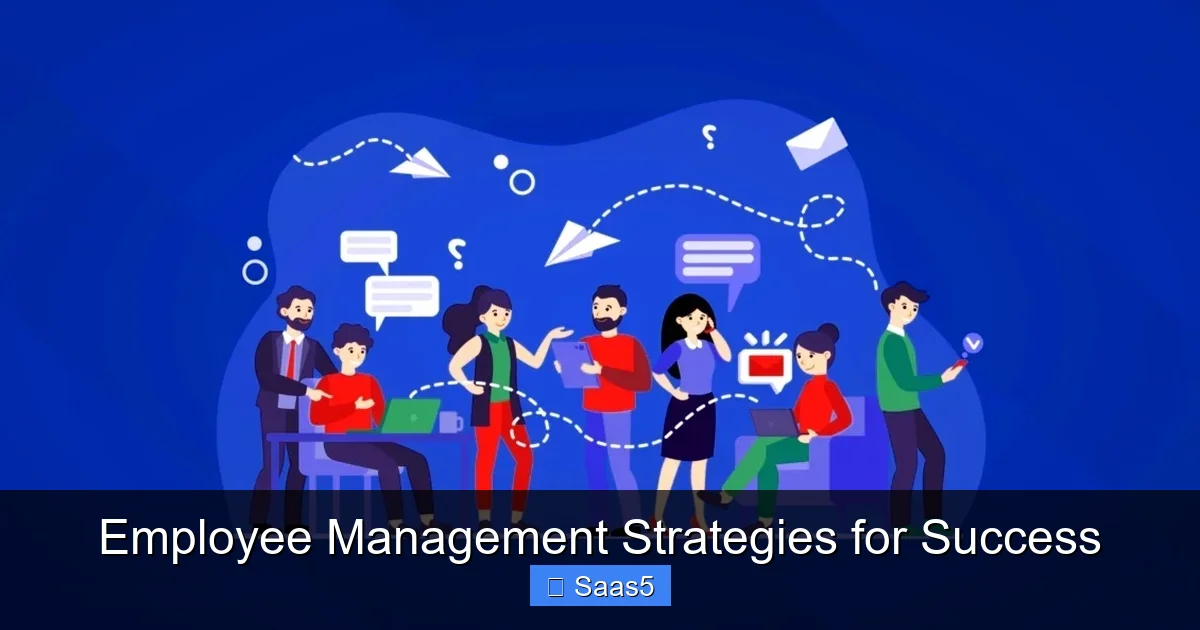
Visual guide about Employee Management Strategies for Success
Image source: lawyerflux.com
Defining Boundaries, Then Getting Out of the Way
Autonomy without boundaries is chaos. Start by clearly defining the “guardrails”: the company’s core values, the team’s key objectives (OKRs), budget constraints, and compliance requirements. Within those guardrails, give your team the freedom to determine the “how.” A product designer should decide the user flow; a growth marketer should choose the channel mix for a campaign. Your job is to provide the “why” (the strategic context) and remove obstacles (e.g., “I’ll get you access to that data tool you need”), not to dictate every step.
The “Delegate and Elevate” Model
Effective delegation is a skill. It’s not about dumping tasks. Use a model like this:
- Define the Outcome: Clearly state the desired result and its importance.
- Set the Parameters: Outline resources, deadlines, and decision-making limits.
- Ensure Competence: Does the person have the skills, or do they need training?
- Establish Check-ins: Agree on progress update points (not micromanagement, but support).
- Hand Over the Reins: Trust them to execute. Be available for questions, but resist the urge to intervene.
This builds capability and confidence, freeing you to focus on higher-level strategic work.
4. Recognition, Rewards, and Retention: More Than Just a Paycheck
In the competitive SaaS talent market, a good salary is table stakes. What truly retains top performers is feeling valued, seen, and on a path to growth. Recognition and rewards are critical components of employee management strategies for success, directly impacting engagement and turnover.
Visual guide about Employee Management Strategies for Success
Image source: lawyerflux.com
Timely, Specific, and Personalized Recognition
Forget only recognizing big, quarterly wins. The most powerful recognition is frequent, specific, and immediate. Instead of “good job on the demo,” say, “Hey, great job in the Acme demo today. The way you handled their complex objection about API rate limits was confident and solution-oriented—it directly addressed their core fear. That likely sealed the deal.” Be specific about the behavior and its impact. Also, know your team members: some prefer public praise in a team channel, others value a quiet, sincere thank-you in a 1:1, and some appreciate tangible rewards like a small gift card.
Designing a Holistic Compensation & Growth Strategy
Your compensation philosophy must be transparent and equitable. This includes:
- Competitive Base Salary: Benchmarked regularly against the market.
- Meaningful Variable Compensation: For sales and some roles, clear, achievable commission structures. For others, team/company-based bonuses tied to metrics like MRR growth or customer retention.
- Equity (Stock Options): Crucial in SaaS to foster an owner’s mindset and long-term alignment.
- Career Lattice, Not Just Ladder: Provide growth paths beyond traditional management. Create “individual contributor” tracks (e.g., Senior Engineer, Principal Architect) with commensurate compensation and influence. Support internal mobility—let a marketer try a stint in customer success if they’re curious.
5. Continuous Development: Building a Learning Culture
The SaaS landscape evolves monthly. New technologies, competitive features, and shifting buyer behaviors are the norm. A team that isn’t learning is a team that’s falling behind. Investing in professional development is not a perk; it’s a survival strategy.
Personalized Development Plans
During your quarterly or annual goal-setting (or in dedicated development conversations), co-create a Individual Development Plan (IDP) with each employee. Ask: “What skills do you want to build in the next 6-12 months? What experiences would help you grow toward your career goals?” The plan should include concrete actions: a course (Udemy, Coursera, industry certifications), a mentorship pairing (with a senior leader or a peer in a different function), a stretch project, or attending a key conference (like SaaStock or a niche dev conference). Budget for this. A $2,000 annual learning budget per employee is a high-ROI investment.
Knowledge Sharing as a Core Workflow
Stop letting knowledge hoard in individual heads. Institutionalize sharing. This can take many forms:
- “Lunch & Learns”: Informal sessions where team members share a project, a new tool, or a lesson learned.
- Internal Tech/Craft Talks: More formal presentations, recorded for the archive.
- Mentorship & Buddy Programs: Pairing new hires with tenured ones, and cross-department pairs (e.g., an engineer with a customer success rep) to break down silos.
- Documentation Culture: Reward and simplify the creation of clear, accessible docs in your wiki (Confluence, Notion). Make it a core part of project completion.
A learning culture attracts curious talent and makes your organization exponentially more resilient.
6. Well-being and Flexibility: The Sustainable Performance Engine
The “always-on” SaaS culture is a burnout factory. Sustainable success requires a team that is not just skilled, but also mentally and physically healthy. Modern employee management strategies for success must explicitly address well-being and flexibility.
Embracing True Flexibility
Flexibility isn’t just about working from home. It’s about when and how work gets done. Implement core collaboration hours (e.g., 10 AM – 2 PM in key time zones) for meetings, but allow people to structure the rest of their day around their peak productivity times and personal lives. Trust output over hours logged. This requires clear goal-setting (from Section 1) so you can measure results, not seat time.
Proactive Mental Health and Boundaries
Lead by example. Managers should model healthy boundaries: not sending emails late at night, taking full vacation time, and blocking focus time on their calendars. Offer tangible support: subscriptions to meditation apps (Calm, Headspace), access to Employee Assistance Programs (EAPs), and training for managers on spotting burnout signs (withdrawal, cynicism, decreased efficacy). Normalize conversations about stress. A simple “How are you *really* doing?” in a 1:1, followed by active listening, can be a powerful intervention.
Conclusion: Management as Your Ultimate Leverage
The strategies outlined—clarity, communication, empowerment, recognition, development, and well-being—are interconnected pieces of a holistic system. They are not standalone initiatives to be checked off a list. They represent a fundamental shift in mindset: from viewing employees as resources to be optimized, to viewing them as partners to be cultivated. In the SaaS arena, where your product can be copied and your market can shift overnight, the quality of your team’s collaboration, innovation, and execution is your last, best competitive moat.
Start small. Pick one area where your team is struggling—maybe it’s inconsistent feedback or a lack of career path visibility—and implement one change this quarter. Train your managers on conducting effective one-on-ones. Roll out a simple peer-recognition program. Launch a pilot mentorship cohort. Measure the impact through engagement surveys, retention rates, and productivity metrics. Employee management strategies for success are not a static playbook; they are a continuous practice of empathy, clarity, and courage. By investing deeply in your people, you don’t just build a better team—you build a company that can truly succeed.
Frequently Asked Questions
How do I manage underperforming employees without demotivating the rest of the team?
Address performance issues with empathy and privacy. Have a direct, fact-based conversation focused on behaviors and impact, not personality. Co-create a clear Performance Improvement Plan (PIP) with specific milestones and support. Handle it confidentially to maintain team trust. Your team will respect fair, consistent processes.
What are the best tools for implementing these management strategies in a remote SaaS team?
Use a suite of tools: Slack/MS Teams for async/sync communication; Zoom for video calls; Asana/Clickup/Jira for goal and project tracking; Lattice or Culture Amp for feedback, goals, and engagement surveys; and Notion/Confluence for documentation. The tool matters less than consistent usage and integration into daily workflows.
How can I measure the ROI of my employee management initiatives?
Track leading and lagging indicators. Lagging: turnover rate (especially regrettable attrition), employee engagement/eNPS scores, and productivity metrics (e.g., sprint velocity, sales quota attainment). Leading: participation in development programs, frequency of 1:1s, internal mobility rates, and qualitative feedback from stay interviews. Correlate improvements in these with business outcomes like customer satisfaction (CSAT) and revenue growth.
What should I do if my team is resistant to new management processes like OKRs or feedback tools?
Involve them in the design. Explain the “why” clearly—connect the process to a pain point they feel (e.g., “We’re all juggling too many priorities; OKRs will help us say no to low-value work”). Start with a pilot team, gather their feedback, and iterate. Highlight early wins. Frame it as an experiment to make their work lives better, not a top-down mandate.
How often should I conduct one-on-one meetings, and what’s the ideal structure?
For direct reports, aim for weekly or bi-weekly 30-45 minute meetings. Make them employee-led with a shared doc agenda. A good structure: (1) Personal check-in (how are you?), (2) Wins and challenges from last week, (3) Priorities and support needed for this week, (4) Career growth discussion (rotate this focus), (5) Feedback exchange. Always end with clear action items for both of you.
Is it possible to be too flexible? How do I maintain accountability?
Flexibility without accountability is anarchy. The balance is achieved through extreme clarity on outcomes (goals/OKRs) and consistent communication on progress. Use results-based metrics, not activity-based monitoring. Regular check-ins (like weekly 1:1s) become forums to review outcomes, not to police activity. Trust is built on delivering results, not on being seen online at specific hours.