How High Should Surround Speakers Be
Getting the right height for your surround speakers makes a huge difference in your audio experience. You want sound that feels natural, clear, and immersive without causing ear fatigue. In this guide, we will walk you through the best placement heights, why it matters, and simple tips to dial in your setup. Whether you are building a new home theater or upgrading an old one, you will learn how to position your speakers for the best results.
Setting up a home theater is exciting, but the details can feel overwhelming. One of the most common questions people ask is how high should surround speakers be. The answer is not just a single number. It depends on your room, your seating, and the kind of sound you want. That said, there is a simple starting point that works for most setups.
Surround speakers handle the background sounds, ambient noise, and off-screen action. They help create the feeling that sound is all around you. If they sit too low, the audio can feel muddy or disconnected. If they sit too high, the sound may feel detached from the scene. The goal is a smooth, natural wrap of sound that supports the movie, show, or game you are enjoying.
In this guide, we will break down the best height range, why it matters, and how to fine-tune your layout. We will also cover common mistakes, quick tips, and simple tests you can do at home. By the end, you will know exactly what to aim for and how to get the most from your system.
Key Takeaways
- Ideal Height: Aim to place surround speakers slightly above ear level when seated, usually around 2 to 3 feet higher.
- Audio Sweet Spot: The goal is to create a natural sound field that wraps around you without distracting from the main action.
- Room Matters: Ceiling height, furniture, and wall materials can change the best speaker height for your space.
- Testing Is Key: Small adjustments of a few inches can noticeably improve clarity and immersion.
- Consistency Counts: Keep left and right surround speakers at the same height for balanced sound.
- Avoid Obstructions: Keep speakers clear of shelves, plants, and other objects that can block or reflect sound.
- Use a Reference: Start with manufacturer guidelines, then tweak based on how your room sounds.
📑 Table of Contents
Why Speaker Height Matters for Surround Sound
Speaker height changes the way sound reaches your ears. When a speaker is placed at the right height, the audio feels balanced and natural. You hear details more clearly, and the room feels more open. When the height is off, sound can feel harsh, weak, or strangely distant.
The human ear is very sensitive to direction. We notice when a sound comes from above, below, or straight ahead. In a home theater, you want the surround speakers to support the scene without pulling attention away from the screen. Proper height helps the sound blend into the room instead of sticking out like a sore thumb.
Another reason height matters is reflection. Sound bounces off walls, ceilings, and furniture. If a speaker sits too close to a hard surface, the reflections can cause harshness or muddiness. A better height often reduces those problems and gives you cleaner audio.
Here is a simple way to think about it:
- Too low: Sound may feel like it is coming from the floor or furniture rather than the room.
- Too high: Sound may feel detached, especially if the speaker is well above your head.
- Just right: Sound feels like part of the scene, with a smooth and natural spread.
If you want a more detailed look at surround placement in general, you can also read our guide on where to put surround speakers. That article explains positioning from a broader perspective, which pairs well with today’s focus on height.
The Role of Ear Level in Speaker Placement
Ear level is the starting point for most speaker setups. When you sit in your main listening spot, imagine a straight line from your ears outward. That line is your reference. For surround speakers, you usually do not want them exactly at ear level. Instead, you want them slightly above that line.
Why slightly above? Because sound from a surround speaker should feel like it is coming from around you, not directly into your ears. A small upward offset helps create a more relaxed listening experience. It also helps the sound spread across the seating area more evenly.
If your seating is low, such as a couch or recliner, the ideal height may be a bit different than if you use higher chairs. The best approach is to think about where your ears will be during normal viewing. Then place the speakers a little above that point.
How Room Size and Ceiling Height Affect Placement
Room size plays a bigger role than many people expect. In a small room, sound can build up quickly. A speaker that is too high or too close to a hard ceiling may create harsh reflections. In a larger room, you may have more freedom, but you still want the sound to stay connected to the listening area.
Ceiling height also matters. High ceilings can make a room feel more open, but they can also make sound seem distant if the speakers are placed too high. Lower ceilings require a more careful approach because there is less space for sound to travel before it reflects.
If your room has unusual features, such as sloped ceilings or large windows, plan your placement carefully. Those surfaces can change the way sound behaves. In some cases, moving a speaker a few inches can make a noticeable difference.
How High Should Surround Speakers Be
So, how high should surround speakers be? For most home theater setups, a good starting point is to place the speakers above ear level when you are seated. Many people find a range of about 2 to 3 feet above ear level works well. That usually puts the speakers high enough to create a natural surround effect without feeling disconnected.
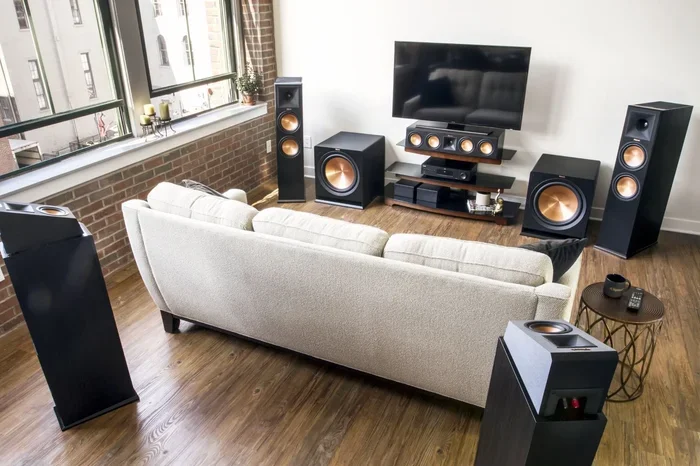
Visual guide about Home theater surround speakers
Image source: i.pinimg.com
This is only a starting point, though. Your ideal height may shift a bit based on your room and your preferences. Some listeners like the speakers a little lower for a more direct feel. Others prefer them a little higher for a more ambient sound. The best choice is the one that feels balanced in your space.
A practical approach is to begin with a standard height, then listen and adjust. Small changes can have a real impact. If the sound feels too soft or too airy, lower the speakers a little. If the sound feels too direct or distracting, raise them slightly.
General Height Guidelines for Most Setups
Here are some simple guidelines to help you get started:
- Seated ear level first: Find your main listening position and note your ear height.
- Add a small offset: Place the surround speakers a bit above that line, often around 2 to 3 feet higher.
- Keep both sides even: Match the height on the left and right surround speakers for balanced sound.
- Stay clear of obstacles: Avoid placing speakers behind thick furniture or too close to shelves.
- Check the sound field: Make sure the audio feels spread around you instead of coming from one spot.
If you are also thinking about speaker spacing, you may want to check out our article on how far apart should speakers be. Distance and height work together, so it helps to consider both at the same time.
Adjusting Height for Different Seating Arrangements
Not every room has one perfect seating spot. Some people have a single main couch. Others have multiple rows or a mix of seating types. If your room has different seating heights, aim for the main viewing area first. That is usually where most of the listening happens.
For a single couch, place the speakers relative to the seated ear level of the people using that couch. For multiple rows, think about the middle row if you have one. That area often represents the best compromise for the whole room.
If your seating is very low or very high, adjust accordingly. A floor-based setup may need a different offset than a raised seating area. The key is to keep the sound comfortable and natural for the people who use the room most often.
Use Cases: Movies, Gaming, and Music
Different activities can change what height feels best. For movies, you usually want the surround speakers to support the action without drawing attention to themselves. A moderate height often works well because it keeps the sound immersive but relaxed.
For gaming, clarity matters a lot. You want to hear footsteps, ambient cues, and directional sound as clearly as possible. In that case, a height that keeps the sound open and detailed may be preferable. If the speakers feel too high, some cues may seem less immediate.
For music, the goal is usually a smooth and balanced sound. Surround speakers can add depth to a listening session, but they should not overpower the main audio. A height that blends well with the front speakers often gives the most pleasing result.
Best Practices for Surround Speaker Placement
Good placement is about more than height alone. You also need to think about angle, distance, and room layout. When all of these pieces fit together, your surround sound feels cohesive and immersive.
One helpful habit is to keep your setup symmetrical when possible. Symmetry makes the sound field more predictable and easier to balance. If one speaker is higher, farther, or more obstructed than the other, the room may sound uneven.
Another good practice is to avoid placing speakers in spots that block the sound. Large furniture, thick curtains, and crowded shelves can all interfere. Even a small obstruction can change the way audio spreads through the room.
Matching Height With Speaker Angle
Height and angle work together. If a speaker is placed higher, you may want to angle it slightly downward toward the listening area. That helps the sound reach the listeners more directly. If the speaker is lower, you may need less angle or even a slight upward tilt, depending on the layout.
The right angle helps the sound feel natural. Too much tilt can make the audio feel pointed or harsh. Too little tilt can make it feel like the sound is missing the listening area. The best angle is the one that gives you clear, comfortable sound from your main seating position.
If you are using wall mounts, placement can be easier to adjust. For a closer look at that process, see our guide on how to mount speakers on wall. Mounting gives you more control over height and angle, which can be very useful during setup.
Keeping Left and Right Surrounds Balanced
Balance is one of the easiest ways to improve surround sound. Make sure both surround speakers are at the same height unless you have a very specific reason to do otherwise. Matching height helps the sound feel even across the room.
It also helps to keep the distance similar on both sides. If one speaker is much farther away, the sound may feel stronger on one side. That can be distracting, especially during dialogue or action scenes. A balanced layout gives you a more stable and enjoyable soundstage.
If you are using stands or mounts, double-check that they are level. A small tilt may not seem important, but it can affect the listening experience over time. A quick level check is an easy win during setup.
Common Mistakes When Setting Speaker Height
Even experienced listeners can make simple mistakes during setup. The good news is that most of them are easy to fix once you know what to look for. Here are some of the most common issues.
One common mistake is placing the speakers too high. When that happens, the sound can feel disconnected from the screen and the room. Another mistake is placing them too low, where the audio may feel like it is coming from nearby objects instead of the surround field.
People also forget to account for furniture and decor. A bookshelf, plant, or large lamp can change the sound more than expected. It is worth checking the area around each speaker before you finalize the setup.
Placing Speakers Too High or Too Low
If the speakers are too high, you may notice that the surround effects feel floaty or weak. The sound may not blend as well with the front speakers. If they are too low, the audio may feel too close and less immersive. Either extreme can take away from the experience.
A simple fix is to start in the middle of the recommended range and move in small steps. Listen to a scene you know well. If something feels off, adjust the height a little and try again. Small changes are often enough.
Ignoring Furniture, Walls, and Room Layout
Rooms are not empty boxes. They have sofas, rugs, lamps, bookshelves, and walls with different surfaces. All of these can affect sound. A speaker placed near a hard wall may sound brighter or more reflective. A speaker hidden behind soft furniture may sound softer or less clear.
It helps to look at the whole room, not just the speaker itself. If you want to reduce clutter around your audio setup, our article on to avoid clutter speakers should eliminate offers useful ideas for keeping the space cleaner and more functional.
Overlooking Symmetry and Listening Position
Symmetry is another area where people often slip up. If one surround speaker is higher than the other, the sound can feel lopsided. The same is true if one side is closer to a wall or blocked by furniture.
Your listening position matters too. If you usually sit in one spot, optimize for that spot first. If you move around the room often, aim for a setup that still sounds good from several seats. That usually means keeping the speakers clear, balanced, and not too extreme in height.
How to Test and Fine-Tune Your Setup
Once your speakers are in place, testing is the best way to confirm the height is right. You do not need fancy tools. You just need a few test scenes, some patience, and a willingness to make small adjustments.
Start by sitting in your main listening position. Play content with clear surround effects, such as a movie scene with background action or a game with directional sound. Pay attention to whether the sound feels natural and evenly spread.
Then make one change at a time. Move a speaker up or down by a small amount. Listen again. If the sound improves, keep going in that direction. If it gets worse, move back. This simple process is often more effective than trying to guess the perfect height right away.
Simple Listening Tests You Can Try at Home
Here are a few easy tests to help you judge your setup:
- Dialogue check: Make sure dialogue stays clear and the surround effects do not overpower it.
- Movement check: Listen for sounds that move across the room. They should feel smooth, not jerky.
- Ambience check: Background sounds should feel gentle and spacious, not harsh or noisy.
- Balance check: Sit in different spots and see whether the sound stays reasonably even.
- Comfort check: After a while, the sound should still feel easy to listen to, not tiring.
If you want to improve the overall wiring and connection side of your setup, you may also find our guide on how to wire component speakers helpful. Clean connections and proper setup go hand in hand.
When to Move Speakers Up or Down
Move a speaker up if the sound feels too direct, too loud in the listening position, or too detached from the room. A small raise can soften the focus and help the audio blend better.
Move a speaker down if the sound feels too distant, too vague, or too far from the listening area. A small lowering can make the surround effects feel more present and easier to follow.
The best adjustment is usually small. Try a few inches at a time. Big jumps can make it harder to tell what changed. Slow, careful tweaks usually lead to the best result.
Expert Insights on Fine-Tuning Height
Experienced listeners often say the best setup is the one you barely notice. That is a good goal. You do not want the speakers to call attention to themselves. You want them to support the audio so the movie, game, or music feels complete.
Another useful insight is to trust your ears more than a rigid rule. A guideline gives you a strong starting point, but your room is unique. If a slightly lower or higher position sounds better in your space, that is worth paying attention to.
It also helps to revisit your setup after moving furniture or changing seating. Even small changes in the room can affect sound. A quick recheck can save you from wondering why the audio feels different later on.
Final Tips for a Better Surround Sound Experience
Getting the height right is only one part of the puzzle, but it is an important one. Once you dial it in, you will likely notice clearer details, better immersion, and a more comfortable listening experience. Here are a few final tips to keep in mind.
- Start with a solid baseline: Use a height slightly above seated ear level, then adjust.
- Keep things balanced: Match height, distance, and angle on both sides when possible.
- Stay flexible: Be ready to tweak the setup if your room or seating changes.
- Listen for comfort: Good surround sound should feel easy, not tiring.
- Think about the whole room: Walls, furniture, and decor all affect the final result.
If you are also planning to hide some of your gear for a cleaner look, you might enjoy our article on how to hide surround sound speakers. A tidy setup can make the room more enjoyable without sacrificing sound quality.
When you take the time to set your speakers carefully, the payoff is worth it. A well-placed surround system can turn an ordinary movie night into something much more engaging. It can make games feel more responsive and music feel more spacious. That is the real goal: sound that feels right for the way you use the room.
So if you are still asking how high should surround speakers be, start with the general guideline, then fine-tune for your space. A few careful adjustments can make a big difference. Once everything clicks into place, your home theater will feel more natural, more immersive, and much more fun to use.
Frequently Asked Questions
How high should surround speakers be placed for the best sound?
For most setups, surround speakers work well when placed slightly above seated ear level, often about 2 to 3 feet higher. This helps the sound feel natural and immersive without becoming distracting. You can adjust a little up or down based on your room and seating.
Should surround speakers be at ear level or higher?
They are usually better slightly higher than ear level when you are seated. That small offset helps the sound spread around the room more smoothly. Exact ear level can work in some cases, but a little height often feels more relaxed and balanced.
What happens if surround speakers are too high?
If they are too high, the sound can feel detached from the screen and the listening area. You may notice that surround effects seem weak or floaty. Lowering the speakers a bit can often bring the sound back into a more natural space.
What happens if surround speakers are too low?
If they are too low, the audio may feel like it is coming from nearby furniture or the floor instead of the room. The surround field can feel less open and less immersive. Raising the speakers slightly usually improves the sense of space.
Do surround speaker height and angle need to match?
They do not have to match exactly, but they should work together. A higher speaker may need a slight downward angle, while a lower one may need less tilt. The goal is to aim the sound toward the listening area in a way that feels clear and comfortable.
How can I tell if my surround speaker height is right?
Sit in your main listening spot and play content with clear surround effects. If the sound feels evenly spread, easy to follow, and not tiring, the height is probably close to right. If something feels off, try small adjustments until the audio feels more natural.