2 Channel Amplifier 4 Speakers

Looking to power four speakers with just two amp channels? This guide breaks down everything you need to know—from wiring configurations to power matching—so you can get crystal‑clear, room‑filling sound without guesswork. We’ll show you practical tips, real‑world examples, and the best gear picks to make your 2 channel amplifier 4 speakers system shine.
Key Takeaways
- Match impedance wisely: Pairing your amp’s output with the right speaker impedance prevents overheating and distortion.
- Series vs. parallel wiring: Understanding both methods lets you choose the optimal sound quality and power distribution.
- Amplifier power matters: Aim for an amp that delivers at least 50‑75 % of each speaker’s RMS rating for clean headroom.
- Quality cabling improves performance: Use low‑resistance speaker wire and secure connections to avoid signal loss.
- Safety first: Proper grounding and ventilation extend the life of your 2 channel amplifier 4 speakers setup.
- Upgrade paths are easy: Adding a crossover or a DSP can fine‑tune the system as your audio needs grow.
- Real‑world examples help: Sample configurations show how to get the most out of popular car and home speakers.
📑 Table of Contents
- Introduction: Why a 2 Channel Amplifier for Four Speakers?
- Understanding the Basics: Impedance, Power, and Channels
- Wiring Four Speakers to Two Channels
- Choosing the Right Amplifier
- Practical Example: Setting Up a Car Audio System
- Home Audio Scenario: Driving Four Bookshelf Speakers
- Optimising Sound Quality
- Safety and Maintenance Tips
- Conclusion: Your Path to Powerful, Balanced Sound
Introduction: Why a 2 Channel Amplifier for Four Speakers?
Imagine you have a modest budget but want to fill a small living room or a car cabin with rich, dynamic sound. A 2 channel amplifier is often the go‑to choice for many DIY enthusiasts because it’s compact, affordable, and easy to install. But what happens when you want to drive four speakers with only two channels?
That’s where clever wiring tricks and a solid understanding of power handling come into play. By connecting speakers in series, parallel, or a hybrid of both, you can safely power four speakers from a single 2‑channel amp while preserving tone and protecting your gear.
Understanding the Basics: Impedance, Power, and Channels
What is Impedance?
Impedance, measured in ohms (Ω), is the speaker’s resistance to the flow of electrical current. Most home speakers are 8 Ω, while many car speakers are 4 Ω. Your amplifier will list a “stable load” range—usually 4‑8 Ω per channel. Feeding a load outside this range can cause the amp to overheat or clip.
Visual guide about 2 Channel Amplifier 4 Speakers
Image source: lnwidea.com
RMS Power vs. Peak Power
RMS (Root Mean Square) power is the continuous power a speaker can handle without distortion. Peak power is the short‑term maximum. When matching an amp to speakers, aim for an RMS rating that’s 50‑75 % of the speaker’s RMS rating. This gives you headroom for musical transients.
Channels Explained
A “channel” is simply one output from the amplifier. A 2 channel amp has two outputs, each capable of driving one speaker or a group of speakers wired together. The key is to keep the total load per channel within the amp’s safe range.
Wiring Four Speakers to Two Channels
Parallel Wiring
Connecting speakers in parallel means you join the positive terminals together and the negative terminals together. The formula for total impedance (Z_total) is:

Visual guide about 2 Channel Amplifier 4 Speakers
Image source: n.sinaimg.cn
Z_total = (Z1 × Z2) / (Z1 + Z2)
For two 8 Ω speakers in parallel, Z_total = (8 × 8) / (8 + 8) = 4 Ω. This is great if your amp can handle 4 Ω per channel, but you lose some power per speaker.
Series Wiring
Series wiring adds the impedances together: Z_total = Z1 + Z2. Two 8 Ω speakers in series give you 16 Ω, which is usually too high for most amps. However, you can pair a series string with a parallel string to balance the load.
Series‑Parallel Hybrid (The Sweet Spot)
The most common solution for a 2 channel amp driving four speakers is the series‑parallel method. Here’s how it works:
- Wire two speakers in series on Channel A (e.g., front left + rear left).
- Wire the other two speakers in series on Channel B (front right + rear right).
- Each channel now sees the combined impedance of two speakers.
If you use two 8 Ω speakers per channel, the result is 16 Ω per channel—too high. To fix this, you can use a pair of 4 Ω speakers per channel, giving 8 Ω total, which is safe for most amps.
For a practical example, see our guide on 2 8 Ohm Speakers In Series for detailed calculations.
Choosing the Right Amplifier
Power Rating
When selecting a 2 channel amp for four speakers, look for an RMS output that matches your speakers’ needs. If each speaker is rated at 50 W RMS, aim for an amp that can deliver at least 25‑30 W RMS per channel into the combined load.

Visual guide about 2 Channel Amplifier 4 Speakers
Image source: m.media-amazon.com
Class Types (A, AB, D)
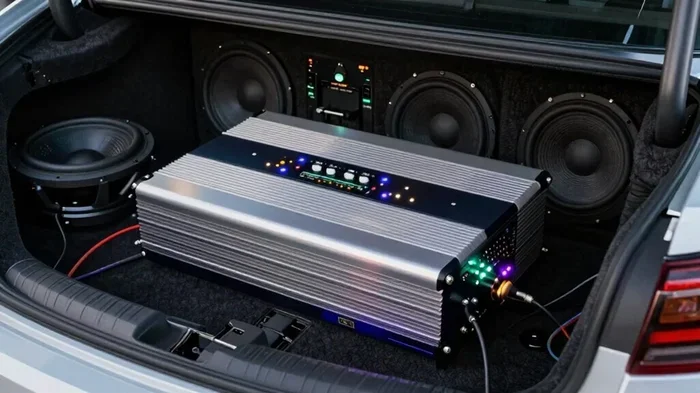
Class A amps are ultra‑clean but inefficient. Class AB offers a balance of sound quality and efficiency, while Class D is lightweight and perfect for car installations. For most home setups, a Class AB amp like the Fosi Audio TB10A works well.
Built‑In Crossovers and EQ
Some 2 channel amps include built‑in crossovers, letting you set high‑pass or low‑pass filters for each channel. This is handy when pairing woofers with tweeters in a 4‑speaker configuration.
Practical Example: Setting Up a Car Audio System
Components Needed
- 2 channel amplifier (e.g., Rockford Fosgate R150‑2, 150 W RMS per channel at 4 Ω).
- Four 4 Ω car speakers (two woofers, two tweeters).
- Speaker wire (16‑gauge for short runs, 12‑gauge for longer runs).
- Inline fuse and distribution block.
- Basic tools: wire cutters, crimping tool, screwdriver.
Step‑by‑Step Wiring
- Mount the amplifier in a ventilated spot, usually under a seat.
- Connect the power cable (+12 V) to the battery with an inline fuse within 18 inches of the battery.
- Run ground wire to a clean metal point on the chassis.
- Wire the front left and rear left speakers in series: positive of front left to amp’s Channel A+, then front left negative to rear left positive, and rear left negative back to amp’s Channel A‑.
- Repeat the same series wiring for the right side on Channel B.
- Secure all connections with heat‑shrink tubing.
- Turn on the amp, set the gain low, and gradually increase while listening for distortion.
This setup delivers 8 Ω per channel (two 4 Ω speakers in series), safely within the amp’s rating.
If you’re interested in more car speaker options, check out our article on 6 3 4 Car Speakers for a roundup of popular models.
Home Audio Scenario: Driving Four Bookshelf Speakers
Gear List
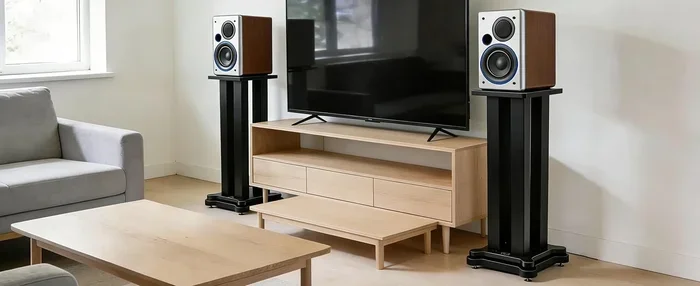
- 2 channel integrated amplifier (e.g., Yamaha A‑S801, 100 W per channel at 8 Ω).
- Four 8 Ω bookshelf speakers (e.g., Polk Audio T15).
- Speaker wire (14‑gauge).
- Optional: passive crossover network.
Wiring Options
Because the Yamaha amp can handle 8 Ω per channel, you can wire two speakers in parallel on each channel, giving 4 Ω per channel—still safe but a bit low. A safer route is to use a series‑parallel hybrid:
- Connect left front and left rear in series (total 16 Ω).
- Connect right front and right rear in series (total 16 Ω).
- Then place a 2 Ω resistor in parallel with each series pair to bring the load down to roughly 8 Ω. (Resistors are optional and mainly for fine‑tuning.)
For those who love gaming, pairing a high‑quality amp with a How To Get Speakers Sight Destiny 2 guide can enhance in‑game audio immersion.
Optimising Sound Quality
Use Quality Speaker Wire
Thicker wire (lower gauge number) reduces resistance, especially over long distances. For runs under 25 ft, 16‑gauge is fine; for longer runs, upgrade to 14‑gauge.
Secure Connections
Loose terminals cause crackling and loss of power. Use banana plugs or solder and heat‑shrink for a solid bond.
Positioning and Room Treatment
Place speakers at ear level and keep them at least a foot away from walls to reduce bass boom. Adding a simple acoustic panel behind the speakers can tame reflections.
Fine‑Tuning with a DSP
Digital Signal Processors let you set precise crossover points, delay, and EQ. Even a budget-friendly DSP can make a noticeable difference in clarity.
Safety and Maintenance Tips
Ventilation
Amplifiers generate heat. Ensure at least 2‑inches of clearance on all sides and consider a small fan if the amp runs hot.
Ground Loops
If you hear a hum, check that all components share a common ground point. Use ground loop isolators if needed.
Regular Checks
Inspect speaker wire for wear, tighten any loose screws, and clean contacts with electronic cleaner every six months.
Conclusion: Your Path to Powerful, Balanced Sound
Driving four speakers with a 2 channel amplifier isn’t just possible—it can be the most efficient way to achieve a full, immersive soundstage without breaking the bank. By matching impedance, selecting the right amp, and wiring thoughtfully, you’ll enjoy clean, dynamic audio in both car and home environments.
Remember to start low, listen carefully, and adjust as needed. With the right setup, your 2 channel amplifier 4 speakers system will deliver music that feels alive, whether you’re cruising down the highway or relaxing in your living room.
Frequently Asked Questions
Can I use any 2 channel amplifier with four speakers?
Not all amps are suitable. The amp must be able to handle the combined impedance of the speakers per channel. Check the amp’s specifications for stable load ranges.
What is the best wiring method for a 2 channel amp and four speakers?
The series‑parallel hybrid method is usually optimal, as it keeps the load within the amp’s safe range while delivering balanced power to all speakers.
Will wiring speakers in series reduce volume?
Series wiring increases total impedance, which can lower the power each speaker receives, potentially reducing volume. Using a series‑parallel mix helps maintain volume levels.
Do I need a crossover when using a 2 channel amp for four speakers?
If you’re pairing woofers with tweeters, a crossover (or a DSP with built‑in filters) helps direct the right frequencies to each driver, improving clarity.
How can I protect my amp from overheating?
Ensure proper ventilation, keep the amp out of direct sunlight, and consider adding a small fan. Also, avoid running the amp at full gain for extended periods.
Is it okay to use a 2 channel amp for a home theater surround setup?
For a basic 4‑speaker surround (front left/right and rear left/right), a 2 channel amp can work with series‑parallel wiring, but a dedicated multi‑channel amp will give more flexibility and better channel separation.