First Laptop History
The first laptop history is a journey through decades of innovation, from heavy portable computers to the slim devices we carry today. The first true portable computer appeared in the early 1980s, and it changed how people work and communicate forever. Understanding this history helps you appreciate the powerful laptop you use every day.
The story of the first laptop history is one of bold ideas, stubborn engineers, and a world that was not yet ready for portable computing. Before laptops existed, computers filled entire rooms. They cost millions of dollars and required special cooling systems. The idea of carrying one on your lap seemed like science fiction. Yet a handful of dreamers refused to accept that limitation. They believed computing should be free from desks and cables. Their work gave birth to a device that now sits in billions of hands worldwide.
Today, we barely think twice about opening a laptop. We stream movies, write reports, and video call friends without a second thought. But behind that simple action lies decades of innovation. The first laptop was heavy, slow, and expensive. It had no Wi-Fi, no touchscreen, and a screen the size of a small book. Understanding where it all began helps us see how far we have come. It also reminds us that every great invention starts with a single step.
In this article, we will walk through the complete timeline of the first laptop history. We will explore the machines that started it all, the people who built them, and how portable computing became the global standard. Whether you are a tech enthusiast or just curious, this story will surprise you.
Key Takeaways
- The first portable computer: The Osborne 1 in 1981 is widely considered the first true portable computer, weighing 24.5 pounds.
- GRiD Compass made history: Used by NASA and the military, it introduced the clamshell design we still use today.
- Evolution of portability: Early laptops were heavy and expensive, but each generation got lighter, faster, and more affordable.
- Modern laptops are unrecognizable: Today’s laptop with i7 processor and 32gb ram 1tb ssd would blow the minds of 1980s engineers.
- Battery life improved dramatically: Early laptops barely lasted an hour, while modern ones last 10+ hours on a single charge.
- The first laptop sparked mobile computing: It paved the way for remote work, digital nomads, and the connected world we live in now.
📑 Table of Contents
- The Dawn of Portable Computing
- The Osborne 1: The Machine That Started It All
- The GRiD Compass: The First True Clamshell Laptop
- The Rise of Mainstream Laptops in the 1990s
- Modern Laptops: From Heavy Boxes to Sleek Powerhouses
- Key Milestones in First Laptop History
- Common Mistakes People Make When Learning About Laptop History
- Expert Insights: What the Pioneers Learned
- Conclusion
The Dawn of Portable Computing
Before the term “laptop” even existed, engineers were already experimenting with portable machines. The goal was simple but radical: make a computer you could move around. In the 1970s, most computers were room-sized monsters. They needed air conditioning, dedicated power lines, and teams of technicians just to keep them running. The idea of a personal, portable machine felt almost impossible.
The Xerox Alto: A Visionary Prototype
In 1973, Xerox created the Alto, a computer that hinted at what was possible. It was not truly portable, but it introduced concepts we now take for granted. The Alto featured a graphical user interface, a mouse, and ethernet networking. These ideas were decades ahead of their time. While the Alto stayed in the lab, it planted the seeds for everything that followed. Many people credit it as the spiritual ancestor of modern computing.
The Alto cost about $40,000 in 1973 dollars. That is over $250,000 today. Only a few hundred units were ever built. But its influence was enormous. Steve Jobs visited Xerox PARC and saw the Alto firsthand. That visit inspired the Apple Lisa and later the Macintosh. The first laptop history owes a quiet debt to this forgotten machine.
Early Portable Machines: The Scelbi and the MCM/70
Before the first true laptop, a few machines tried to bridge the gap. The Scelbi-8H, released in 1975, is often called one of the first personal computers. It was a kit-based machine that could fit on a desk, but it was not portable in any real sense. The MCM/70, released in 1974, was more interesting. It looked like a small typewriter and could fit in a car trunk. Some historians consider it an early cousin of the laptop.
These machines were important stepping stones. They proved that people wanted smaller, more accessible computers. They also showed that portability was a desirable feature, even if the technology of the time could not fully deliver it yet. The dream of a truly portable computer was alive, waiting for the right combination of parts and vision.
The Osborne 1: The Machine That Started It All
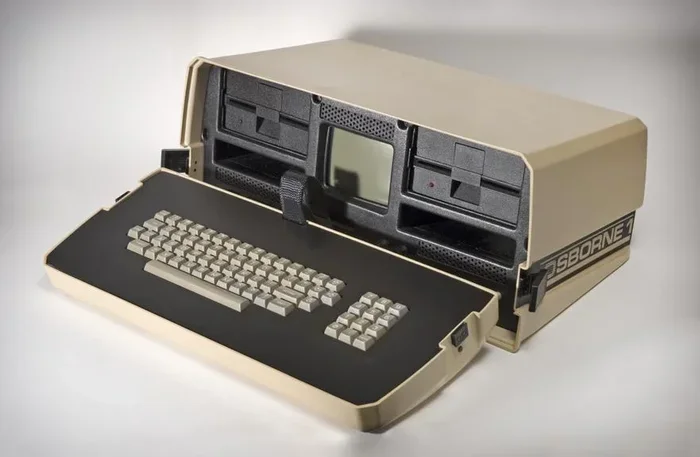
When most people study the first laptop history, they start with the Osborne 1. Released in 1981 by Adam Osborne’s company, Osborne Computer Corporation, this machine is widely regarded as the first commercially successful portable computer. It was not thin or light by today’s standards, but it was a breakthrough nonetheless.
What Made the Osborne 1 Special
The Osborne 1 weighed about 24.5 pounds, which is roughly the weight of a medium suitcase today. It had a five-inch screen, two floppy disk drives, and the CP/M operating system. It cost $1,795 at launch, which was a bargain compared to other computers of the era. The machine came bundled with software worth over $1,500, which was a smart marketing move that helped it sell quickly.
One of the most important things about the Osborne 1 was its design philosophy. It was meant to be moved. You could carry it with a handle on top, and it fit between airplane seats. It was not meant to sit permanently on a desk. This idea of computing on the go was revolutionary. For the first time, business travelers could work from their laps during flights or in hotel rooms.
The Osborne 1 also sparked a new industry. Companies like Compaq and Dell saw its success and began developing their own portable machines. Within a few years, the portable computer market exploded. The first laptop history is inseparable from the ripple effects this single machine created.
The Osborne Curse and Its Legacy
Despite its success, the Osborne 1 company collapsed just two years later. This became known as the “Osborne Effect,” where announcing a better product too early killed sales of the current one. Adam Osborne announced the Osborne Vixen before the Vixen was ready, and customers stopped buying the Osborne 1. The company went bankrupt in 1983.
But the legacy lived on. The Osborne 1 proved that portable computing had a market. It inspired countless engineers and entrepreneurs to push the boundaries further. Every modern laptop with i7 processor and laptop with ssd and 16gb ram traces its roots back to that clunky box from 1981. The Osborne 1 may have been heavy and slow, but it opened a door that would never close.
The GRiD Compass: The First True Clamshell Laptop
While the Osborne 1 was a portable computer, the GRiD Compass is often called the first true laptop. Released in 1982, it introduced the clamshell design that defines laptops today. The screen folded over the keyboard, protecting both components during transport. This simple but brilliant design choice changed everything.
NASA and Military Use
The GRiD Compass was not a consumer product. It was an expensive machine, costing around $8,000 to $10,000 in the early 1980s. But it found a niche where reliability mattered most. NASA used it aboard the Space Shuttle starting in 1983. The U.S. military also adopted it for field operations. Its magnesium alloy case was rugged and lightweight for its time.
The GRiD Compass had a unique ball mouse built into the keyboard, a 320×240 pixel display, and 384 kilobytes of RAM. It ran the GEOS operating system and could store data on proprietary floppy disks. It was not powerful by any modern standard, but it was the right machine for the right job at the right time.
What makes the GRiD Compass so important is its design DNA. The clamshell form factor it pioneered is still the standard today. When you open your laptop right now, you are using a design that was refined from the GRiD Compass. Its influence on the first laptop history cannot be overstated.
Epson and the Portable Market Expands
In 1983, Epson released the HX-20, which is sometimes called the first notebook computer. It was tiny, lightweight, and ran on batteries. It featured a tiny LCD screen and a built-in printer. The HX-20 was more of a handheld calculator than a full computer, but it pushed the idea of extreme portability forward.
Other companies followed quickly. Kyocera, Sharp, and NEC all released portable machines during the mid-1980s. The market was growing fast, and each new machine brought improvements. Screens got a little bigger. Processors got a little faster. Batteries lasted a little longer. The first laptop history was accelerating.
The Rise of Mainstream Laptops in the 1990s
The 1990s transformed laptops from niche business tools into everyday devices. Several key innovations drove this shift. Faster processors, better displays, and falling prices made laptops accessible to ordinary consumers. The first laptop history reached its most dramatic transformation during this decade.
The IBM ThinkPad and Apple PowerBook
IBM launched the ThinkPad 700C in 1992, and it became an instant icon. It featured a 10.4-inch color TFT display, a TrackPoint pointing stick, and a sleek black design. The ThinkPad became the standard for business professionals worldwide. Its build quality and keyboard were legendary, and it set the template for business laptops for decades.
Meanwhile, Apple released the PowerBook 100 in 1991. It introduced the trackpad, which replaced the bulky external mouse. The PowerBook also placed the keyboard slightly rearward, creating space for a palm rest. These small design decisions had a huge impact. The trackpad and palm rest are still standard features on every laptop sold today.
During the mid-1990s, laptops started to get lighter. The days of carrying a 15-pound portable computer were fading. Manufacturers focused on reducing weight while improving performance. The competition between IBM, Apple, Toshiba, and Dell drove innovation at a rapid pace. Consumers finally started seeing laptops as practical alternatives to desktop computers.
Wi-Fi and the Laptop Goes Wireless
Perhaps the biggest shift of the 1990s was the arrival of Wi-Fi. The IEEE 802.11 standard was released in 1997, and laptops quickly adopted wireless connectivity. For the first time, you could use a laptop without plugging it into a wall or an ethernet cable. The idea of computing anywhere became a reality.
Wireless connectivity changed the value proposition of laptops forever. A desktop computer was tied to one location. A laptop could go anywhere. Coffee shops, libraries, airports, and living rooms became potential workspaces. This freedom was the final piece of the puzzle that made laptops indispensable. The first laptop history would not be complete without acknowledging how Wi-Fi transformed the device from a portable computer into a mobile lifestyle tool.
Modern Laptops: From Heavy Boxes to Sleek Powerhouses
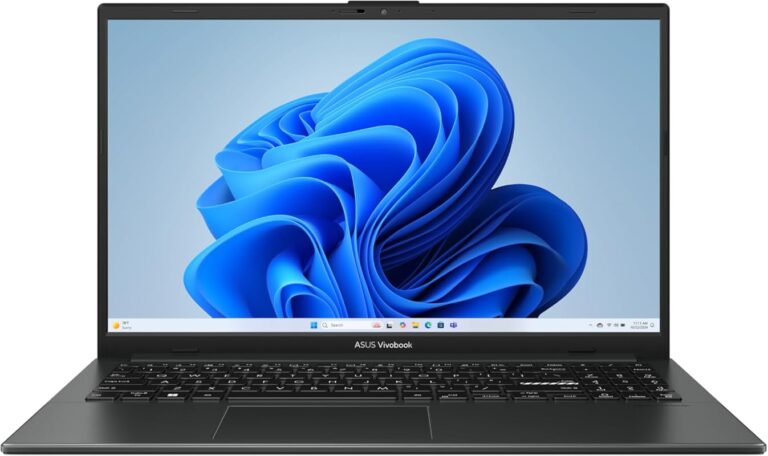
Today’s laptops look nothing like the machines from the first laptop history. A modern laptop with i7 processor and 32gb ram 1tb ssd is thinner than a magazine, lighter than a textbook, and more powerful than a room-sized computer from the 1970s. The evolution has been staggering.
What Makes Modern Laptops So Different
Let us compare the Osborne 1 to a modern machine. The Osborne 1 had a 4-megahertz processor, 64 kilobytes of RAM, and two floppy drives. A modern laptop has a multi-core processor running at several gigahertz, 16 to 64 gigabytes of RAM, and a solid-state drive with terabytes of storage. The speed difference is almost impossible to comprehend.
Modern laptops also feature high-resolution displays, backlit keyboards, fingerprint scanners, and webcams. They weigh as little as 2 pounds and can run for 10 to 15 hours on a single charge. Some models can even handle demanding tasks like video editing and gaming. The laptop with the most ram available today has more memory than an entire building of computers from the 1980s.
Power consumption has also improved dramatically. Early portable computers drank battery power like a desert drinks water. A modern laptop sips energy efficiently thanks to advances in chip design and battery technology. The power draw of a modern machine is a tiny fraction of what early portables required.
The Rise of Ultrabooks and 2-in-1s
In the 2010s, new form factors emerged. Ultrabooks offered extreme thinness and long battery life. 2-in-1 laptops combined the flexibility of a tablet with the power of a laptop. These innovations kept the first laptop history story alive and evolving. The definition of what a laptop could be expanded beyond anything early pioneers imagined.
Today, you can find a laptop for nearly any need and budget. A student might use a basic laptop 8gb ram i5 processor for note-taking and browsing. A creative professional might need a powerful machine with a dedicated graphics card. A business traveler might prioritize weight and battery life above all else. The diversity of options is a direct result of the foundational work done by the pioneers of portable computing.
Key Milestones in First Laptop History
The first laptop history spans several decades of innovation. Here are the key milestones that shaped the journey:
- 1973: Xerox Alto introduces the graphical interface and mouse, inspiring future portable designs.
- 1981: The Osborne 1 becomes the first commercially successful portable computer.
- 1982: The GRiD Compass introduces the clamshell design and is used by NASA and the military.
- 1983: The Epson HX-20 pushes ultra-portability with a battery-powered handheld design.
- 1991: Apple’s PowerBook introduces the trackpad and modern laptop ergonomics.
- 1992: IBM’s ThinkPad sets the standard for business laptops with its TrackPoint and build quality.
- 1997: Wi-Fi enables wireless computing, freeing laptops from cables and desks.
- 2000s: Laptops become mainstream consumer devices, replacing desktops for many users.
- 2010s: Ultrabooks and 2-in-1s redefine what a laptop can be in terms of form and function.
Common Mistakes People Make When Learning About Laptop History
As you explore the first laptop history, keep these common misconceptions in mind:
- Mistake 1: Confusing portable computers with true laptops. The Osborne 1 was portable but not a laptop in the clamshell sense.
- Mistake 2: Ignoring the GRiD Compass. Many people skip over this machine, but it created the design template all modern laptops follow.
- Mistake 3: Assuming early laptops were cheap. The first portable computers cost thousands of dollars and were out of reach for most consumers.
- Mistake 4: Overlooking the role of software. Portable hardware meant little without operating systems and applications designed for mobile use.
- Mistake 5: Thinking the laptop appeared suddenly. The first laptop history is a gradual evolution, not a single invention moment.
Expert Insights: What the Pioneers Learned
Engineers who built the earliest portable computers often talk about the challenges they faced. Miniaturizing components was difficult. Battery technology was primitive. Screens were dim and expensive. Despite all this, they persisted because they believed in the vision of mobile computing.
One recurring theme in the first laptop history is the importance of trade-offs. Early laptop builders had to sacrifice screen size, processing power, and storage to achieve portability. Every generation of laptops balanced these trade-offs differently. Today, we rarely think about these compromises because modern technology has largely solved them.
The lessons from the pioneers still apply today. Innovation requires patience, vision, and the willingness to fail. The first laptops were imperfect, but they proved that the idea worked. That proof inspired decades of improvement and eventually gave us the powerful, lightweight machines we use every day.
Conclusion
The first laptop history is a story of human ingenuity and relentless progress. From the heavy Osborne 1 to the sleek, powerful devices of today, the journey has been remarkable. Each generation built on the discoveries of the last, pushing portable computing closer to perfection.
When you open your laptop today, take a moment to appreciate the decades of innovation behind it. The machine in your hands carries the legacy of engineers who dared to imagine computing without walls. The first laptop history reminds us that every great technology starts with a bold idea and a willingness to try. And that idea continues to evolve every single day.
Whether you use your laptop for work, study, or entertainment, you are part of a story that began over four decades ago. The portable revolution started with a heavy box on someone’s lap, and it has grown into one of the most important tools in human history. The future of computing will build on this foundation, and who knows what the next chapter of the first laptop history will bring.
Frequently Asked Questions
What was the first laptop ever made?
The GRiD Compass, released in 1982, is widely considered the first true laptop because it introduced the clamshell design. However, the Osborne 1 from 1981 is often called the first portable computer. Both machines played essential roles in the first laptop history and laid the groundwork for modern portable devices.
How much did the first laptop weigh?
The Osborne 1 weighed about 24.5 pounds, which is roughly 11 kilograms. The GRiD Compass was lighter at around 11 pounds. Compare that to modern laptops that weigh as little as 2 pounds. The first laptop history shows how dramatically weight has decreased over the decades.
How much did the first laptop cost?
The Osborne 1 cost $1,795 in 1981, which is about $5,500 in today’s money. The GRiD Compass was even more expensive at $8,000 to $10,000. These prices were high for the era, but they made portable computing accessible to businesses and institutions for the first time.
Who invented the first laptop?
Adam Osborne created the Osborne 1 in 1981, making him a key figure in the first laptop history. The GRiD Compass was developed by GRiD Systems Corporation, with designer Bill Moggridge playing a crucial role in creating the clamshell form factor. No single inventor created the laptop; it was a collective effort over many years.
What was the first laptop’s screen size?
The Osborne 1 had a five-inch screen, which is tiny compared to modern displays. The GRiD Compass featured a slightly larger screen with a resolution of 320 by 240 pixels. Screen technology has improved enormously since then, and today’s laptop with i7 processor machines can have screens up to 17 inches or more with stunning clarity.
How has battery life improved since the first laptop?
The Osborne 1 could run for only about one hour on battery power. Modern laptops easily last 10 to 15 hours on a single charge. This dramatic improvement is one of the most important achievements in the first laptop history, and it is what made truly mobile computing possible for everyday users.