Global Saas Landscape

The global SaaS landscape is booming, driven by cloud adoption, AI integration, and shifting business models. From North America’s dominance to emerging hubs in Asia and Europe, this guide breaks down market size, regional trends, and practical steps to succeed in the SaaS world.
Key Takeaways
- Market size: The SaaS market is projected to exceed $200 billion by 2028, with double‑digit CAGR.
- Regional leaders: North America still leads, but Europe and APAC are closing the gap fast.
- AI impact: Artificial intelligence is the biggest catalyst for new product categories and pricing models.
- Customer focus: Retention and expansion (NRR) now matter more than pure acquisition.
- Regulatory watch: Data‑privacy laws like GDPR and India’s PDPB shape product design.
- Go‑to‑market tips: Content, SEO, and targeted email campaigns remain the most cost‑effective growth engines.
- Future outlook: Vertical‑specific SaaS and low‑code/no‑code platforms will dominate the next wave.
📑 Table of Contents
- Introduction: Why the SaaS World Matters Today
- 1. Market Size and Growth Trajectory
- 2. Key Players and Competitive Landscape
- 3. Business Models and Revenue Strategies
- 4. Technology Trends Shaping the Future
- 5. Go‑to‑Market Strategies That Work
- 6. Challenges and Risks to Watch
- Conclusion: Positioning Yourself in the Global SaaS Landscape
Introduction: Why the SaaS World Matters Today
Imagine running a business without worrying about servers, updates, or licensing headaches. That’s the promise of Software‑as‑a‑Service (SaaS). Over the past decade, SaaS has moved from a niche offering to the backbone of modern enterprises. Companies of every size rely on cloud‑based tools for everything from email marketing to complex ERP.
In this article we’ll walk through the current global SaaS landscape, explore who’s leading the charge, and give you practical tips to navigate this fast‑moving market. Whether you’re a founder, investor, or tech enthusiast, you’ll finish with a clear picture of where the industry stands and where it’s headed.
1. Market Size and Growth Trajectory
Current Valuation
According to recent reports, the worldwide SaaS market was valued at roughly $157 billion in 2023. Analysts forecast it will surpass $200 billion by 2028, driven by continued cloud migration and the rise of AI‑enhanced services.
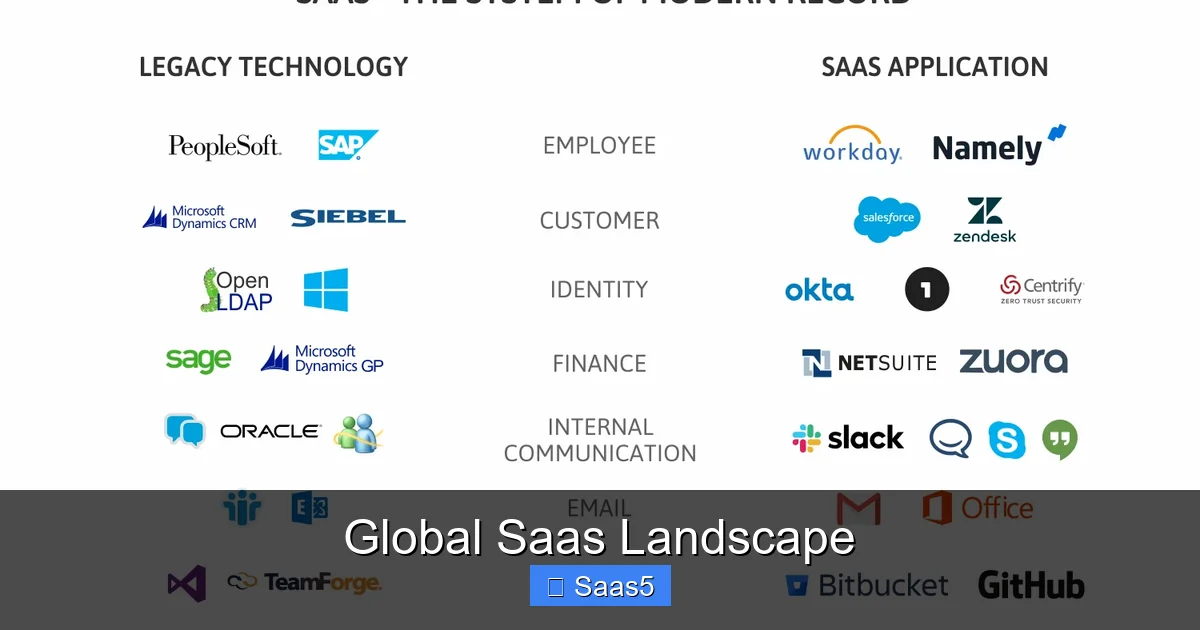
Visual guide about Global Saas Landscape
Image source: 2muchcoffee.com
Growth Drivers
- Cloud infrastructure maturity: Faster, cheaper, and more reliable data centers lower entry barriers.
- AI and automation: Tools that automate routine tasks boost productivity, prompting businesses to adopt SaaS solutions.
- Remote work: Distributed teams need accessible, web‑based software, accelerating demand.
- Subscription economics: Predictable recurring revenue appeals to both buyers and investors.
Regional Breakdown
North America still commands about 45 % of global SaaS revenue, thanks to a mature venture ecosystem and early cloud adoption. Europe follows with ~30 % and is distinguished by strong data‑privacy regulations that foster trust. The Asia‑Pacific (APAC) region, especially India and Southeast Asia, is the fastest‑growing market, posting CAGR rates above 20 %.
2. Key Players and Competitive Landscape
Industry Titans
Companies like Salesforce, Microsoft, Adobe, and ServiceNow dominate the enterprise segment. Their extensive ecosystems create high switching costs, making them hard to displace.
Emerging Champions
Start‑ups such as Notion, Figma, and Snowflake have carved out niche verticals and grown rapidly through product‑led growth (PLG) strategies. These firms focus on user experience, freemium models, and viral adoption loops.
Regional Heroes
In APAC, firms like Zoho (India) and Uptick (Japan) illustrate how local knowledge combined with global scalability can win market share. Europe’s UiPath and TeamViewer showcase the power of specialized automation SaaS.
3. Business Models and Revenue Strategies
Subscription Tiers
Most SaaS businesses offer tiered pricing—Free, Basic, Professional, and Enterprise. The free tier acts as a low‑cost acquisition channel, while higher tiers deliver advanced features and dedicated support.

Visual guide about Global Saas Landscape
Image source: c.53326.com
Usage‑Based Billing
Pay‑as‑you‑go models align cost with value, especially for infrastructure‑heavy tools like analytics or API platforms. This approach improves customer satisfaction and reduces churn.
Vertical SaaS
Targeting specific industries (e.g., healthcare, legal, construction) allows companies to embed compliance features and domain expertise directly into the product.
Licensing Considerations
If you’re building a SaaS product, understanding licensing is crucial. Our guide on how to license a SaaS walks you through the legal and financial aspects.
4. Technology Trends Shaping the Future
Artificial Intelligence
AI is no longer a buzzword; it’s a core component of modern SaaS. From predictive analytics in CRM to AI‑driven code generation, the technology creates new value propositions. Read more about the impact of AI on SaaS for deeper insights.
No‑Code and Low‑Code Platforms
These tools enable non‑technical founders to launch SaaS products quickly. Platforms like Bubble or Adalo reduce development time dramatically, making it easier to test ideas without heavy upfront investment. For a step‑by‑step guide, see no code tools for SaaS.
Micro‑SaaS and API‑First Design
Micro‑SaaS focuses on a single, highly specialized function delivered via an API. This model lowers overhead and allows creators to target niche problems with precision.
5. Go‑to‑Market Strategies That Work
Content‑Driven SEO
High‑quality blog posts, case studies, and tutorials rank well on Google and attract organic traffic. Target long‑tail keywords such as “best SaaS for project management” to capture intent‑rich visitors.
Email Marketing
Personalized drip campaigns nurture leads from free trial to paid conversion. Tips on building an effective email strategy can be found in our article on email marketing strategy for SaaS companies.
Referral and Affiliate Programs
Incentivize existing users to refer new customers. A well‑structured referral program can lower CAC (customer acquisition cost) dramatically.
Product‑Led Growth (PLG)
Let the product sell itself. Offer a free tier, track user activation metrics, and use in‑app messaging to upsell. PLG reduces reliance on large sales teams and aligns product development with user needs.
6. Challenges and Risks to Watch
Data Privacy Regulations
GDPR in Europe, PDPB in India, and emerging U.S. state laws dictate how SaaS firms store and process data. Non‑compliance can lead to hefty fines and reputation damage.
Churn Management
Even with great features, high churn can cripple growth. Focus on onboarding, continuous value delivery, and proactive support to keep Net Revenue Retention (NRR) above 100 %.
Competitive Saturation
With low entry barriers, the market is crowded. Differentiation through vertical focus, AI integration, or superior UX is essential.
Conclusion: Positioning Yourself in the Global SaaS Landscape
The global SaaS landscape is vibrant, expansive, and full of opportunity. By understanding market size, regional dynamics, emerging technologies, and proven go‑to‑market tactics, you can craft a strategy that not only captures market share but also sustains long‑term growth. Remember, success in SaaS hinges on delivering continuous value, mastering customer retention, and staying ahead of tech trends. Whether you’re launching a new product or scaling an existing one, the insights above will help you navigate the complex yet rewarding SaaS world.
Frequently Asked Questions
What is the current size of the global SaaS market?
The SaaS market was valued at about $157 billion in 2023 and is expected to exceed $200 billion by 2028, driven by cloud adoption and AI integration.
Which regions are leading SaaS adoption?
North America leads with roughly 45 % of revenue, followed by Europe (≈30 %). APAC is the fastest‑growing region, especially India and Southeast Asia.
How does AI influence SaaS products?
AI adds predictive analytics, automation, and personalization to SaaS tools, creating new features and pricing models that boost user productivity.
What are the most effective go‑to‑market tactics for SaaS?
Content‑driven SEO, targeted email campaigns, referral programs, and product‑led growth (PLG) are proven methods to acquire and retain customers cost‑effectively.
Why is churn such a critical metric?
High churn erodes recurring revenue. Maintaining a Net Revenue Retention (NRR) above 100 % ensures growth comes from existing customers as well as new ones.
Where can I learn more about licensing a SaaS product?
Our detailed guide on how to license a SaaS explains the legal and financial steps you need to take.