How to Connect Speakers to a Record Player
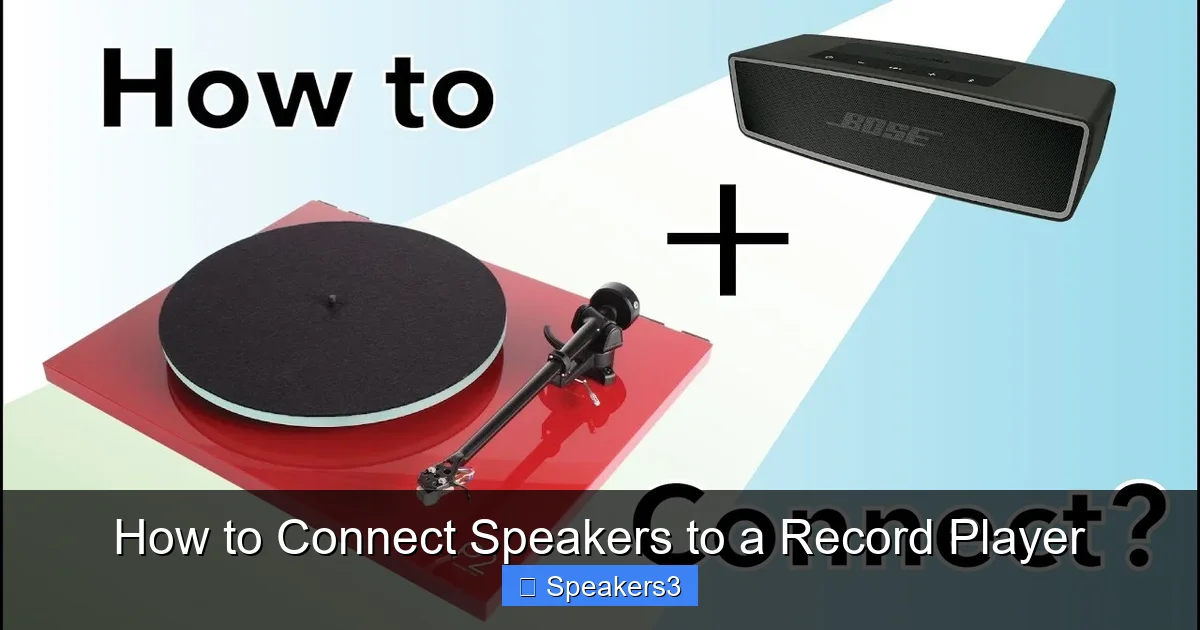
Connecting speakers to a record player is simpler than you think. Whether you have a vintage turntable, a modern Bluetooth model, or an amp‑driven setup, this guide walks you through every option with clear, friendly instructions. Get the best sound fast—no extra tech support needed.
Key Takeaways
- Identify the right output: Know whether your turntable uses RCA, 3.5 mm, or Bluetooth.
- Match speaker type to source: Passive speakers need an amp; active speakers can plug straight in.
- Use proper cables: Quality RCA, 3.5 mm, or speaker wire makes a noticeable difference.
- Grounding matters: A ground wire prevents hum on many vintage models.
- Test before you commit: Play a test record to verify connections and volume levels.
- Upgrade safely: Adding a phono pre‑amp or Bluetooth receiver expands compatibility.
- Maintain regularly: Keep connections clean and check cables for wear.
📑 Table of Contents
- Introduction: Vinyl’s Warmth Meets Modern Sound
- 1. Know Your Turntable’s Output Options
- 2. Choose the Right Kind of Speakers
- 3. Wiring Basics: Cables, Adapters, and Grounding
- 4. Step‑by‑Step: Connecting Different Setups
- 5. Optimizing Sound Quality
- 6. Troubleshooting Common Issues
- Conclusion: Spin Your Vinyl with Confidence
Introduction: Vinyl’s Warmth Meets Modern Sound
There’s something magical about dropping the needle on a record and hearing that warm, analog glow. But if your turntable is hooked to a tiny built‑in speaker, you might miss out on the full experience. Connecting external speakers transforms a modest setup into a room‑filling audio haven.
In this guide we’ll walk through every possible scenario—from classic belt‑driven turntables with RCA outputs to sleek Bluetooth models that pair with wireless speakers. You’ll learn the tools you need, the steps to follow, and a few pro tips that keep hiss and hum at bay. By the end, you’ll be ready to enjoy your vinyl collection the way it was meant to be heard.
1. Know Your Turntable’s Output Options
RCA (Red & White) – The Most Common
Most mid‑range and high‑end turntables use a pair of RCA connectors. One is red (right channel) and the other white (left channel). This stereo output is perfect for both passive and active speakers.

Visual guide about How to Connect Speakers to a Record Player
Image source: vault131.com
3.5 mm (Aux) – Handy for Portable Sets
Some entry‑level turntables have a single 3.5 mm jack. It works like a headphone plug and can be used with powered speakers or a headphone amp.
USB – For Digital Recording
A few modern turntables include a USB port to send the signal directly to a computer. USB isn’t meant for speaker connections, but it’s useful if you also want to digitize your records.
Bluetooth – The Wireless Route
Bluetooth‑enabled turntables stream audio to compatible speakers or headphones. No cables, but you’ll need a Bluetooth speaker or a receiver that can pair with the turntable.
2. Choose the Right Kind of Speakers
Passive Speakers – Need an Amplifier
Passive speakers don’t have built‑in power. They require an external amp or a receiver with a “Speaker‑A” output. Connect the turntable to the amp’s “Phono” input (if it has one) or use a separate phono pre‑amp.

Visual guide about How to Connect Speakers to a Record Player
Image source: bizhigq.com
Active (Powered) Speakers – Plug‑and‑Play
Active speakers have built‑in amplifiers. You can connect them directly to the turntable’s RCA or 3.5 mm output. Just match the connectors: RCA to RCA, or use an RCA‑to‑3.5 mm adapter.
Bluetooth Speakers – Truly Wireless
Pair a Bluetooth‑enabled turntable with any Bluetooth speaker. Keep the speaker within the typical 30‑foot range and avoid walls that could cause interference.
3. Wiring Basics: Cables, Adapters, and Grounding
RCA Cables – The Gold Standard
Invest in good‑quality RCA cables. Look for thick shielding and gold‑plated connectors. This reduces noise and keeps the signal clean.
Visual guide about How to Connect Speakers to a Record Player
Image source: auctions.c.yimg.jp
Speaker Wire – For Passive Sets
If you’re connecting passive speakers to an amp, use 16‑gauge speaker wire for short runs (under 25 ft) and 14‑gauge for longer distances. Strip about ½ inch of insulation from each end, twist the strands, and insert into the amp’s speaker terminals.
Ground Wires – Stop the Hum
Many vintage turntables include a green ground wire. Attach it to the grounding screw on your amp or pre‑amp. This simple step can eliminate that annoying 60 Hz hum.
Adapters – When Sizes Don’t Match
Common adapters include:
- RCA‑to‑3.5 mm (male to male)
- RCA‑to‑XLR (for professional gear)
- 3.5 mm‑to‑RCA (female to male)
Choose the adapter that matches both your turntable and speaker inputs.
4. Step‑by‑Step: Connecting Different Setups
4.1. Passive Speakers + Turntable with Built‑In Phono Pre‑Amp
- Locate the turntable’s “Line Out” RCA jacks (often labeled “Line” or “Aux”).
- Plug one end of an RCA cable into these jacks.
- Connect the other end to the “Aux” or “Line‑In” on your amp/receiver.
- Use speaker wire to link the amp’s speaker terminals to your passive speakers.
- Turn on the amp, set the volume low, and play a record.
4.2. Passive Speakers + Turntable Without Built‑In Pre‑Amp (Need Phono Pre‑Amp)
- Buy a dedicated phono pre‑amp (often called a “phono stage”).
- Connect the turntable’s RCA “Phono” output to the pre‑amp’s input.
- Run another RCA cable from the pre‑amp’s “Line‑Out” to the amp’s “Aux” input.
- Wire the amp to your passive speakers as described above.
- Power on the pre‑amp and amp, then test.
4.3. Active Speakers + Turntable with RCA Output
- Plug an RCA cable into the turntable’s “Line Out.”
- Connect the other end to the active speaker’s RCA input.
- If the speaker only has a 3.5 mm jack, use an RCA‑to‑3.5 mm adapter.
- Power the speakers, set volume low, and enjoy.
4.4. Bluetooth Turntable + Bluetooth Speaker
- Put the Bluetooth speaker in pairing mode (refer to its manual).
- On the turntable, press the Bluetooth “Pair” button.
- When the devices discover each other, confirm the connection.
- Play a record and adjust the speaker volume.
4.5. Adding a Bluetooth Receiver to a Wired Turntable
If your turntable lacks Bluetooth, you can add a Bluetooth receiver:
- Purchase a Bluetooth audio receiver with RCA inputs.
- Connect the turntable’s RCA cables to the receiver’s inputs.
- Pair the receiver with your Bluetooth speaker or headphones.
- Play a record; the receiver streams the audio wirelessly.
For a deeper dive on adding Bluetooth to a wired system, see our guide on how to wire speakers to amp.
5. Optimizing Sound Quality
Placement Matters
Position speakers at ear level and form an equilateral triangle with your listening spot. Keep them at least a foot away from walls to avoid bass boom.
Equalization (EQ) and Tone Controls
If your amp has tone controls, start with a flat setting and adjust bass or treble to taste. Some modern speakers include built‑in EQ presets for “Vinyl” or “Jazz.”
Cleaning Contacts
Oxidized RCA connectors can cause crackle. Use a contact cleaner and a soft cloth to keep them shiny.
Upgrade Paths
- Swap a basic pre‑amp for a high‑end model with adjustable gain.
- Replace aging speaker wire with oxygen‑free copper for clearer mids.
- Add a dedicated subwoofer for deeper bass without overdriving small speakers.
6. Troubleshooting Common Issues
No Sound
Check that the turntable’s power is on, the tonearm is lowered, and the cartridge is set to the correct tracking force. Verify each cable is firmly seated.
Hum or Buzz
Make sure the ground wire is attached. Try moving power cords away from audio cables, and use shielded RCA cables.
Distorted Audio
Turn down the volume on the amp or speakers. Distortion often means the amp is clipping.
Bluetooth Dropouts
Reduce the distance between the turntable (or receiver) and speaker. Avoid obstacles like metal cabinets that can block the signal.
Conclusion: Spin Your Vinyl with Confidence
Connecting speakers to a record player doesn’t have to be a mystery. By identifying your turntable’s output, picking the right speakers, using proper cables, and following the step‑by‑step wiring instructions, you’ll unlock the full richness of your vinyl collection. Remember to ground the system, keep connections clean, and experiment with placement for the best soundstage. Now, cue up your favorite record, press play, and let the music fill the room.
Frequently Asked Questions
Can I use any speaker with a turntable?
Yes, as long as the speaker type matches the turntable’s output. Passive speakers need an amp, while active or Bluetooth speakers can connect directly.
Do I need a phono pre‑amp for all turntables?
Only turntables that output a “phono” signal need a pre‑amp. Many modern units have a built‑in pre‑amp and output a line‑level signal.
What’s the difference between RCA and 3.5 mm connections?
RCA provides separate left/right channels and is standard for hi‑fi audio. A 3.5 mm jack combines both channels into one plug, often found on portable or budget models.
How can I reduce hum in my vinyl setup?
Attach the ground wire to your amp’s grounding screw, use shielded cables, and keep power cords away from audio cables.
Is it okay to connect a Bluetooth speaker to a turntable with a Bluetooth receiver?
Absolutely. The receiver converts the turntable’s analog signal to Bluetooth, letting you stream to any compatible speaker.
Can I upgrade my system without buying a new turntable?
Yes. Adding a quality phono pre‑amp, better cables, or a Bluetooth receiver can dramatically improve sound without replacing the turntable.