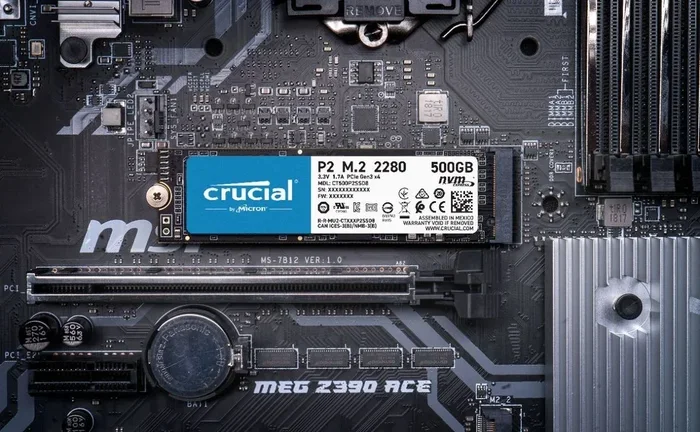
M 2 Nvme Ssd Gen 5

The M 2 Nvme Ssd Gen 5 is the latest leap in storage technology, offering blazing fast PCIe 5.0 speeds that dramatically outperform older generations. These drives deliver read speeds up to 14,000 MB/s and are perfect for gamers, creators, and professionals who need the fastest possible storage. In this guide, we break down everything you need to know about M 2 Nvme Ssd Gen 5 drives so you can make a smart upgrade decision.
Storage technology moves fast, and the M 2 Nvme Ssd Gen 5 is proof of just how fast it can go. If you have been hearing about PCIe Gen 5 SSDs and wondering what all the hype is about, you are in the right place. These drives represent the newest generation of non-volatile memory express storage, and they bring serious speed gains to the table.
Whether you are a gamer who wants instant load times, a video editor working with massive 4K footage, or simply someone who wants the fastest possible computer, understanding Gen 5 NVMe M.2 SSDs is important. In this article, we will cover everything from how these drives work to whether an upgrade makes sense for you.
Key Takeaways
- Gen 5 NVMe M.2 SSDs offer speeds up to 14,000 MB/s read, making them the fastest consumer SSDs available today.
- PCIe Gen 5 is backward compatible with Gen 4 and Gen 3 motherboards, though you will not get full Gen 5 speeds on older boards.
- The Crucial T705 is a top Gen 5 M.2 SSD that delivers excellent real-world performance for gaming and content creation.
- Gen 5 SSDs generate more heat than Gen 4, so a quality heatsink or enclosure is essential for sustained performance.
- M 2 Nvme Ssd Gen 5 prices are dropping, making them more accessible for everyday users who want top-tier storage.
- Not everyone needs Gen 5 yet, but if you work with large files, 4K video, or heavy gaming workloads, the upgrade is worthwhile.
📑 Table of Contents
What Is an M 2 Nvme Ssd Gen 5?
Let us start with the basics. An M 2 Nvme Ssd Gen 5 is a solid state drive that uses the NVMe protocol over a PCIe 5.0 interface. The M.2 form factor is a small, compact stick that plugs directly into your motherboard. Unlike older SATA SSDs, NVMe drives communicate with your CPU through the PCIe lanes, which allows for much faster data transfer.
Gen 5 is the fifth generation of PCIe technology for consumer SSDs. Each generation roughly doubles the bandwidth available. Gen 4 offered up to about 7,000 MB/s read speeds. Gen 5 pushes that to around 14,000 MB/s or even higher in some models. That is a massive jump.
Inside these drives, manufacturers use advanced NAND flash memory, often TLC (triple-level cell) or newer PLC (pentagonal-level cell) technology. A DRAM cache is common in high-end Gen 5 models, which helps with sustained write performance. The result is a storage drive that can handle heavy workloads with ease.
How Does PCIe Gen 5 Differ From Gen 4?
The main difference is bandwidth. PCIe Gen 5 doubles the per-lane speed from 16 GT/s in Gen 4 to 32 GT/s in Gen 5. For a typical NVMe M.2 SSD that uses four lanes (x4), this means a theoretical maximum of around 14,000 MB/s in each direction.
In real-world use, you may not always hit those peak numbers. But even at sustained workloads, Gen 5 drives significantly outperform Gen 4 drives. Here is a quick comparison:
- PCIe Gen 4 NVMe SSD: Up to 7,000 MB/s read, 5,000 MB/s write
- PCIe Gen 5 NVMe SSD: Up to 14,000 MB/s read, 10,000+ MB/s write
- PCIe Gen 3 NVMe SSD: Up to 3,500 MB/s read, 3,000 MB/s write
As you can see, the leap from Gen 4 to Gen 5 is substantial. If you have been using a M 2 PCIe NVMe SSD Gen 4 drive, the Gen 5 experience feels noticeably snappier.
Top Benefits of M 2 Nvme Ssd Gen 5
Why should you care about Gen 5 speeds? Here are the key benefits that make these drives stand out.
Blazing Fast Load Times
Gaming is one of the biggest beneficiaries of Gen 5 storage. Games that stream assets from disk load almost instantly. Open-world titles with massive textures and environments benefit the most. You will notice shorter boot times, faster level transitions, and smoother overall performance.
Even if you already have a fast Gen 4 SSD, the Gen 5 advantage is real. Large game libraries with hundreds of gigabytes of data benefit from the higher sequential read speeds.
Faster Content Creation Workflows
If you edit video, work with 3D renders, or handle large datasets, a Gen 5 NVMe M.2 SSD can dramatically cut down your workflow time. Transferring a 50GB 4K video file takes seconds instead of minutes. Rendering projects that stream assets from storage run more smoothly.
Content creators who work with raw footage or multi-layer projects will appreciate the sustained write speeds that Gen 5 drives offer. Many models maintain high write speeds even under heavy loads thanks to advanced thermal management and large DRAM caches.
Future-Proofing Your System
Motherboards with PCIe Gen 5 support are becoming more common. Intel’s 14th and 15th generation Core processors and AMD’s Ryzen 7000 and 9000 series both support Gen 5 M.2 slots. By investing in a 2TB NVMe M.2 SSD Gen 5 now, you are future-proofing your build for years to come.
As software and games continue to grow in size and complexity, faster storage becomes more important. A Gen 5 SSD ensures your system stays relevant as demands increase.
Top M 2 Nvme Ssd Gen 5 Drives to Consider
The market for Gen 5 NVMe SSDs is growing quickly. Here are some of the most popular and well-reviewed options available right now.
The Crucial T705 PCIe Gen 5 NVMe M.2 SSD is one of the most talked-about drives in this category. It offers sequential read speeds up to 14,000 MB/s and write speeds around 10,000 MB/s. It uses a Phison E31 controller and comes in capacities up to 4TB. The T705 is known for its strong real-world performance and competitive pricing.
Another option worth considering is the WD Black SN850X, which has been updated with Gen 5 support in newer revisions. The Samsung PM9A3 is also a server-grade Gen 5 drive that performs exceptionally well in demanding workloads. Each of these drives has its strengths, so your choice depends on your specific needs and budget.
When shopping for a Gen 5 drive, pay attention to capacity options. A 2TB NVMe M.2 SSD is a sweet spot for most users, offering enough space for games, applications, and media without breaking the bank.
What to Look For When Buying
- Sequential Read/Write Speeds: Look for drives that advertise speeds close to 14,000 MB/s read for true Gen 5 performance.
- Capacity Options: 1TB, 2TB, and 4TB options are available. Choose based on your storage needs.
- DRAM Cache: Drives with onboard DRAM handle sustained workloads better than DRAM-less models.
- Thermal Design: Gen 5 drives run hotter. A built-in heatsink or a quality NVMe SSD M.2 enclosure with cooling is a smart investment.
- Warranty and Endurance: Look for at least a 5-year warranty and a high TBW (terabytes written) rating.
Do You Need a Gen 5 M.2 SSD?
This is the question most people ask, and the honest answer is: it depends. Let us break it down by use case so you can decide for yourself.
If you are a casual user who browses the web, streams content, and plays light games, a Gen 4 NVMe SSD is still more than enough. You will not notice a huge difference in everyday tasks. The bottleneck in your system is more likely your CPU, RAM, or GPU than your storage speed.
However, if you are a hardcore gamer, a video editor, a 3D artist, or someone who works with massive files daily, a Gen 5 drive can make a real difference. The faster read and write speeds translate to shorter wait times and smoother workflows.
Here is a quick guide to help you decide:
- Gaming: Gen 5 helps most with open-world games and titles that stream assets from disk. Competitive shooters benefit less.
- Video Editing: Gen 5 is a game-changer for 4K and 8K editing workflows. Scrubbing through timelines is noticeably faster.
- General Use: A Gen 4 or even Gen 3 NVMe SSD is perfectly fine for everyday computing.
- Workstations: If you run simulations, render farms, or handle large databases, Gen 5 NVMe M.2 SSDs are worth every penny.
It is also worth noting that your motherboard must support PCIe Gen 5 to get the full benefits. If you have a Gen 4 motherboard, a Gen 5 drive will still work but will be limited to Gen 4 speeds. Check your motherboard manual or specs before buying.
How to Install and Optimize an M 2 Nvme Ssd Gen 5
Installing a Gen 5 M.2 NVMe SSD is straightforward, but there are a few things to keep in mind for optimal performance.
Installation Steps
- Check your motherboard: Confirm you have an M.2 slot that supports PCIe Gen 5. Not all M.2 slots are created equal.
- Prepare the drive: Remove the M 2 NVMe SSD from its packaging and handle it by the edges to avoid static damage.
- Insert the drive: Align the notch on the M.2 connector with the slot on your motherboard. Press gently and secure with the screw.
- Enable PCIe Gen 5 in BIOS: Some motherboards default to Gen 4 mode. Go into your BIOS and set the M.2 slot to Gen 5 if available.
- Install your OS or format the drive: Use your operating system’s disk management tools to format and partition the new drive.
Tips for Getting the Best Performance
- Use a quality heatsink: Gen 5 drives run hot. A copper heatsink designed for M.2 SSDs keeps temperatures in check.
- Update your motherboard BIOS: Manufacturers often release BIOS updates that improve M.2 compatibility and performance.
- Enable PCIe Gen 5 mode: As mentioned above, this is essential for reaching full Gen 5 speeds.
- Use NVMe-optimized software: Tools like the Crucial Storage Executive or Samsung Magician help you monitor drive health and optimize settings.
- Consider an external enclosure: If you need portable Gen 5 storage, a M 2 NVMe SSD enclosure with a USB 3.2 or Thunderbolt connection lets you take advantage of Gen 5 speeds on the go.
Common Mistakes to Avoid
- Installing a Gen 5 drive in a Gen 3 slot: You will not get Gen 5 speeds, and in some cases, the drive may not work at all.
- Skipping the heatsink: Thermal throttling can significantly reduce performance on Gen 5 drives during long workloads.
- Not updating firmware: Drive firmware updates often include performance improvements and bug fixes.
- Ignoring driver updates: Keep your NVMe drivers up to date for the best compatibility and stability.
The Future of NVMe M.2 Storage
The M 2 NVMe SSD Gen 5 era is just getting started. As more motherboards adopt PCIe Gen 5 support and more drives enter the market, prices will continue to drop. Within a year or two, Gen 5 NVMe M.2 SSDs will likely become the new standard for mainstream builds.
Looking further ahead, PCIe Gen 6 is already on the horizon. It promises even higher bandwidth and faster speeds. But for now, Gen 5 offers the best performance available for consumer storage. Whether you are building a new PC or upgrading an existing one, a Gen 5 NVMe M.2 SSD is a fantastic choice.
The SSD NVMe M.2 PCIe ecosystem continues to evolve rapidly. New controllers, better NAND flash, and improved thermal designs are pushing the boundaries of what these tiny drives can do. If you have been on the fence about upgrading, now is a great time to make the jump.
One thing is certain: faster storage changes how you interact with your computer. Games load in seconds instead of minutes. Files transfer almost instantly. Video exports finish faster. The M 2 Nvme Ssd Gen 5 delivers all of this and more, making it one of the most impactful upgrades you can make to your PC.
Conclusion
The M 2 Nvme Ssd Gen 5 represents the cutting edge of consumer storage technology. With PCIe Gen 5 speeds reaching up to 14,000 MB/s, these drives offer a massive performance leap over previous generations. Whether you are a gamer, creator, or professional, the benefits are real and noticeable.
From blazing fast load times to smoother content creation workflows, a Gen 5 NVMe M.2 SSD transforms your computing experience. Just make sure your motherboard supports Gen 5, invest in proper cooling, and choose a drive that fits your capacity needs and budget.
If you are ready to upgrade, look at the top-rated Gen 5 drives available today and pick the one that suits your workflow best. Your storage has never been this fast.
Frequently Asked Questions
What makes an M 2 Nvme Ssd Gen 5 different from Gen 4?
The main difference is bandwidth. PCIe Gen 5 doubles the per-lane speed from 16 GT/s to 32 GT/s, which means Gen 5 NVMe M.2 SSDs can reach read speeds up to 14,000 MB/s compared to about 7,000 MB/s on Gen 4 drives. This makes Gen 5 drives significantly faster for large file transfers, gaming, and content creation workloads.
Can I use a Gen 5 NVMe SSD in a Gen 4 motherboard?
Yes, a Gen 5 NVMe M.2 SSD is backward compatible with Gen 4 and even Gen 3 motherboards. However, you will only get Gen 4 or Gen 3 speeds, not the full Gen 5 performance. Check your motherboard specifications to confirm which PCIe generation your M.2 slot supports.
Do Gen 5 M.2 SSDs need a heatsink?
Yes, Gen 5 NVMe drives generate more heat than previous generations due to their higher speeds and power consumption. A quality heatsink helps maintain consistent performance and prevents thermal throttling during sustained workloads. Many Gen 5 drives come with a heatsink included, but aftermarket options are also widely available.
How much does an M 2 Nvme Ssd Gen 5 cost?
Prices vary by capacity and brand. A 1TB Gen 5 NVMe M.2 SSD typically starts around $80 to $120, while 2TB models range from $150 to $250. As production increases and more drives enter the market, prices continue to drop, making Gen 5 storage more accessible to a wider range of users.
Is Gen 5 overkill for gaming?
For most gamers, Gen 4 NVMe SSDs are already more than sufficient. However, Gen 5 drives shine in open-world games with massive asset streaming and in setups where you also do heavy content creation. If you want the absolute best performance and plan to keep your PC for several years, a Gen 5 drive is a worthwhile investment.
What is the lifespan of a Gen 5 NVMe M.2 SSD?
Most Gen 5 NVMe M.2 SSDs come with a 5-year warranty and high TBW ratings, often exceeding 600 TBW for 2TB models. With normal use, these drives can last many years. Factors like operating temperature, workload intensity, and firmware updates all affect long-term durability. Keeping your drive cool and up to date helps maximize its lifespan.