Do You Need Speakers for a Turntable
Wondering if you need speakers for a turntable? The short answer is yes—unless your deck already has a built‑in amp or you’re using headphones. This guide breaks down why external speakers matter, what types work best, and how to connect everything without a hassle. Read on for easy tips, budget options, and expert advice.
Key Takeaways
- External speakers are usually required: Most turntables output a low‑level signal that needs amplification.
- Built‑in amps simplify set‑up: Some decks include a phono preamp or Bluetooth, letting you skip a separate amp.
- Choose speakers by size and power: Small bookshelf speakers work for apartments; floor‑standing models fill larger rooms.
- Wiring matters: Proper RCA or 3.5 mm cables keep the signal clean and avoid hum.
- Placement improves sound: Position speakers at ear level and form an equilateral triangle with your listening spot.
- Budget doesn’t mean low quality: Many affordable speakers deliver rich vinyl sound when paired with a good amp.
- Maintenance is key: Keep cables tidy and dust‑free for the best long‑term performance.
📑 Table of Contents
- Introduction: Why the Question Matters
- 1. Understanding Turntable Output Types
- 2. Do You Need Speakers? The Simple Answer
- 3. Choosing the Right Speakers for Your Vinyl
- 4. Setting Up Your Turntable and Speakers
- 5. Optimizing Sound Quality
- 6. Budget‑Friendly Options and Upgrade Paths
- Conclusion: Do You Need Speakers for a Turntable?
Introduction: Why the Question Matters
If you’ve just bought a turntable, the excitement is real. You hear the crackle of the needle, the warm tones of a record, and you think, “Do I need speakers for a turntable?” The answer isn’t always obvious because turntables come in many flavors.
Some models have built‑in amplifiers, Bluetooth, or even headphone jacks. Others are pure “phono” units that only produce a tiny signal. Knowing the difference helps you avoid silence, distortion, or costly mistakes.
In this article we’ll walk through the basics, explore the gear you might need, and give you practical tips so you can enjoy vinyl right away.
1. Understanding Turntable Output Types
Phono vs. Line‑Level Signals
Most traditional turntables output a phono signal. It’s low voltage and has a specific equalization curve (RIAA) baked in. To turn that into a usable audio signal, you need a phono preamp. Without it, speakers will sound weak and tinny.
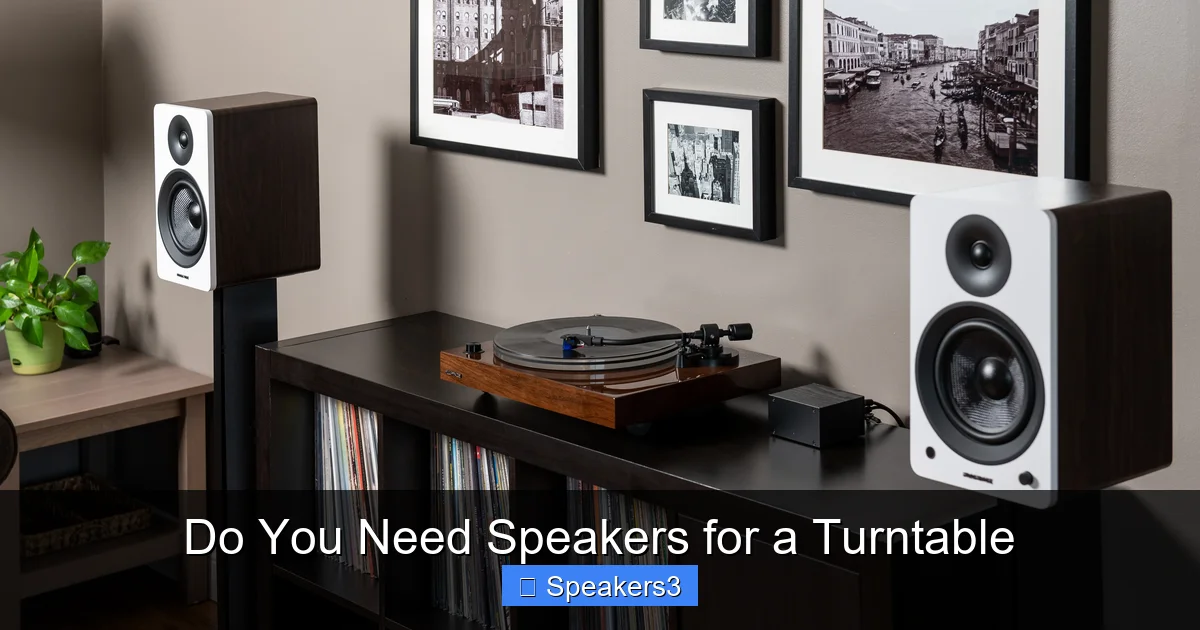
Visual guide about Do You Need Speakers for a Turntable
Image source: fluance.com
Built‑In Preamp or Line‑Level Turntables
Many modern decks include a built‑in preamp. When you switch the selector to “Line,” the turntable sends a stronger, ready‑to‑play signal. In that case you can connect directly to powered speakers or a receiver.
Bluetooth and Wireless Options
Some turntables add Bluetooth for wireless listening. Even then, you’ll need a speaker or headphones that can receive the Bluetooth stream. The turntable itself still needs a speaker, whether wired or wireless.
2. Do You Need Speakers? The Simple Answer
When Speakers Are Absolutely Required
If your turntable is a pure phono model, **yes**, you need speakers (or at least an amp and speakers). The phono signal is far too weak for a speaker’s driver to move air effectively.

Visual guide about Do You Need Speakers for a Turntable
Image source: i.ytimg.com
When You Might Skip Separate Speakers
– Built‑in amp with line‑level output
– Headphone jack on the turntable (you can use headphones instead of speakers)
– Bluetooth model paired with a Bluetooth speaker
Even in these cases, many owners still add external speakers for a fuller room‑filling sound.
3. Choosing the Right Speakers for Your Vinyl
Powered (Active) vs. Passive Speakers
Powered speakers have an internal amp. Connect them directly to a line‑level output or a preamp, and you’re done. They’re perfect for beginners.

Visual guide about Do You Need Speakers for a Turntable
Image source: xinyuepu.com
Passive speakers need an external amp or receiver. If you already own a home‑theater receiver, passive speakers can be a great match.
Size Matters: Bookshelf vs. Floor‑Standing
- Bookshelf speakers: Ideal for apartments, small rooms, or budgets under $200.
- Floor‑standing speakers: Offer deeper bass and wider soundstage for larger spaces.
Key Specs to Watch
- Power handling (watts): Choose speakers that can handle at least 50 W RMS for most home setups.
- Impedance (ohms): 4 Ω or 8 Ω are common; match them to your amp’s specifications.
- Frequency response: Look for 20 Hz–20 kHz for full‑range coverage.
4. Setting Up Your Turntable and Speakers
Step‑by‑Step Wiring Guide
- Identify the output on your turntable: RCA (phono or line) or 3.5 mm.
- If you have a phono output, connect it to a phono preamp using RCA cables.
- From the preamp’s line‑out, run RCA cables to your powered speakers or amp.
- Plug the speakers into a wall outlet (for powered models) and turn everything on.
- Adjust the volume on the amp or speaker control, then place the needle on a record.
Common Pitfalls and How to Avoid Them
- Ground loop hum: Use the ground wire on the turntable if your preamp has a grounding post.
- Wrong input selection: Make sure the turntable is set to “Line” if it has a built‑in preamp.
- Cable quality: Cheap, unshielded cables can introduce noise. A modest upgrade makes a big difference.
For more troubleshooting tips, see our article Why Do My Speakers Crackle.
5. Optimizing Sound Quality
Speaker Placement Basics
Place speakers so they form an equilateral triangle with your listening spot. Keep them at ear level and at least a foot away from walls to reduce bass boom.
Room Treatment on a Budget
Soft furnishings, rugs, and curtains absorb reflections. Even a simple bookshelf behind a speaker can act as a diffuser.
Matching Turntable Cartridge to Speakers
A high‑output cartridge pairs well with low‑power speakers, while a low‑output cartridge may need a stronger amp. Check the cartridge’s specifications before finalizing your speaker choice.
6. Budget‑Friendly Options and Upgrade Paths
Starter Packs Under $150
Many brands offer “turntable bundles” that include a preamp and a pair of powered bookshelf speakers. These are perfect for first‑time vinyl lovers.
Mid‑Range Upgrades ( $200‑$500 )
Consider a dedicated phono preamp and separate powered speakers. This combo gives you more control over tone and power.
High‑End Dreams ( $500+ )
Invest in a high‑quality passive speaker pair and a solid-state or tube amp. Pair with a premium cartridge for audiophile‑grade sound.
If you’re curious about speaker accessories, read our guide Speaker Stands For Large Speakers for placement ideas.
Conclusion: Do You Need Speakers for a Turntable?
The short answer: Yes, unless your turntable already includes a built‑in amp or you’re using headphones. Understanding the type of output your deck provides is the first step. From there, choose the right speakers—powered or passive—and connect them with the proper cables.
With a little setup and thoughtful placement, you’ll hear vinyl the way it was meant to be heard: warm, detailed, and full of life. Happy listening!
Frequently Asked Questions
Do all turntables require external speakers?
No. Turntables with a built‑in preamp or line‑level output can drive powered speakers directly, and some have headphone jacks for private listening.
Can I use my TV’s speakers with a turntable?
Only if the TV has an audio input that accepts line‑level signals and you connect the turntable (or preamp) to it. Otherwise, TV speakers are usually too small for quality vinyl playback.
What is the difference between a phono preamp and a regular amp?
A phono preamp boosts the tiny phono signal and applies the RIAA equalization curve. A regular amp expects a line‑level signal and does not perform this equalization.
Do I need a separate ground wire?
Many turntables include a ground wire to eliminate hum. Connect it to the grounding post on your preamp or amp if you hear a low‑frequency buzz.
Are Bluetooth speakers a good choice for vinyl?
Bluetooth speakers work if your turntable can stream via Bluetooth, but wired connections usually deliver clearer, more detailed sound.
How often should I clean my speaker cables?
Dust them lightly with a dry cloth every few weeks. For deeper cleaning, use a mild electronics cleaner and a soft brush to remove grime.