What Is the Difference Between 3way and 2 Way Speakers
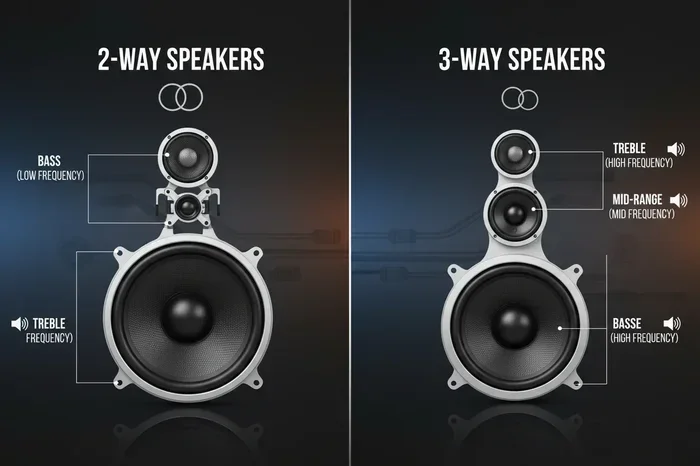
The main difference between 3way and 2 way speakers comes down to how many dedicated driver bands handle the audio range. 2 way speakers use a woofer and a tweeter, while 3way speakers add a midrange driver for clearer vocal and instrument detail. Your choice depends on your budget, enclosure space, and how much clarity you want from your sound system.
Key Takeaways
- Driver count matters: 2 way speakers use two drivers, while 3way speakers use three for broader frequency separation.
- Sound clarity: 3way speakers often deliver more detailed midrange performance, which helps vocals and instruments stand out.
- Crossover complexity: More drivers mean more complex crossover networks that divide frequencies between each unit.
- Installation space: 2 way speakers are usually simpler to fit, while 3way speakers may need more room and careful tuning.
- Budget and value: 2 way speakers often cost less and are easier to set up, making them a practical choice for many listeners.
- Sound preference: The best option depends on your listening habits, music genres, and whether you prioritize punchy bass or refined mids.
- System matching: Both designs work well when paired with the right amp, enclosure, and speaker impedance setup.
📑 Table of Contents
- What Is the Difference Between 3way and 2 Way Speakers
- How Speaker Drivers Divide the Work
- 2 Way Speakers Explained
- 3 Way Speakers Explained
- Sound Quality Differences You Can Actually Hear
- Installation, Space, and Setup Considerations
- Cost, Complexity, and Real World Value
- How to Choose Between 2 Way and 3 Way Speakers
- Common Mistakes to Avoid
- Expert Insights
- Final Thoughts on What Is the Difference Between 3way and 2 Way Speakers
What Is the Difference Between 3way and 2 Way Speakers
If you have ever shopped for audio gear, you have probably seen the terms 2 way speakers and 3way speakers tossed around. It can feel confusing at first because both designs aim to do the same job: turn electrical signals into sound you can enjoy. The real change is in how they split that job between different drivers. Once you understand that split, the choice becomes much easier.
In simple terms, 2 way speakers use two main drivers to cover the full range of sound. One driver handles the low and mid notes, and the other handles the high notes. 3way speakers add another dedicated driver for the middle part of the sound range. That extra driver can improve clarity in certain frequencies, especially vocals and many instruments. Still, more drivers do not automatically mean better sound for every listener.
The best choice depends on your goals. Some people want a simple setup that sounds great without much fuss. Others want a more detailed presentation and are willing to spend more time on placement and tuning. In this guide, we will break down how each design works, what they sound like, and which one fits your needs better.
How Speaker Drivers Divide the Work
Every speaker system has to cover a wide range of frequencies. Bass notes sit at the low end, vocals and many instruments sit in the middle, and cymbals or high harmonics sit at the top. A single driver can only do so much well. That is why many speakers use separate drivers, each tuned for a specific part of the audio spectrum.
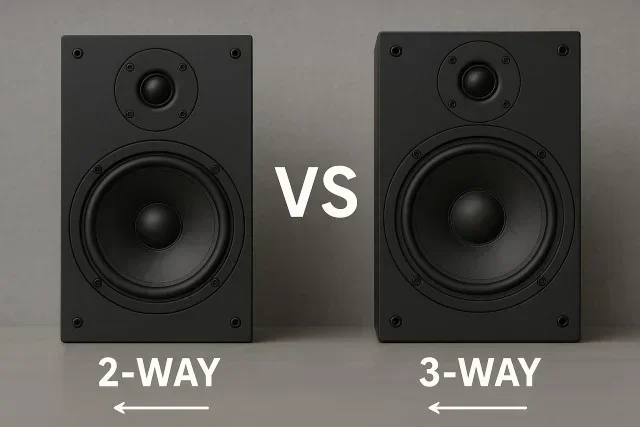
Visual guide about 3-way vs 2-way speakers
Image source: techchick.co.uk
The Role of Woofers, Tweeters, and Midrange Drivers
A woofer is built to move more air and handle lower frequencies. It gives you the body and punch in the bass region. A tweeter is smaller and faster, so it handles the bright, delicate high notes. In a 3way speaker, a midrange driver takes over the middle band. This helps reduce the workload on the other drivers and can make the mids sound more natural.
How Crossovers Separate Frequencies
Drivers alone are not enough. The speaker also needs a crossover network to decide which frequencies go to which driver. Think of it like a traffic controller for sound. It sends bass to the woofer, highs to the tweeter, and in a 3way design, it also sends midrange signals to the middle driver. A good crossover helps each driver stay in its comfort zone.
This is one reason speaker design matters so much. If the crossover points are not chosen well, the sound can feel disjointed. You might hear a gap between the bass and mids, or the highs may not blend smoothly with the rest of the music. Both 2 way and 3way speakers can sound excellent when designed properly, but they achieve that result in different ways.
2 Way Speakers Explained
2 way speakers are one of the most common designs in car audio, home audio, and portable systems. They are popular because they offer a strong balance of simplicity and performance. If you are comparing options, you may also want to read about the difference between two way and three way speakers to see how the designs compare in more detail.
What Makes 2 Way Speakers Simple and Effective
A 2 way speaker typically uses a woofer and a tweeter. The woofer covers the lower and middle frequencies, while the tweeter takes care of the highs. Because there are fewer parts, the design is often easier to build and easier to install. That can make 2 way speakers a very practical option for everyday listening.
Another benefit is that fewer drivers can mean fewer transition points. With only one main crossover region, the sound can sometimes feel more unified. For many listeners, that means a smoother and less complicated listening experience. Of course, the final result still depends on the quality of the drivers, the enclosure, and the crossover design.
Best Uses for 2 Way Speakers
2 way speakers work well in many situations. They are a strong choice when you want a balanced sound without needing a large or complex setup. They also fit well in smaller spaces, which makes them useful for door panels, shelves, desktop audio, and compact home speakers.
Here are some common reasons people choose 2 way speakers:
- Simplicity: Fewer drivers usually means easier installation and setup.
- Cost: They are often more affordable than more complex designs.
- Balanced sound: Many 2 way systems deliver a good mix of bass, mids, and highs.
- Space savings: They can fit into tighter enclosures or mounting locations.
- Lower power demands: Some simpler designs are easier to drive with modest amplifiers.
If you want a straightforward setup that still sounds enjoyable, 2 way speakers can be a very smart pick. They are especially appealing when you care more about overall balance than extremely detailed midrange separation.
3 Way Speakers Explained
3 way speakers take a different approach. Instead of asking one woofer to cover both bass and mids, they add a dedicated midrange driver. That extra driver can make the middle frequencies sound more focused and articulate. If you are curious about how this design compares with other speaker types, you may also find it helpful to look at what are 3 way speakers and how they are used in real audio setups.
Why Some Listeners Prefer 3 Way Speakers
The biggest reason people like 3way speakers is detail. By giving the midrange its own driver, the system can focus more energy on vocals, guitars, keyboards, and other instruments that live in that range. For music lovers who care about clarity, that can be a big advantage.
Another advantage is reduced strain on the other drivers. The woofer does not need to stretch as far into the mids, and the tweeter does not need to handle as much lower high-frequency content. When everything is tuned well, the result can feel more refined. That said, this design usually needs more careful planning to make sure the three drivers blend smoothly.
Tradeoffs to Consider
3way speakers are not automatically better for everyone. They can be larger, more complex, and sometimes more expensive. They may also need more precise placement and tuning to sound their best. If the crossover points are not matched well, the sound can feel less natural rather than more detailed.
Some tradeoffs to keep in mind include:
- Size: Three drivers can take up more room, especially in larger woofer/midrange setups.
- Complexity: More drivers often mean more complex crossovers and tuning.
- Cost: Higher component counts can increase the price.
- Integration: The sound must blend cleanly across all three sections.
- Installation: Placement may matter more if you want the best coherence.
If you value midrange clarity and are willing to invest in a well-matched system, 3way speakers can be a rewarding choice. They often shine in setups where the listener wants a more separated and detailed presentation.
Sound Quality Differences You Can Actually Hear
The biggest question most people have is simple: which one sounds better? The honest answer is that it depends on the implementation. A well-made 2 way speaker can outperform a poorly made 3way speaker, and vice versa. Still, there are general differences you can expect from each design.
Bass, Mids, and Highs in Each Design
In a 2 way speaker, the woofer usually handles a wide range of lower and middle frequencies. That can work very well, but it also means the woofer has to manage more duties. In a 3way speaker, the midrange driver takes over a chunk of that middle territory. This can make vocals and lead instruments feel more present and less crowded.
The highs are handled by the tweeter in both designs. The difference is that in a 3way system, the tweeter may only need to cover a narrower band. That can help the highs stay smooth and reduce distortion in some cases. Again, this depends heavily on crossover design and driver quality.
Which Design Sounds More Natural?
Many listeners associate 3way speakers with a more natural midrange because the middle driver is dedicated to that region. This can be especially noticeable with acoustic music, vocals, and complex arrangements. However, 2 way speakers can also sound very natural if the woofer and tweeter are well matched.
A quick way to think about it is this:
- 2 way speakers: Often sound smooth, balanced, and cohesive.
- 3way speakers: Often sound more detailed in the midrange, with clearer instrument separation.
- Both designs: Can sound excellent when built and tuned properly.
If you are comparing speaker types for a specific project, it can help to review related topics like difference between 2 way and 4 way speakers so you understand how driver count affects sound division. More drivers are not always the goal. The goal is better performance for your listening needs.
Installation, Space, and Setup Considerations
Sound quality is important, but so is how easy a speaker is to fit into your space. 2 way speakers are usually simpler to install because they have fewer components and a simpler layout. That can make them a better fit for tighter spots or projects where you want a cleaner installation.
Size and Enclosure Needs
3way speakers often need more internal volume or a larger physical footprint, depending on the woofer and midrange sizes. If you are building or buying a speaker system, you need to make sure the enclosure supports the drivers properly. A cramped enclosure can limit bass response and hurt overall performance.
For car audio, this can matter a lot. Door panels, kick panels, and custom enclosures all have limited space. If you are trying to fit a more complex system, you may need to plan the layout carefully. Some installations also involve wiring multiple speaker sections, which can lead you to look at guides like connecting 4 speakers to 2 channel amp if you are expanding your setup.
Tuning and Placement
Placement can affect both 2 way and 3way speakers, but 3way designs may be a little more sensitive to alignment because each driver covers a narrower band. If the drivers are not aimed well or the listening position is off, the sound may feel less blended. That does not mean they are difficult to use, only that setup can matter more.
A few practical setup tips:
- Keep drivers aligned: Try to aim the tweeter and midrange toward the listening area.
- Watch the enclosure: Use a box or mounting method that suits the driver sizes.
- Check polarity: Make sure all drivers move in the same direction for coherent bass.
- Mind the crossover: If the system allows adjustment, tune it to match your room or vehicle.
- Test at different volumes: Listen at low and high levels to see how the system behaves.
Good installation is one of the easiest ways to get more from any speaker system. Even an excellent design can underperform if it is mounted poorly or packed into the wrong space.
Cost, Complexity, and Real World Value
When people compare 2 way and 3way speakers, price often comes up quickly. 2 way speakers tend to be more budget-friendly because they usually require fewer drivers and a simpler crossover. That does not mean they are lower quality. It just means the design is often less complicated to produce.
When 2 Way Speakers Make More Sense
2 way speakers make a lot of sense when you want strong overall performance without extra complexity. They are a good match for everyday music listening, smaller spaces, and projects where simplicity matters. If you want a system that is easy to install and still sounds enjoyable, this is often the safer starting point.
They also work well when you plan to add other components later. For example, if you want stronger bass down the road, you might pair your main speakers with a separate subwoofer. If you are wondering how that fits into a larger system, you can explore difference between subs and speakers to understand where a sub fits in.
When 3 Way Speakers Are Worth It
3way speakers can be worth it when midrange detail matters a lot to you. They are often appealing for listeners who enjoy vocal-heavy music, complex mixes, or recordings where instrument separation is important. If you have the space, budget, and patience for a more refined setup, the extra driver can be a meaningful upgrade.
Value depends on what you want from the system. A 3way speaker is not automatically a better buy. It is a different tool. The right choice is the one that matches your priorities.
How to Choose Between 2 Way and 3 Way Speakers
Choosing between these designs is easier when you focus on a few simple questions. Start with your listening habits, then think about space, budget, and how much setup effort you want to handle.
Questions to Ask Before Buying
Here are some useful questions to narrow things down:
- What music do I listen to most? Vocals and acoustic music may benefit from stronger midrange detail.
- How much space do I have? Smaller spaces may favor a more compact 2 way design.
- Do I want a simple setup? 2 way speakers are often easier to install and tune.
- Is midrange clarity my top priority? 3way speakers may be more appealing.
- What is my budget? More drivers can mean higher cost and more tuning needs.
- Will I add other components later? Think about amps, subwoofers, and enclosure plans.
If you are still comparing driver configurations, you may also want to check 2 way 3 way speakers for a broader look at how these designs compare in practice. That can help you decide whether you want a simpler system or a more segmented one.
Quick Tips for Getting the Best Results
No matter which design you choose, a few habits can improve the outcome:
- Match the speaker to the space: Do not force a large design into a tiny enclosure.
- Use a proper amplifier: Make sure the amp can drive the speakers comfortably.
- Pay attention to crossover settings: Good blending matters more than driver count.
- Listen before you finalize: Test the speakers in a position close to your real setup.
- Keep the system balanced: Strong bass, clear mids, and smooth highs should all be present.
If you also want to understand how speaker impedance affects your setup, it can help to review difference between 2 and 4 ohm speakers. Impedance can influence how hard your amplifier has to work, so it is worth keeping in mind when you build a system.
Common Mistakes to Avoid
A lot of speaker frustration comes from small setup mistakes rather than the speaker design itself. Here are a few problems to watch for.
Expecting More Drivers to Fix Everything
Some buyers assume that a 3way speaker will automatically sound better in every way. That is not always true. A poor 3way design can sound disconnected, while a great 2 way speaker can sound smooth and natural. Driver count is only one part of the picture.
Ignoring Enclosure and Placement
Even well-designed speakers can underperform if they are mounted badly. A weak enclosure, poor aiming, or bad polarity can hurt the sound. Always treat installation as part of the performance, not an afterthought.
Overlooking Crossover and Amp Matching
A speaker system is a chain. If the crossover is poorly tuned or the amp is mismatched, the sound will suffer. It is worth taking time to understand how the pieces work together instead of focusing on one feature alone.
Expert Insights
If you ask experienced listeners what matters most, many will tell you the same thing: implementation matters more than labels. A well-tuned 2 way speaker can be a fantastic choice, and a well-built 3way speaker can offer wonderful detail. The best system is the one that fits your room, your music, and your expectations.
It also helps to think about the whole listening experience. For some people, the extra detail of a 3way design is worth the added complexity. For others, the simplicity and balance of a 2 way speaker is exactly what they need. There is no single winner here. There is only the better choice for your situation.
Final Thoughts on What Is the Difference Between 3way and 2 Way Speakers
So, what is the difference between 3way and 2 way speakers? The short answer is that 2 way speakers use two drivers to cover the audio range, while 3way speakers add a dedicated midrange driver for more separation in the middle frequencies. That extra driver can improve clarity, but it also adds size, complexity, and often cost.
If you want a practical, balanced setup that is easier to install, 2 way speakers are often a strong choice. If you care deeply about midrange detail and are ready for a more refined system, 3way speakers may be the better fit. Either way, the best results come from matching the speaker design to your space, your music, and your setup goals.
The good news is that both designs can sound excellent. Once you know how they divide the work, you can choose with confidence instead of guessing based on the label alone.
Frequently Asked Questions
What is the main difference between 3way and 2 way speakers?
The main difference is that 2 way speakers use two drivers, usually a woofer and a tweeter, while 3way speakers add a dedicated midrange driver. This gives 3way speakers another layer of frequency separation, especially in the vocal and instrument range.
Do 3 way speakers always sound better than 2 way speakers?
No, not always. A well-made 2 way speaker can sound excellent, while a poorly designed 3way speaker may sound less cohesive. The overall quality, crossover tuning, and installation often matter more than the number of drivers.
Are 2 way speakers easier to install?
Usually, yes. 2 way speakers tend to be simpler because they have fewer drivers and a less complex setup. That can make them easier to fit into smaller spaces and simpler to wire in many installations.
Why would someone choose 3 way speakers?
People often choose 3way speakers for better midrange clarity and more detailed instrument separation. If vocals, acoustic music, and complex mixes are important to you, the extra midrange driver can be very appealing.
Can 2 way speakers still produce good bass and highs?
Yes. In a 2 way speaker, the woofer handles the lower and much of the middle range, while the tweeter covers the highs. When the drivers and crossover are well matched, the system can sound balanced and enjoyable.
Is speaker impedance important when choosing between 2 way and 3 way speakers?
Yes, because speaker impedance affects how your amplifier drives the system. If you are comparing options, it can help to understand what is ohm in speakers so you can match the speakers to the right amp and avoid setup issues.