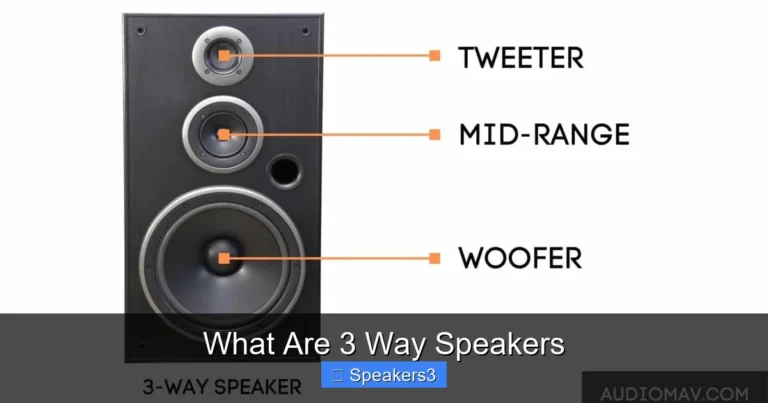
6 Speakers on 4 Channel Amp

Want to run six speakers from a four‑channel amp without losing power or sound quality? We break down the wiring methods, amp recommendations, and practical tips so you can enjoy booming audio with a simple setup. Read on for step‑by‑step guidance that even a beginner can follow.
Key Takeaways
- Correct wiring matters: Using series, parallel, or hybrid wiring lets you match speaker impedance to a 4‑channel amp.
- Choose the right amp: Look for an amp with enough RMS power and headroom for six speakers.
- Use quality components: High‑grade speaker wire, connectors, and distribution blocks keep signal loss low.
- Balance sound: Proper crossover settings and speaker placement ensure even sound across all six drivers.
- Safety first: Fuse protection and proper grounding prevent damage to your amp and speakers.
- Future‑proof your system: Consider a 5‑channel amp or adding a subwoofer later without re‑wiring everything.
- DIY is doable: With the right guide, anyone can wire 6 speakers on a 4‑channel amp at home.
📑 Table of Contents
- Introduction: Why You Might Want 6 Speakers on a 4‑Channel Amp
- Understanding the Basics: Impedance and Power
- Wiring Options for 6 Speakers on a 4‑Channel Amp
- Choosing the Right 4‑Channel Amp for Six Speakers
- Step‑by‑Step Wiring Guide
- Optimizing Sound Quality Across Six Speakers
- Advanced Topics: Going Beyond Six Speakers
- Real‑World Example: A DIY Install in a Compact Sedan
- Conclusion: You Can Absolutely Run 6 Speakers on a 4‑Channel Amp
Introduction: Why You Might Want 6 Speakers on a 4‑Channel Amp
Car audio enthusiasts love to fill the cabin with rich, immersive sound. Often the first upgrade is adding more speakers—maybe a pair of tweeters, a set of mids, and a couple of woofers. But most budget‑friendly amplifiers come with only four channels. So the question pops up: Can I run six speakers on a 4‑channel amp? The short answer is yes, as long as you understand impedance, wiring methods, and power distribution.
In this guide we’ll walk through everything you need to know to safely and effectively connect six speakers to a four‑channel amp. From the math behind impedance matching to practical wiring diagrams, you’ll finish this article with a clear plan to boost your car’s sound without buying a pricey new amp.
Understanding the Basics: Impedance and Power
What is Impedance?
Impedance, measured in ohms (Ω), is the resistance a speaker presents to an amplifier’s signal. Most car speakers are rated at 4 Ω, but you’ll also find 2 Ω and 8 Ω models. An amp is designed to handle a certain range—typically 2 Ω to 8 Ω per channel. If you connect too many speakers in a way that drops the total impedance below the amp’s limit, you risk overheating and damage.

Visual guide about 6 Speakers on 4 Channel Amp
Image source: i.pinimg.com
Why RMS Power Matters
RMS (Root Mean Square) power is the continuous power an amp can deliver. When you add more speakers, the total RMS demand rises. Choose an amp whose RMS rating per channel comfortably exceeds the RMS rating of each speaker, leaving a safety margin of about 20–30 %.
Wiring Options for 6 Speakers on a 4‑Channel Amp
There are three main wiring strategies you can use to connect six speakers to a four‑channel amp: series, parallel, and a hybrid of both. Each method changes the total impedance seen by the amp.

Visual guide about 6 Speakers on 4 Channel Amp
Image source: nypost.com
Series Wiring
Connecting two speakers end‑to‑end (positive to negative) makes the total impedance the sum of the individual impedances. Two 4 Ω speakers in series become an 8 Ω load. This is safe for most amps but reduces power output because higher impedance draws less current.
- Pros: Easy to calculate, safe for low‑power amps.
- Cons: Lower volume from each speaker.
Parallel Wiring
Parallel wiring ties all positive terminals together and all negatives together. Two 4 Ω speakers in parallel become a 2 Ω load. This gives more power to each speaker but can strain the amp if it isn’t rated for 2 Ω.
- Pros: Higher volume, better efficiency.
- Cons: Requires an amp that can handle low impedance.
Hybrid (Series‑Parallel) Wiring
The hybrid approach balances the two methods. For six speakers, you might wire three pairs in series (each pair 8 Ω) and then wire those three pairs in parallel. The math looks like this:
Series pair = 8 Ω
Three 8 Ω pairs in parallel = 8 Ω ÷ 3 ≈ 2.7 Ω
Most modern four‑channel amps can handle a 2.7 Ω load, making hybrid wiring a popular choice for 6‑speaker setups.
Practical Example: Wiring a 6‑Speaker System
Assume you have six 4 Ω speakers (two woofers, two mids, two tweeters). Here’s a step‑by‑step hybrid wiring guide:
- Group the speakers by type: left‑front, right‑front, left‑rear, right‑rear, left‑tweeter, right‑tweeter.
- Wire each left‑front and left‑rear pair in series (positive of front to negative of rear, etc.).
- Repeat for the right side.
- Now you have two 8 Ω series pairs on each side.
- Connect the two left series pairs in parallel to channel 1, and the two right series pairs in parallel to channel 2.
- Use channels 3 and 4 for the tweeters, wired either straight (if the amp can handle 4 Ω) or in series with a small resistor to raise impedance.
This configuration keeps each channel’s load around 2.7 Ω, delivering solid power without overheating.
Choosing the Right 4‑Channel Amp for Six Speakers
Not every four‑channel amp is created equal. When you plan to run six speakers, look for these key specifications:

Visual guide about 6 Speakers on 4 Channel Amp
Image source: i.ytimg.com
- Power per channel: Aim for at least 50 W RMS per channel at 4 Ω.
- Impedance flexibility: The amp should advertise stable operation at 2 Ω–8 Ω.
- Built‑in crossovers: Adjustable high‑pass and low‑pass filters let you fine‑tune each speaker type.
- Headroom: An extra 10–20 W per channel helps handle musical peaks.
Our recommended car amp for 6 speakers article lists several models that meet these criteria, such as the Alpine MRV-F300 and the Rockford Fosgate R500X4.
Step‑by‑Step Wiring Guide
Tools and Materials
- High‑quality 16‑gauge speaker wire (or 14‑gauge for longer runs)
- Wire strippers and crimping tool
- Distribution block (optional but recommended)
- Fuse holder and appropriate amperage fuse
- Heat‑shrink tubing or electrical tape
- Multimeter for checking impedance
Installation Steps
- Plan your layout: Sketch where each speaker will sit and label the wiring paths.
- Disconnect the battery: Prevent shorts while you work.
- Run the speaker wire: Pull the wire from the amp location to each speaker mounting point, leaving a few extra inches for connections.
- Wire the series pairs: Connect the positive terminal of the first speaker to the amp’s positive output, then link its negative to the positive of the second speaker, and so on.
- Create the parallel network: Gather the free ends of each series pair and tie them together to the same amp channel.
- Install the fuse: Place a fuse on the power lead close to the battery. Use a rating 1.5× the amp’s RMS draw per channel.
- Ground the amp: Connect the amp’s ground lead to a clean metal spot on the chassis.
- Double‑check connections: Use a multimeter to verify each channel’s total impedance matches your design (around 2.7 Ω for hybrid).
- Power up and test: Turn the car on, set the amp gain low, and gradually increase while listening for distortion.
Common Mistakes to Avoid
- Using too thin wire, which adds resistance and heat.
- Skipping the fuse—this can destroy the amp during a short.
- Mixing speaker impedances (e.g., pairing a 2 Ω with a 4 Ω) without recalculating total load.
- Neglecting proper grounding, leading to hum and noise.
Optimizing Sound Quality Across Six Speakers
Once your six speakers are wired to a four‑channel amp, the next step is getting the best sound possible.
Set the Crossovers Correctly
High‑pass filters (HPF) should be set for tweeters (usually 3–5 kHz) and mids (around 500 Hz). Low‑pass filters (LPF) are for woofers (80–120 Hz). Proper crossover settings prevent frequency overlap and keep each driver operating in its sweet spot.
Balance and Fade Adjustments
Use your head unit’s balance and fade controls to ensure the left and right sides are even. If you notice one side louder, double‑check the wiring for loose connections or a mismatched impedance.
Equalization (EQ) Tips
Most modern head units include a parametric EQ. A gentle boost around 2 kHz can add presence, while a slight cut at 200 Hz can reduce boominess caused by too much low‑end from the woofers.
Speaker Placement Matters
Even the best wiring won’t fix poor placement. Aim for the following:
- Front speakers: Mounted near the dash for clear dialogue and imaging.
- Rear speakers: Positioned in the doors or rear deck for enveloping surround.
- Tweeters: High up, angled toward the listener’s ears.
Advanced Topics: Going Beyond Six Speakers
If you think you might add more speakers or a subwoofer later, consider these upgrades now.
Switching to a 5‑Channel Amp
A 5‑channel amp provides four dedicated channels plus a high‑power channel for a subwoofer, eliminating the need for hybrid wiring. It’s a clean solution if you plan to expand.
Using a Distribution Block
A distribution block lets you split a single amp channel into multiple speaker outputs while maintaining correct impedance. This can simplify wiring for complex setups.
Adding a Subwoofer
If you later add a sub, you’ll need a low‑pass filter and a dedicated amp channel. The 4‑channel amp can still power the six speakers if you re‑wire them in a higher‑impedance configuration (e.g., all in series for 8 Ω) to free up a channel for the sub.
Real‑World Example: A DIY Install in a Compact Sedan
John, a first‑time car‑audio hobbyist, wanted six speakers in his 2015 Honda Civic but only bought a budget 4‑channel amp. He followed our hybrid wiring guide, using two 4 Ω woofers, two mids, and two tweeters.
Result?
- Even soundstage with clear highs and punchy lows.
- No overheating; the amp stayed cool after 2 hours of continuous music.
- He later added a 10‑inch sub using a 5‑channel amp, re‑wiring the six speakers in series to keep each channel at 8 Ω.
John’s story shows that with the right plan, six speakers on a 4‑channel amp is not only possible—it can be a solid foundation for future upgrades.
Conclusion: You Can Absolutely Run 6 Speakers on a 4‑Channel Amp
Running six speakers on a four‑channel amp boils down to three core ideas: understand impedance, choose the right wiring method, and match your amp’s power to the speakers. By following the hybrid series‑parallel wiring technique, using quality components, and fine‑tuning crossover settings, you’ll get a rich, balanced sound without needing a pricey new amplifier.
Whether you’re upgrading a daily driver or building a custom sound system, the principles in this guide give you the confidence to tackle the project yourself. And remember—if you ever feel stuck, our how to wire speakers to amp tutorial offers additional diagrams and troubleshooting tips.
Frequently Asked Questions
Can I connect six 4 Ω speakers to a 4‑channel amp without damaging it?
Yes, by using series‑parallel (hybrid) wiring you can keep the total load around 2.7 Ω per channel, which most modern amps can handle safely.
Do I need a separate amplifier for the tweeters?
Not necessarily. You can use two of the four channels for tweeters if the amp has built‑in high‑pass filters, or you can wire them in series with a small resistor to raise the impedance.
What size speaker wire should I use for six speakers?
For runs up to 10 feet, 16‑gauge wire is sufficient. For longer runs or higher power, step up to 14‑gauge to reduce resistance.
Is a fuse really required for this setup?
Absolutely. A properly rated fuse protects the amp and wiring from short circuits and can prevent costly damage.
Can I add a subwoofer later without re‑wiring everything?
Yes. If you wire the six speakers in series to achieve an 8 Ω load, you’ll free up a channel for a subwoofer or can switch to a 5‑channel amp for a cleaner solution.
Where can I find more detailed wiring diagrams?
Our 6 3 4 car speakers article includes diagrams that illustrate series, parallel, and hybrid configurations for various speaker combos.