What Gauge Wire for Home Theater Speakers
Choosing the right gauge wire for home theater speakers is crucial for optimal sound quality and system reliability. This guide breaks down how wire size, distance, and speaker power interact, and gives you easy‑to‑follow tips so you can wire your theater like a pro.
Key Takeaways
- Gauge matters most at longer runs: Use thicker (lower‑number) wire for distances over 50 ft to prevent loss.
- Match wire to speaker power: Higher‑wattage speakers need lower‑gauge wire to handle the current.
- Connectors count: Secure, low‑resistance connectors keep the signal clean.
- Safety first: Never exceed the amp’s current rating; choose wire that can handle it.
- Future‑proofing: Running a slightly thicker wire than needed can save upgrades later.
- Room layout influences gauge: Plan speaker placement before buying wire.
- Use quality copper: OFC (oxygen‑free copper) offers the best conductivity for home theater setups.
📑 Table of Contents
- Introduction: Why Wire Gauge Is the Unsung Hero of Your Home Theater
- Understanding Wire Gauge: The Basics
- Factors That Influence the Right Gauge
- How to Choose the Right Gauge: A Step‑by‑Step Guide
- Practical Examples: Real‑World Scenarios
- Installation Tips for a Clean, Safe Setup
- Common Mistakes and How to Avoid Them
- When to Consider Alternative Solutions
- Conclusion: Wire the Right Way for Movie‑Night Perfection
- Additional Resources
Introduction: Why Wire Gauge Is the Unsung Hero of Your Home Theater
When you sit down to watch the latest blockbuster, you notice the thunderous explosions, the subtle whispers, and the rich bass that makes your couch vibrate. Most of us think the magic comes from the speakers, the receiver, or the movies themselves. In reality, a quiet partner—your speaker wire—plays a starring role. The gauge, or thickness, of that wire determines how efficiently electricity travels from the amp to each speaker.
If you’ve ever wondered what gauge wire for home theater speakers you really need, you’re not alone. The answer isn’t a one‑size‑fits‑all number; it depends on distance, speaker power, and the type of music or movies you love. This article walks you through the basics, shows you how to calculate the right size, and gives practical tips so you can enjoy crystal‑clear audio without a costly upgrade.
Understanding Wire Gauge: The Basics
What Does “Gauge” Mean?
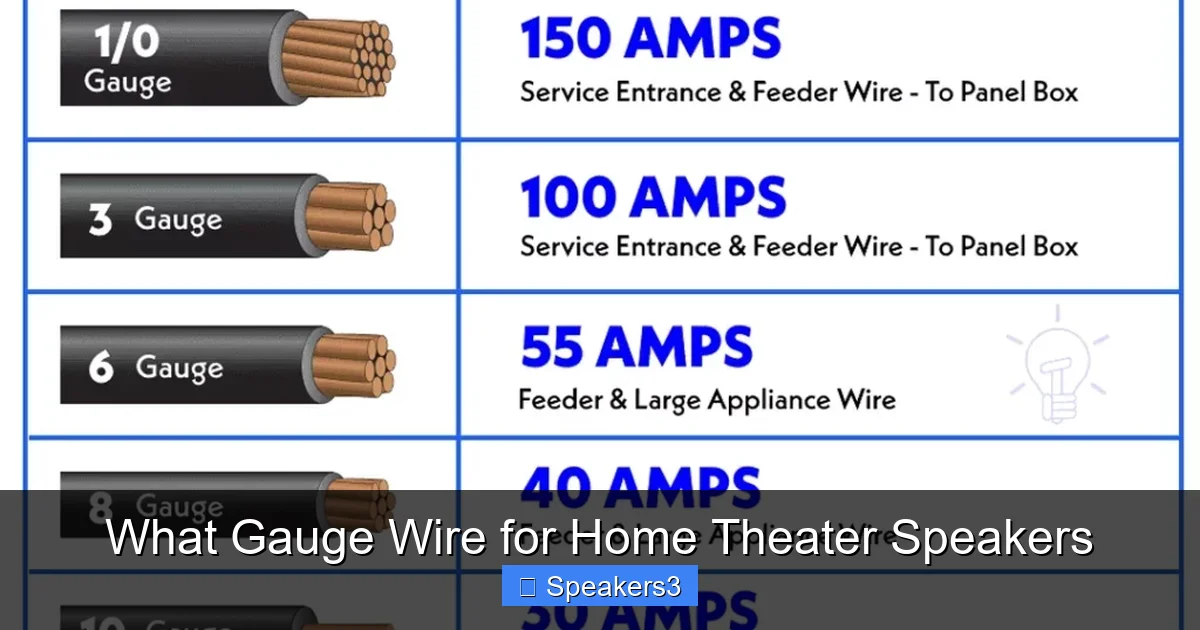
Wire gauge is measured by the American Wire Gauge (AWG) system. The lower the number, the thicker the wire. For home theater speakers, the most common gauges are 12, 14, 16, and 18 AWG. Think of it like a water pipe: a larger pipe (lower gauge) lets more water (current) flow with less resistance.
Visual guide about What Gauge Wire for Home Theater Speakers
Image source: pic1.zhimg.com
Why Thickness Affects Sound
Every foot of wire adds a tiny amount of resistance. When resistance builds up, the amp has to work harder, and the speaker receives less power. This can lead to muffled bass, reduced volume, and even distortion at high levels. Using the correct gauge keeps resistance low, ensuring the signal arrives as intended.
Factors That Influence the Right Gauge
1. Length of the Run
Distance is the biggest factor. A short run (under 25 ft) can usually get away with 16‑ or 18‑AWG. Once you pass 50 ft, step up to 14‑ or 12‑AWG. The longer the wire, the more resistance it adds, so a thicker wire compensates for that loss.

Visual guide about What Gauge Wire for Home Theater Speakers
Image source: image.fmkorea.com
2. Speaker Power (Wattage)
High‑power speakers (200 W + RMS) demand more current. Pair those with 12‑ or 14‑AWG wire, especially if the run is long. Lower‑power bookshelf speakers (under 100 W) are fine with 16‑AWG for most distances.
3. Impedance (Ohms)
Most home theater speakers are 8 Ω, but some subwoofers run at 4 Ω. Lower impedance draws more current, so you’ll need a thicker gauge to avoid overheating the amp.
4. Amplifier Output
Check your receiver’s specifications. If it can deliver 100 W per channel at 8 Ω, you’ll need wire that can handle that current without significant voltage drop.
5. Material and Construction
Pure copper (OFC) is the gold standard. Some cheaper wires use copper‑clad aluminum, which has higher resistance and may require a larger gauge to perform the same.
How to Choose the Right Gauge: A Step‑by‑Step Guide
Step 1: Measure Your Runs
Measure the distance from your receiver to each speaker, adding a little extra for routing behind walls or under carpets. Write down each length.
Visual guide about What Gauge Wire for Home Theater Speakers
Image source: imgv2-1-f.scribdassets.com
Step 2: Check Speaker Specs
Note the RMS wattage and impedance of each speaker. This information is usually on the back of the speaker or in the manual.
Step 3: Use a Wire Gauge Chart
Below is a quick reference chart. Match your longest run and highest power/lowest impedance to the appropriate gauge.
- Up to 25 ft, 8 Ω, ≤50 W → 16‑AWG
- Up to 50 ft, 8 Ω, ≤100 W → 14‑AWG
- Up to 75 ft, 8 Ω, ≤150 W → 12‑AWG
- Over 75 ft, any speaker, high power → 12‑AWG or thicker
Step 4: Factor in Future Upgrades
If you plan to add a bigger subwoofer or upgrade to a more powerful amp, go one gauge thicker than you need now. The extra cost is minimal compared to re‑running wire later.
Step 5: Choose Quality Connectors
Banana plugs, spade connectors, or high‑quality spring clips make a secure connection. Poor connectors add resistance and can negate the benefits of the right gauge.
Practical Examples: Real‑World Scenarios
Example 1: Small Apartment, Short Runs
Imagine a 20‑ft run to two bookshelf speakers (8 Ω, 50 W). 16‑AWG OFC wire is perfect. You’ll notice no loss, and the budget stays low.
Example 2: Dedicated Home Theater Room
Four 12‑inch satellite speakers sit 40 ft from the receiver, each rated at 100 W / 8 Ω. The subwoofer is 8 Ω, 300 W, and sits 55 ft away. For the satellites, 14‑AWG works well. For the subwoofer, step up to 12‑AWG to handle the higher power and longer distance.
Example 3: Large Open‑Plan Living Area
In a 70‑ft run to a pair of floor‑standing speakers (8 Ω, 200 W) and a 8‑Ω, 400 W subwoofer 80 ft away, you’ll need 12‑AWG for everything. This ensures the amp isn’t strained and the bass stays tight.
Installation Tips for a Clean, Safe Setup
Plan Your Path
Run wire along baseboards or through wall cavities. Avoid sharp bends; a 90‑degree bend can damage the conductor.
Secure the Wire
Use zip ties or wire staples (with the staple’s prongs turned outward) to keep the wire in place without crushing it.
Label Each End
Mark the speaker and channel (e.g., Front Left, Center) on both ends of the wire. This saves time during troubleshooting.
Test Before Sealing
If you’re fishing wire through walls, pull a short length of the wire out before closing up the wall to verify continuity and correct polarity.
Combine With Good Speaker Placement
Proper placement enhances sound as much as the right gauge. Check out our guide on speaker stands for surround speakers to get the most out of your setup.
Common Mistakes and How to Avoid Them
- Using too thin wire for long runs: Leads to noticeable loss, especially in bass response.
- Mixing copper‑clad aluminum with copper: The lower conductivity can cause overheating.
- Skipping connector quality: Loose connections add resistance and can cause crackling.
- Neglecting future upgrades: Re‑running wire later can be messy and expensive.
When to Consider Alternative Solutions
Wireless Speaker Kits
If running wire is impossible, high‑quality wireless kits can work, but they often add latency and may not deliver the same power handling.
Powered Speakers
Powered (active) speakers have built‑in amps, so you only need a power cord. This eliminates gauge concerns but adds cost.
Professional Installation
For complex, in‑wall wiring or large systems, hiring a professional ensures code compliance and optimal performance.
Conclusion: Wire the Right Way for Movie‑Night Perfection
Choosing the correct gauge wire is a simple yet powerful way to improve your home theater’s sound. By measuring your runs, checking speaker specs, and using a reliable gauge chart, you can avoid the pitfalls of resistance, distortion, and under‑powered bass. Remember to use quality copper, secure connectors, and plan for future upgrades. With the right wire in place, you’ll hear every whisper, feel every explosion, and enjoy a cinema‑like experience right at home.
Additional Resources
Need help with the actual connection process? Our step‑by‑step tutorial how to wire speakers to amp walks you through each connection. For optimal speaker placement, explore our article on best studio monitors for home studio to understand how positioning affects sound quality.
Frequently Asked Questions
What gauge wire should I use for a 30‑foot run to 8‑Ω speakers?
For a 30‑ft run to 8‑Ω speakers rated up to 100 W, 14‑AWG copper wire is ideal. It balances cost and performance without noticeable loss.
Can I use 16‑AWG wire for a subwoofer?
Only if the subwoofer is low‑power and the run is short (under 25 ft). High‑power subwoofers or longer distances should use 12‑ or 14‑AWG to handle the current safely.
Does the color of the wire matter?
No, the color is just for convenience. What matters is the gauge, material (copper vs. copper‑clad aluminum), and the quality of the connectors.
Is it safe to mix different gauges in the same system?
Yes, as long as each segment meets the requirements for its length and load. However, using the same gauge throughout simplifies troubleshooting.
How do I know if my current wire is too thin?
If you notice reduced volume, muffled bass, or the amp gets unusually warm, your wire may be too thin for the run or power level.
Should I upgrade to thicker wire if I plan to add more speakers later?
Absolutely. Installing a slightly thicker gauge now (e.g., 12‑AWG) can accommodate future speakers and higher power without rewiring.